New
GS Foundation (P+M) - Delhi : 05th Jan., 2026 New Year offer UPTO 75% + 10% Off | Valid till 03 Jan 26 GS Foundation (P+M) - Prayagraj : 15th Dec., 11:00 AM New Year offer UPTO 75% + 10% Off | Valid till 03 Jan 26 GS Foundation (P+M) - Delhi : 05th Jan., 2026 GS Foundation (P+M) - Prayagraj : 15th Dec., 11:00 AM

Current Affairs for 20 December 2025

ISRO to Launch AST BlueBird-2 Satellite

Prelims: (Space and Technology +CA)
Mains: (GS 2 - International Relations; GS 3 - Space Technology, Science & Technology)

Why in News ?

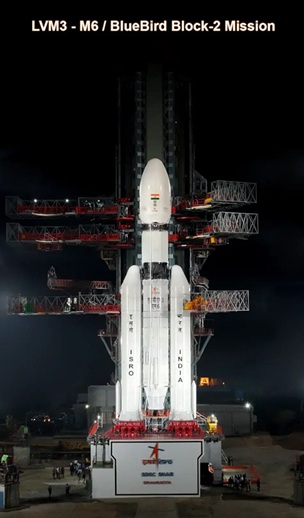
The Indian Space Research Organisation (ISRO) will launch AST SpaceMobile’s advanced BlueBird Block-2 satellite using its heavy-lift LVM3 rocket on December 24, 2025, from the Satish Dhawan Space Centre, Sriharikota, under a commercial agreement facilitated by NewSpace India Limited (NSIL).
Background and Context

India’s space programme has progressively transitioned from being purely state-driven to a commercially competitive global launch service provider. With the creation of NSIL, ISRO’s commercial arm, India has positioned itself as a reliable partner for international satellite operators.

Simultaneously, global demand for space-based broadband and direct-to-smartphone connectivity has surged, driven by the need to bridge digital divides in remote and underserved regions. The LVM3-M6 mission reflects the convergence of these trends—India’s heavy-lift launch capability and next-generation global telecom satellites.

About the LVM3-M6 Mission

  • Launch Vehicle: LVM3 (India’s heavy-lift launch vehicle)
  • Mission Designation: LVM3-M6
  • Launch Date: December 24, 2025
  • Launch Site: Satish Dhawan Space Centre, Sriharikota
  • Commercial Facilitator: NewSpace India Limited (NSIL)

This mission marks another step in ISRO’s expanding role in commercial satellite deployment for global clients.

About BlueBird Block-2 Satellite

  • Developed by AST SpaceMobile (USA)
  • Designed to deliver high-capacity space-based cellular broadband
  • Enables direct smartphone connectivity without reliance on ground-based cell towers
  • Operates in Low Earth Orbit (LEO)

Key Technological Features

  • Equipped with a massive phased-array communications system (~2,400 square feet)
  • Among the largest commercial communications arrays deployed in LEO
  • Supports higher data throughput and continuous wide-area coverage

Significance of the Mission

For India / ISRO

  • Strengthens ISRO’s credentials as a global commercial launch provider
  • Demonstrates the operational maturity of LVM3 for international commercial missions
  • Enhances NSIL’s role in integrating India into the global space economy

For India–US Space Cooperation

  • Reflects deepening Indo-US collaboration in advanced space technologies
  • Expands cooperation beyond government missions to commercial satellite ecosystems

For Global Connectivity

  • Supports AST SpaceMobile’s goal of universal cellular broadband coverage
  • Helps bridge connectivity gaps in remote, rural, and disaster-prone regions

Broader Implications

  • Reinforces India’s position in the LEO satellite launch market, alongside emerging global players
  • Aligns with India’s vision of becoming a major space services hub under space sector reforms
  • Contributes to the global shift towards Direct-to-Device (D2D) satellite communication

FAQs

Q1. What is special about the BlueBird Block-2 satellite ?

It enables high-speed cellular broadband directly to standard smartphones from space.

Q2. Which Indian agency is handling the commercial launch ?

NewSpace India Limited (NSIL), ISRO’s commercial arm.

Q3. What is the role of LVM3 in this mission ?

LVM3 serves as the heavy-lift launch vehicle deploying the satellite into Low Earth Orbit.

Q4. Why is this mission significant for India–US relations ?

It strengthens commercial and technological cooperation in advanced space and telecom sectors.

Q5. How does this mission benefit global connectivity ?

It helps extend mobile broadband coverage to remote and underserved regions worldwide.

SHANTI Bill 2025: Opening India’s Nuclear Sector

Prelims: (Polity & Governance + CA)
Mains: (GS 2: International Relations, Government Policies; GS Paper – 3: Nuclear Energy, Infrastructure)

Why in News ?

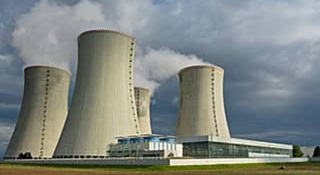
Parliament has passed the Sustainable Harnessing and Advancement of Nuclear Energy for Transforming India (SHANTI) Bill, 2025, fundamentally restructuring India’s nuclear power framework by allowing private participation in nuclear power plant operations and related activities.
Background and Context

India’s nuclear power sector has historically been state-dominated, governed by the Atomic Energy Act, 1962, with operational control vested in public sector entities. While nuclear energy is crucial for clean baseload power, capacity expansion has remained slow due to capital intensity, liability concerns, and limited public resources.

With India targeting 100 GW of nuclear power capacity by 2047—to meet climate commitments and energy security needs—the government argues that private investment and technology partnerships are essential. The SHANTI Bill seeks to modernise the legal framework to align nuclear power with India’s broader infrastructure and clean energy ambitions.

Private Sector Entry under SHANTI Bill, 2025

Expanded Participation

  • Allows public and private companies to set up and operate nuclear power plants
  • Permits private involvement in:
    • Transport and storage of nuclear fuel
    • Import/export of nuclear equipment and technology
    • Handling of specified nuclear materials (non-sensitive segments)

Strict Safety and Regulatory Oversight

  • Mandatory authorisation from the Atomic Energy Regulatory Board (AERB)
  • Regulatory approval required for:
    • Manufacture, possession, transport, and disposal of radioactive materials
    • Establishment, operation, and decommissioning of nuclear and radiation facilities

Foreign Investment: Conditional Access

  • No explicit allowance for Foreign Direct Investment (FDI)
  • Participation possible only through Central Government notification
  • Expected alignment with DPIIT foreign equity norms, subject to security considerations

Activities Reserved for the State

Certain sensitive functions remain exclusively under Central Government control, including:

  • Uranium enrichment and isotopic separation
  • Reprocessing of spent fuel and management of high-level nuclear waste
  • Production and upgradation of heavy water

Accountability and Liability Framework

Dilution of Supplier Liability

  • Removes the automatic “right of recourse” against equipment suppliers present under the CLNDA, 2010

  • Operators can claim damages from suppliers only if:

    • Explicitly provided through written contracts, or

    • Criminal intent to cause nuclear damage is established

Implication: This shields suppliers from long-term liability linked to latent defects, addressing investor concerns but raising accountability issues.

Graded Liability Caps

  • Replaces the flat ₹1,500 crore liability cap
  • Introduces capacity-based graded liability, reflecting differing risk profiles of nuclear installations

Insurance and Financial Security

  • Mandatory insurance applies only to private operators
  • Government-owned installations are exempt
  • Provision for a Nuclear Liability Fund to meet compensation obligations of the Centre

Enhanced Penalty Structure

  • Two-tier framework:
    • Monetary penalties for minor violations
    • Imprisonment for serious offences
  • Marks a shift toward graduated enforcement absent in earlier laws

Transparency and RTI Concerns

Section 39: Overriding RTI Act

  • Empowers the Centre to declare broad categories of nuclear-related information as “restricted”
  • Such information becomes fully exempt from disclosure, overriding the RTI Act, 2005

Why This Is Controversial

  • RTI Act exemptions are conditional and subject to:
    • Appeals
    • Public interest override (Section 8(2))
  • Section 39 removes these safeguards entirely

Concerns Raised:

  • Institutionalised secrecy
  • Reduced public oversight as private players enter the sector
  • Weakened whistleblower protection and independent scrutiny

FAQs

Q1. What is the SHANTI Bill, 2025 ?

It is a law reforming India’s nuclear energy framework by permitting private participation and replacing older nuclear laws.

Q2. Does the Bill allow full foreign investment in nuclear power ?

No. Foreign participation is conditional and subject to government notification and security norms.

Q3. How does the Bill change nuclear accident liability ?

It removes automatic supplier liability and introduces graded liability caps linked to plant capacity.

Q4. Who regulates safety under the new law ?

The Atomic Energy Regulatory Board (AERB) continues as the primary safety regulator.

Q5. Why is the Bill criticised on transparency grounds ?

Because it overrides the RTI Act for nuclear-related information without public interest safeguards.

The Problem of Female Genital Mutilation

(Prelims: Current Events of International Importance, Rights Issues)
(Mains, General Studies Paper 2: Social Justice and Women's Issues)

Context

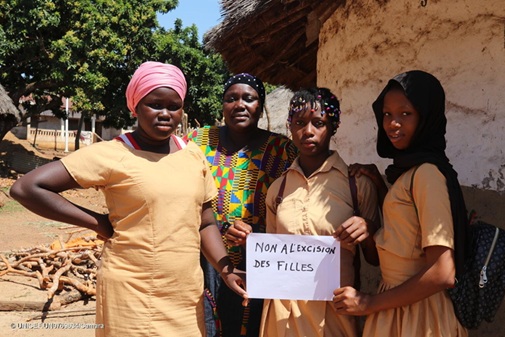
A serious debate has erupted among the Maasai community of southern Kenya over the practice of Female Genital Mutilation (FGM).
The Practice of Female Genital Mutilation (FGM)

  • The practice of female genital mutilation or circumcision is deeply rooted in Kenya, Sudan, and other African countries, as well as Asia and the Middle East. FGM involves the partial or complete removal of female genitalia for non-medical reasons.
  • It is traditionally viewed as a conservative practice designed to curb women's sexual desire. According to popular custom, it is considered crucial before marriage.

Current Situation

  • According to the United Nations, over 200 million women in several African countries are affected by this cruel social custom. The practice is also prevalent in some Asian countries, including Kenya, Sudan, Egypt, Nigeria, Djibouti, and Senegal.
  • A 2014 report by the United Nations Children's Agency estimated that approximately 87% of Sudanese women and girls aged 15-49 have been victims of this practice.
    • However, it is most often performed on young girls, from infancy to 15 years of age.
  • Most of these women undergo a highly painful procedure called infibulations. This procedure involves removing and reshaping the labia to narrow the vaginal opening.
  • This practice not only violates the rights of every girl but is also harmful to her health. This severely impacts physical and mental health. However, research is ongoing, including surgeries, to address its potential for reduction and mitigation.
    • However, the WHO disagrees on the effectiveness of surgeries to mitigate the negative effects.

Statistics vs. Reality

  • Government Position: According to 2022 data, the number of adolescent girls affected by FGM in Kenya has decreased from 29% in 1998 to just 9% now.
  • Local Reality: According to a local nurse in Entasekera Village, Narok County, despite the practice being officially banned in 2011, approximately 80% of girls in rural areas are still subjected to this inhumane practice.

The Problem of Female Genital Mutilation (FGM)

  • Female Genital Mutilation (FGM) can cause serious, long-term complications and even death. Immediate health risks include bleeding, shock, infection, HIV transmission, and severe pain.
  • Psychological effects can range from a girl's distrust of her parents to long-term feelings of anxiety and depression.
  • As adults, girls who have undergone female genital mutilation (FGM) are at risk of infertility, bleeding during or after childbirth, stillbirth, and newborn deaths.
  • In some societies, it is viewed as a rite of passage, while others use it to suppress a woman's sexuality or ensure her purity.

Prevalence of Female Genital Mutilation (FGM)

  • Global efforts have accelerated progress towards eliminating female genital mutilation (FGM). The likelihood of a girl experiencing FGM is currently about one-third lower than it was 30 years ago.
  • However, maintaining these gains remains a major challenge despite population growth. It is estimated that by 2030, approximately 27 million additional girls could become victims of this atrocity.

UNICEF's Efforts to Prevent Female Genital Mutilation

  • Eliminating female genital mutilation (FGM) requires coordinated efforts involving the entire community, including youth, parents, religious leaders, civil society organizations, activists, medical personnel, educators, and policymakers.
  • UNICEF and the United Nations Population Fund (UNFPA) jointly lead the world's largest program to eliminate female genital mutilation (FGM). Launched in 2008, this program:
    • In partnership with communities, it raises awareness about the harms of FGM.
    • Works to collectively change social norms toward its abandonment.
    • Also collaborates with governments at the national and regional levels to develop policies focused on eliminating and outlawing FGM.
    • Provides access to medical and psychological care for FGM survivors.

Impact of UNICEF's work

  • Since the establishment of the United Nations General Assembly's Joint Programme for the Elimination of Female Genital Mutilation, 13 countries have passed national laws banning FGM.
  • The programme has also helped more than 7 million girls and women access FGM-related prevention, protection, and treatment services. Nearly 480 million people in communities across 15 countries have now publicly declared their intention to abandon the practice.

Man-Portable Air Defense System (MANPADS)

(Prelims: Current Affairs, Science & Technology)
(Mains, General Studies Paper 3: Indian Achievements in Science & Technology; Internal Security, Indian Military Capabilities, Various Security Forces and Institutions and Their Mandates)

Context

The Indian Army is undertaking a significant strategic shift in its air defense doctrine. In light of the evolving threat posed by subsonic cruise missiles, the Army is re-optimizing and upgrading its Man-Portable Air Defense Systems (MANPADS) to effectively counter low-flying targets.

What are MANPADS ?

  • MANPADS are surface-to-air missile systems that can be operated by a single soldier or a team of a limited number of soldiers.
  • They are often called shoulder-fired anti-aircraft missiles, known for their rapid deployment and high mobility.
  • These systems are typically less than two meters long and weigh around 20 kilograms, making them easily transportable even by infantrymen.

Historical Background and Global Use

  • In the 1960s, the United States and the then-Soviet Union first developed and deployed MANPADS to provide portable air defense capabilities to their militaries. The United States initially introduced the Redeye system, and the Soviet Union the Strela system.
  • Currently, the armies of approximately 105 countries worldwide use MANPADS. However, only 12 countries, including India, produce these systems indigenously.
  • The most widely known MANPADS globally include the US Stinger, the Soviet Union's 9K32 Strela-2 (SA-7), and China's modern FN-16.

MANPADS fall into three main categories:

  1. Command Line-of-Sight (CLOS): In these systems, the missile is guided toward the target by the operator via remote control.
  2. Laser-Guided or Laser Beam Rider: These systems follow a laser beam projected onto the target.
  3. Infrared Seeker (Heat-Seeking): The most common MANPADS belong to this category, which locate the target by detecting heat emanating from the aircraft or missile's engine.

Main structural units of a MANPADS:

  • A missile packaged in a tube
  • A launch mechanism called a gripstock
  • A battery that powers the system

ULLAS and India’s 100% Literacy Push

Prelims: (Society + CA)
Mains: (GS Paper – 1: Indian Society; GS 2 - Governance, Social Justice; GS 3 - Human Resource Development)

Why in News ?

India has set an ambitious goal of achieving 100% literacy by 2030, aligned with the National Education Policy (NEP) 2020 and SDG-4 (Quality Education). To achieve this, the Union Government launched the ULLAS (Understanding Lifelong Learning for All in Society) programme. However, Bihar’s non-participation, despite being one of India’s least literate States, has emerged as a major bottleneck in achieving the national target.
Background and Context

Literacy has long been a cornerstone of India’s social and economic development strategy. While school enrolment has improved substantially over the decades, adult illiteracy remains a challenge, particularly among women, marginalised communities, and in backward regions.

Recognising this gap, NEP 2020 expanded the concept of literacy beyond basic reading and writing to include digital, financial, and life skills, necessitating a renewed focus on adult and lifelong learning through schemes like ULLAS.

Overview of the ULLAS Scheme

  • Launched: 2022 by the Union Ministry of Education
  • Target Group: Non-literate persons aged 15 years and above
  • Core Approach:
    • Door-to-door identification of non-literates
    • Training in basic literacy and numeracy (up to Class 3 level)
    • Combination of online and offline learning modes
    • Mandatory assessment and certification

Expanded Definition of Literacy (2024 Guidelines):

  • Reading, writing, and numeracy with comprehension
  • Digital literacy, financial literacy, and essential life skills
  • Benchmark: 95% literacy treated as equivalent to 100% literacy for policy purposes

Progress So Far

  • Declared Fully Literate States/UTs: Himachal Pradesh, Mizoram, Goa, Tripura, Ladakh
  • Likely to Join Soon: At least two southern States and one Union Territory
  • National Impact: Gains expected to reflect in upcoming Census data, strengthening India’s human capital indicators.

Bihar – A Major Concern

Literacy Snapshot

  • PLFS 2023–24:
    • Overall literacy: 74.3% (second lowest in India)
    • Male literacy: 82.3%
    • Female literacy: 66.1%
  • Non-literates (15–59 age group): Nearly 2 crore, including 1.32 crore women
  • Census 2011: Literacy rate was 61.8%, the lowest nationally

Financial and Administrative Issues

  • ULLAS Funds Approved (2023–24): ~₹35 crore
    • Central share: ₹21 crore
    • State share: ₹14 crore
  • Issues flagged by the Centre:
    • Funds not transferred to the Single Nodal Agency (SNA)
    • No annual action plan submitted
    • Non-utilisation of released funds
    • 7% interest penalty applicable on delayed transfers (Department of Expenditure norms)

Bihar’s Stand: Akshar Anchal Scheme

  • Nature: State-run literacy programme operational for ~15 years
  • Focus Groups:
    • Dalits, Mahadalits, minorities
    • Extremely Backward Classes (EBCs)
    • Women (15–45 age group)
  • Key Features:
    • Schooling for children (6–14 age group)
    • Basic literacy and numeracy for adult women
    • Biannual literacy assessments conducted by the State
  • State’s Argument:
    • Higher financial outlay than ULLAS
    • Existing institutional mechanisms make ULLAS redundant

Key Challenges and Way Forward

  • Centre–State Coordination Deficit: Need for stronger cooperative federalism in education governance.
  • Duplication vs Convergence: Align Akshar Anchal with the ULLAS framework rather than operating parallel schemes.
  • Gender Gap in Literacy: Prioritise female literacy as a catalyst for health, nutrition, and workforce participation.
  • Underutilisation of Central Funds: Introduce performance-linked incentives and strict monitoring.
  • Monitoring and Outcome-Based Evaluation: Use digital platforms, community educators, and third-party assessments for accountability.

FAQs

Q1. What is the ULLAS scheme ?

ULLAS is a Union Government programme aimed at adult literacy and lifelong learning for persons aged 15 years and above.

Q2. How does ULLAS define literacy ?

It includes reading, writing, numeracy, digital literacy, financial literacy, and life skills.

Q3. Why is Bihar critical to India’s literacy goal ?

Bihar has one of the lowest literacy rates and nearly 2 crore non-literate adults, making its participation crucial for national success.

Q4. What is Akshar Anchal ?

It is Bihar’s long-running State literacy scheme focused on marginalised groups, especially women.

Q5. What is the way forward ?

Convergence of State and Central schemes, improved fund utilisation, focus on female literacy, and strong Centre–State coordination.

« »
  • SUN
  • MON
  • TUE
  • WED
  • THU
  • FRI
  • SAT
Have any Query?

Our support team will be happy to assist you!

OR