(Prelims: Current Events of International Importance, Rights Issues)
(Mains, General Studies Paper 2: Social Justice and Women's Issues) |
Context
A serious debate has erupted among the Maasai community of southern Kenya over the practice of Female Genital Mutilation (FGM).
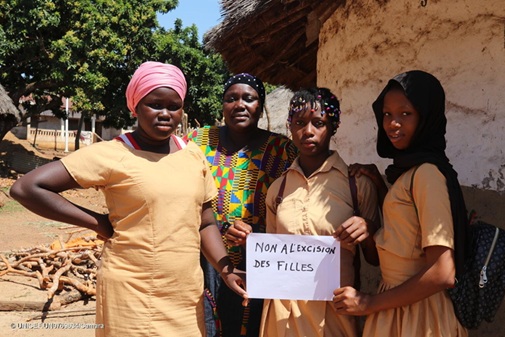
The Practice of Female Genital Mutilation (FGM)
- The practice of female genital mutilation or circumcision is deeply rooted in Kenya, Sudan, and other African countries, as well as Asia and the Middle East. FGM involves the partial or complete removal of female genitalia for non-medical reasons.
- It is traditionally viewed as a conservative practice designed to curb women's sexual desire. According to popular custom, it is considered crucial before marriage.
Current Situation
- According to the United Nations, over 200 million women in several African countries are affected by this cruel social custom. The practice is also prevalent in some Asian countries, including Kenya, Sudan, Egypt, Nigeria, Djibouti, and Senegal.
- A 2014 report by the United Nations Children's Agency estimated that approximately 87% of Sudanese women and girls aged 15-49 have been victims of this practice.
- However, it is most often performed on young girls, from infancy to 15 years of age.
- Most of these women undergo a highly painful procedure called infibulations. This procedure involves removing and reshaping the labia to narrow the vaginal opening.
- This practice not only violates the rights of every girl but is also harmful to her health. This severely impacts physical and mental health. However, research is ongoing, including surgeries, to address its potential for reduction and mitigation.
- However, the WHO disagrees on the effectiveness of surgeries to mitigate the negative effects.
Statistics vs. Reality
- Government Position: According to 2022 data, the number of adolescent girls affected by FGM in Kenya has decreased from 29% in 1998 to just 9% now.
- Local Reality: According to a local nurse in Entasekera Village, Narok County, despite the practice being officially banned in 2011, approximately 80% of girls in rural areas are still subjected to this inhumane practice.
The Problem of Female Genital Mutilation (FGM)
- Female Genital Mutilation (FGM) can cause serious, long-term complications and even death. Immediate health risks include bleeding, shock, infection, HIV transmission, and severe pain.
- Psychological effects can range from a girl's distrust of her parents to long-term feelings of anxiety and depression.
- As adults, girls who have undergone female genital mutilation (FGM) are at risk of infertility, bleeding during or after childbirth, stillbirth, and newborn deaths.
- In some societies, it is viewed as a rite of passage, while others use it to suppress a woman's sexuality or ensure her purity.
Prevalence of Female Genital Mutilation (FGM)
- Global efforts have accelerated progress towards eliminating female genital mutilation (FGM). The likelihood of a girl experiencing FGM is currently about one-third lower than it was 30 years ago.
- However, maintaining these gains remains a major challenge despite population growth. It is estimated that by 2030, approximately 27 million additional girls could become victims of this atrocity.
UNICEF's Efforts to Prevent Female Genital Mutilation
- Eliminating female genital mutilation (FGM) requires coordinated efforts involving the entire community, including youth, parents, religious leaders, civil society organizations, activists, medical personnel, educators, and policymakers.
- UNICEF and the United Nations Population Fund (UNFPA) jointly lead the world's largest program to eliminate female genital mutilation (FGM). Launched in 2008, this program:
- In partnership with communities, it raises awareness about the harms of FGM.
- Works to collectively change social norms toward its abandonment.
- Also collaborates with governments at the national and regional levels to develop policies focused on eliminating and outlawing FGM.
- Provides access to medical and psychological care for FGM survivors.
Impact of UNICEF's work
- Since the establishment of the United Nations General Assembly's Joint Programme for the Elimination of Female Genital Mutilation, 13 countries have passed national laws banning FGM.
- The programme has also helped more than 7 million girls and women access FGM-related prevention, protection, and treatment services. Nearly 480 million people in communities across 15 countries have now publicly declared their intention to abandon the practice.






 Contact Us
  New Batch : 9555124124/ 7428085757
  Tech Support : 9555124124/ 7428085757