- UPSC Exam
- State PCS
- One Day Exam
- Current Affairs
- PT Quiz
- Downlaods
- About Coaching
- Blog
- Videos

|
Prelims: Dengue Virus, QDENGA (TAK-003), Drug Controller General of India (DCGI), WHO Prequalification, Vector-Borne Diseases Mains GS Paper II: Public Health, Preventive Healthcare, and Universal Immunisation GS Paper III: Biotechnology, Vaccine Development, Research & Innovation, and Health Security Keywords: Dengue Vaccine, QDENGA, TAK-003, DCGI, Takeda Biopharmaceuticals, Dengue Virus, WHO, Live Attenuated Vaccine, Tetravalent Vaccine, Dengue Serotypes, Public Health, UPSC Current Affairs. |
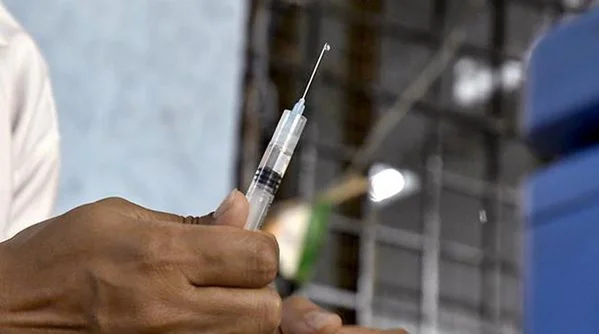
The Drug Controller General of India (DCGI) has granted market authorization to Takeda Biopharmaceuticals India's QDENGA (TAK-003), making it the first dengue vaccine approved in India.
|
Feature |
Details |
|---|---|
|
Vaccine Name |
QDENGA (TAK-003) |
|
Developed By |
Takeda Biopharmaceuticals (Japan) |
|
Approved By |
Drug Controller General of India (DCGI) |
|
Age Group |
4–60 Years |
|
Vaccine Type |
Live Attenuated Tetravalent Vaccine |
|
Number of Doses |
Two |
|
Interval Between Doses |
Three Months |
|
Protection |
Against all four dengue virus serotypes |
|
Pre-vaccination Screening |
Not Required |
|
WHO Status |
WHO Recommended & WHO Prequalified |
Developing a dengue vaccine has been scientifically challenging because protection is required against all four serotypes simultaneously.
Takeda developed TAK-003 using a live attenuated DENV-2 virus as the genetic backbone. Genetic components from the remaining three serotypes were incorporated to create a tetravalent vaccine capable of inducing immunity against all four dengue viruses.
The vaccine's development involved:
A vaccine is a biological preparation that trains the body's immune system to recognize and fight a specific disease-causing pathogen (virus or bacteria) before a person becomes infected. Instead of causing the disease, a vaccine safely exposes the immune system to a weakened, inactivated, or harmless part of the pathogen, enabling the body to develop immunity.
Dengue is a mosquito-borne viral disease caused by the Dengue virus (DENV), which belongs to the Flavivirus family.
It spreads through the bite of infected Aedes aegypti and Aedes albopictus mosquitoes, which are active during the daytime.
There are four distinct serotypes:
Infection with one serotype provides lifelong immunity only against that serotype. Subsequent infection with another serotype increases the risk of developing Severe Dengue (Dengue Hemorrhagic Fever or Dengue Shock Syndrome).
|
Indicator |
Data |
|---|---|
|
India's Share in Global Dengue Burden |
Nearly One-Third |
|
Increase in Reported Cases (Last Two Decades) |
Nearly 11 Times |
|
Virus Serotypes |
Four |
|
Peak Transmission Season |
July–November |
|
Most Affected Areas |
Urban & Semi-Urban Regions |
India carries nearly one-third of the global dengue burden, and reported cases have increased almost eleven-fold over the past two decades.
Major reasons include:
|
Parameter |
Findings |
|---|---|
|
Total Participants |
28,000+ |
|
Countries Covered |
8 Dengue-endemic Countries |
|
Protection Against Laboratory-confirmed Dengue |
80.2% |
|
Protection Against Dengue-related Hospitalisation (18 Months) |
90.4% |
|
Protection Against Hospitalisation (4.5 Years) |
84.1% |
|
Long-term Follow-up |
Sustained protection up to 7 years |
The approval of QDENGA marks a significant milestone in India's public health system. As dengue cases continue to rise due to climate change, rapid urbanization, and changing mosquito habitats, vaccination can become an important preventive tool. However, vaccination should complement—not replace—vector control, environmental sanitation, surveillance, and public awareness initiatives.
Prelims MCQQ. With reference to QDENGA (TAK-003), recently approved in India, consider the following statements:
Which of the statements given above is/are correct? A. 1 only B. 1 and 2 only C. 2 and 3 only D. 1, 2 and 3 Mains Question"Dengue continues to pose a major public health challenge in India. Examine how the approval of QDENGA (TAK-003) can strengthen India's preventive healthcare strategy. Also discuss the challenges associated with implementing dengue vaccination on a national scale." |
1. What is QDENGA (TAK-003)?QDENGA is a live attenuated tetravalent dengue vaccine developed by Takeda Biopharmaceuticals to protect against all four dengue virus serotypes. 2. Who can receive the vaccine in India?The vaccine has been approved for individuals aged 4 to 60 years. 3. Is prior dengue infection necessary before vaccination?No. QDENGA can be administered regardless of previous dengue infection and does not require pre-vaccination screening. 4. How many doses are required?Two doses are administered three months apart. 5. Can the vaccine alone eliminate dengue?No. Vaccination should be combined with mosquito control, environmental sanitation, disease surveillance, and public awareness to effectively reduce dengue transmission. |
The Securities and Exchange Board of India (SEBI) has recently cautioned regulated entities and listed companies against an emerging cyber fraud known as the ‘Boss Scam’, where fraudsters impersonate Chief Executive Officers (CEOs), Managing Directors (MDs), and other senior executives to trick finance teams into transferring funds to fraudulent bank accounts.
As cybercriminals increasingly leverage artificial intelligence (AI), deepfake technology, and social engineering, Boss Scam has emerged as a significant threat to corporate financial security.
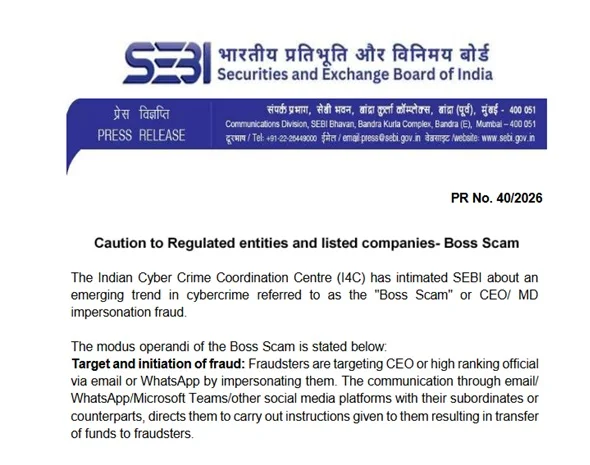
Boss Scam is an advanced form of cyber fraud in which attackers impersonate senior company executives—such as CEOs, Managing Directors (MDs), or Chief Financial Officers (CFOs)—to deceive finance and accounts personnel into making unauthorized fund transfers.
The fraud relies on creating a sense of urgency and confidentiality, convincing employees that the payment is genuine and must be executed immediately.
Cybercriminals primarily use two methods to carry out the scam.
In the first method, fraudsters exploit advanced AI-powered deepfake technology to convincingly impersonate senior executives.
They use:
The finance department is then instructed to transfer money to a specified bank account.
In several cases, employees are also told not to disclose the transaction, with fraudsters claiming that it concerns Unpublished Price Sensitive Information (UPSI) or another confidential corporate matter.
The second method involves sending compressed ZIP files containing malicious executable programs.
When the recipient opens the file:
In some instances, attackers also modify contact lists by saving their own phone numbers under the names of the CEO or MD, making fraudulent messages appear authentic.
SEBI has advised all regulated entities and listed companies to remain vigilant against Boss Scam.
According to the regulator, fraudsters are using communication platforms such as:
to impersonate senior executives and instruct employees or counterparts to execute urgent financial transactions that ultimately result in funds being transferred to criminals.
Organizations can reduce the risk of Boss Scam by adopting the following cybersecurity measures:
Q1. What is Boss Scam?Answer: Boss Scam is an emerging cyber fraud in which criminals impersonate CEOs, Managing Directors (MDs), or other senior executives to trick finance teams into transferring funds to fraudulent bank accounts. Q2. Why has SEBI issued a warning about Boss Scam?Answer: SEBI has warned regulated entities and listed companies because cybercriminals are increasingly using AI, deepfakes, and social engineering to impersonate senior officials and deceive employees into making unauthorized financial transactions. Q3. How do fraudsters carry out a Boss Scam?Answer: Fraudsters mainly use two methods:
Q4. What is the role of AI in Boss Scam?Answer: AI is used to create realistic voice clones and deepfake videos that imitate senior executives, making fraudulent instructions appear genuine. |
|
Prelims: NITI Aayog, Investment Friendliness Index (IFI), GSDP Mains (GS III) Industrial Development, Ease of Doing Business, Competitive & Cooperative Federalise, Investment Promotion, Infrastructure Development, Fiscal Management, Innovation Ecosystem Keywords: Investment Friendliness Index 2026, NITI Aayog, Gujarat, Maharashtra, Tamil Nadu, Ease of Doing Business, Investment Climate, Dholera SIR, GIFT City, Vibrant Gujarat Summit, Industrial Infrastructure, MSMEs, Fiscal Deficit, GSDP, Atal Tinkering Labs, Competitive Federalism, UPSC Economy |
|
Rank |
State |
Score |
|---|---|---|
|
1 |
Gujarat |
56.6 |
|
2 |
Maharashtra |
53.7 |
|
3 |
Tamil Nadu |
53.3 |
Major industrial hubs include:
|
Indicator |
Performance |
|---|---|
|
Fiscal Deficit (2024–25) |
2.81% of GSDP (Lowest among states) |
|
Outstanding Liabilities |
~18% of GSDP |
|
Fiscal Position |
Among the strongest in India |
Prelims MCQQ. With reference to the Investment Friendliness Index 2026, consider the following statements:
Which of the statements given above is/are correct? A. 1 only Mains Practice Question"Competitive federalism has emerged as a key driver of investment-led economic growth in India." Discuss in the context of NITI Aayog's Investment Friendliness Index 2026. |
1. What is the Investment Friendliness Index (IFI)?It is NITI Aayog's first comprehensive index measuring how effectively Indian states attract, facilitate and sustain investments. 2. Which state topped the Investment Friendliness Index 2026?Gujarat ranked first with a score of 56.6, followed by Maharashtra and Tamil Nadu. 3. How many indicators are used in the index?The index is based on 84 indicators grouped under eight assessment pillars. 4. What were Gujarat's major strengths?Policy stability, investor-friendly governance, strong industrial infrastructure, efficient logistics, reliable power supply, fiscal discipline and a robust innovation ecosystem. 5. Why is the Investment Friendliness Index important?It promotes competitive federalism, improves ease of doing business, attracts domestic and foreign investment, and encourages states to adopt best governance and economic practices. |

Our support team will be happy to assist you!

 Contact Us
  New Batch : 9555124124/ 7428085757
  Tech Support : 9555124124/ 7428085757