|
Prelims : (Economy + Environment + CA) |
The Government of India has expanded domestic sourcing norms in the solar sector to include wafers and ingots, effective from June 2028, as part of efforts to reduce dependence on imports, particularly from China, and strengthen domestic manufacturing.
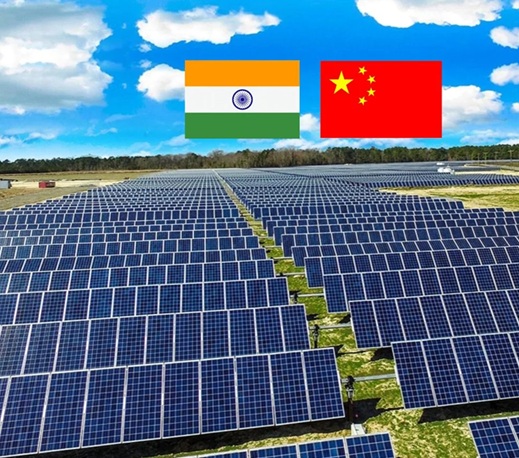
India is one of the fastest-growing renewable energy markets, with ambitious targets under its clean energy transition strategy.
Solar power plays a central role in achieving :
However, India’s solar sector has been heavily dependent on imports, especially from China, which dominates the global solar supply chain.
While India has developed strong capacity in solar modules and cells, upstream components like polysilicon, ingots, and wafers remain underdeveloped.
To address this, the government has progressively introduced localisation policies through schemes like the Production Linked Incentive Scheme and initiatives such as PM Surya Ghar.
Solar panel manufacturing involves multiple stages :
Strengthening wafer and ingot production is crucial for complete supply chain self-reliance.
As per the Ministry of New and Renewable Energy :
The Approved List of Models and Manufacturers (ALMM) ensures domestic sourcing :
1. Limited Manufacturing Capacity
2. High Capital Requirements
3. Competition from Cheap Imports
Segment-wise :
Indicates major gaps in upstream manufacturing
India still relies heavily on imports :
Highlights vulnerability in critical supply chain components
1. Reducing Import Dependence
2. Boost to Domestic Manufacturing
3. Strategic Energy Security
4. Employment Generation
5. Strengthening Renewable Energy Goals
FAQs1. What is the new solar sourcing policy about ? It expands domestic sourcing requirements to include wafers and ingots to reduce import dependence. 2. What is ALMM ? Approved List of Models and Manufacturers ensures that solar components are sourced from approved domestic producers. 3. Why are wafers important in solar manufacturing ? They are an essential intermediate stage between ingots and solar cells. 4. What challenges does India face in solar manufacturing ? Limited upstream capacity, high capital costs, and competition from cheaper imports. 5. What is the goal of this policy change ? To achieve self-reliance in the solar supply chain and strengthen domestic manufacturing. |
| Prelims : (Economy + CA) Mains : (GS 3 – Agriculture, MSP Policy, Inclusive Growth) |
The Cabinet Committee on Economic Affairs (CCEA) has approved Minimum Support Price (MSP) funding for the Cotton Corporation of India (CCI) for the cotton season 2023–24 to support farmers and stabilise market prices.
Cotton is one of India’s most important cash crops, supporting millions of farmers and forming the backbone of the textile industry, which is a major contributor to exports and employment.
However, cotton prices are highly volatile, influenced by global demand, weather conditions, and domestic supply.
To safeguard farmers from price crashes, the Government implements the Minimum Support Price (MSP) mechanism, under which designated agencies procure crops when market prices fall below MSP.
The Cotton Corporation of India acts as the nodal agency for implementing MSP operations in cotton, ensuring income security for farmers and stability in the textile supply chain.
FAQs1. What is the Cotton Corporation of India (CCI) ? It is a government PSU responsible for implementing MSP operations in cotton. 2. Why has MSP funding been approved for CCI ? To support procurement of cotton and protect farmers from low market prices. 3. What is MSP in cotton ? It is the minimum price guaranteed by the government to farmers for their produce. 4. Which ministry controls CCI ? It functions under the Ministry of Textiles. 5. Why is cotton important for India ? It is a key cash crop supporting farmers and the textile industry, a major contributor to exports and employment. |
| Prelims : (Polity & Governance + CA) Mains : (GS 2 – Governance, Federalism, Tribal Administration) |
The Government of Meghalaya has extended the tenure of the Garo Hills Autonomous District Council (GHADC) by six months, raising focus on the functioning and constitutional role of Autonomous District Councils under the Sixth Schedule.
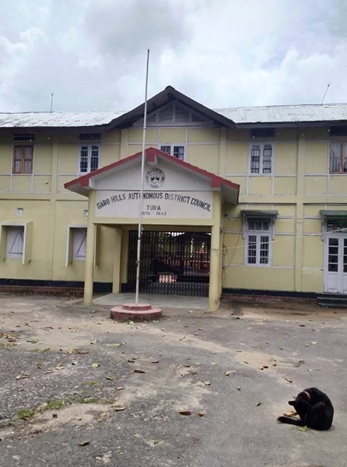
India’s North-East is characterised by ethnic diversity, tribal traditions, and distinct socio-cultural systems, necessitating special governance mechanisms.
To protect the identity, customs, and land rights of tribal communities, the Constitution incorporated the Sixth Schedule of the Indian Constitution.
This Schedule provides for Autonomous District Councils (ADCs) with legislative, administrative, and financial powers to ensure self-governance in tribal areas.
The extension of GHADC’s tenure reflects administrative considerations and highlights the importance of continuity in local governance institutions.
ADCs can generate revenue through :
1. Ensuring Continuity in Governance
2. Protection of Tribal Interests
3. Strengthening Decentralisation
4. Flexibility in Constitutional Mechanism
5. Focus on Institutional Reforms
FAQs1. What is an Autonomous District Council (ADC) ? It is a constitutional body under the Sixth Schedule that provides self-governance to tribal areas. 2. Which states have ADCs ? Assam, Meghalaya, Tripura, and Mizoram. 3. What is the tenure of an ADC ? Normally five years, but it can be extended under special circumstances. 4. What powers do ADCs have ? They have legislative, administrative, and financial powers related to land, customs, and local governance. 5. Why was GHADC’s tenure extended ? To ensure continuity in governance and avoid administrative disruptions in the region. |
| Prelims : (Awards & Honours + Environment + CA) Mains : (GS 3 – Environment, Water Resource Management; GS 2 – Global Governance) |
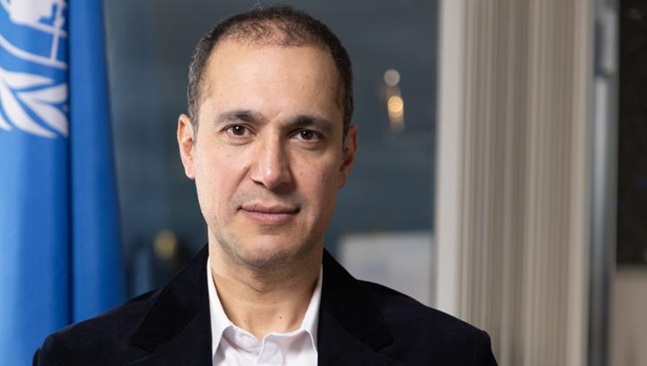
Kaveh Madani has been named the 2026 recipient of the Stockholm Water Prize, recognising his outstanding contributions to water management and sustainability.
Water scarcity and mismanagement have emerged as critical global challenges due to climate change, population growth, and unsustainable usage patterns.
Efficient water governance is essential for :
To recognise path-breaking work in this domain, global platforms honour individuals and institutions contributing to water conservation, policy innovation, and scientific research.
The Stockholm Water Prize is often referred to as the “Nobel Prize of Water”, highlighting its global prestige and significance.
FAQs1. What is the Stockholm Water Prize ? It is a prestigious international award recognising outstanding contributions to water conservation and management. 2. Who received the Stockholm Water Prize 2026 ? Kaveh Madani has been named the recipient. 3. Who presents the award ? The King of Sweden presents the award during World Water Week. 4. What is the significance of this prize ? It is considered the highest global recognition in the field of water-related work. 5. Who can be nominated for the prize ? Any individual or organisation with exceptional contributions to water resources can be nominated, except through self-nomination. |

Our support team will be happy to assist you!


 Contact Us
  New Batch : 9555124124/ 7428085757
  Tech Support : 9555124124/ 7428085757