New
Hindi Medium: (Delhi) - GS Foundation (P+M) : 8th June 2026, 6:30 PM Hindi Medium: (Prayagraj) - GS Foundation (P+M) : 1st June 2026, 5:30 PM English Medium: (Prayagraj) - GS Foundation (P+M) : 7th June 2026, 8:00 AM Hindi Medium: (Delhi) - GS Foundation (P+M) : 8th June 2026, 6:30 PM Hindi Medium: (Prayagraj) - GS Foundation (P+M) : 1st June 2026, 5:30 PM English Medium: (Prayagraj) - GS Foundation (P+M) : 7th June 2026, 8:00 AM

Current Affairs for 20 May 2026

L'Oréal-UNESCO Women in Science Awards 2026

Why in the news?

Five leading women scientists were recently honored under the L'Oréal–UNESCO For Women in Science International Awards 2026. The awards were announced in Paris on May 19, 2026, while the awards ceremony will be held at UNESCO Headquarters on June 11, 2026. This event marks 28 years of the initiative to honor women researchers around the world.

L'Oréal-UNESCO Women in Science International Prize

  • The L'Oréal-UNESCO Women in Science International Prize is a prestigious international award honoring women scientists for their outstanding contributions to science and research.
  • It was jointly established by UNESCO and the L'Oréal Foundation in 1998.

Objective of the Award

  • This program, run by UNESCO and the L'Oréal Foundation, was launched to encourage women's contributions to science and research and to improve gender balance in scientific leadership.
  • Since the program's inception, more than 5,000 women researchers have been honored.
  • 142 laureates have been recognized in the international category.
  • 7 of these scientists later received the Nobel Prize.

Five International Prize-Winning Scientists of 2026

  • Africa and the Arab Region : Professor Liesel Zuhlke
    • Liesel Zuhlke was selected as the prize winner for Africa and the Arab countries.
    • She is a professor at the University of Cape Town and Vice-President of the South African Medical Research Council.
    • She was honored for her work in improving healthcare for children affected by rheumatic heart disease, a disease that particularly affects children from poor communities.
  • Asia-Pacific Region : Professor Felice Jacka
    • Felice Jacka was awarded the Asia-Pacific Region Award.
    • She is the Director of the Food and Mood Centre at Deakin University.
    • She was honored for her contributions to the establishment of the field of nutritional psychiatry, which studies the relationship between diet, brain health, and mental health.
  • Europe : Professor Sarah A. Teichman
    • Sarah A. Teichman received the Europe Region Award.
    • She is Chair Professor of Stem Cell Medicine at the University of Cambridge.
    • Her research helps understand the human body at the single-cell level through genomic science  and computational biology, advancing biomedical research and drug development.
  • Latin America and the Caribbean : Professor Raquel Lia Chan
    • Raquel Lia Chan was awarded the Latin America and the Caribbean Award.
    • She is a senior researcher at CONICET and a professor at the National Coastal University.
    • She was honored for translating plant biology research into drought-tolerant wheat, maize, rice, and soybean varieties.
  • North America : Professor Gordana Vunjak-Novakovic
    • Gordana Vunjak-Novakovic was awarded the North America region award.
    • She is a professor of biomedical engineering at Columbia University.
    • She was honored for her contributions to tissue engineering and regenerative medicine, including the development of “Organs-on-a-Chip” technology.

Selection Process

  • The award winners were chosen by an independent international jury chaired by Brigitte Kieffer.
  • She is Research Director Emeritus of the French National Institute of Health and Medical Research and a former award winner herself.

Status of Women in Science: A Global Perspective

  • According to UNESCO :
    • Women still comprise only about one-third of researchers globally.
    • This imbalance limits scientific diversity.
    • This can impact the approaches needed to address global challenges.

Expanding Partnership

  • UNESCO and the L'Oréal Foundation have renewed their partnership for another six years to promote women's participation in science.
  • This initiative will encourage girls to participate in science at the school level, support young researchers, and expand new opportunities for women scientists in 140 countries and territories.

Conclusion

  • The L'Oréal-UNESCO Women in Science International Awards 2026 not only honor scientific achievements but also recognize the growing role and global leadership of women in science. This initiative is considered an important step towards advancing gender equality, innovation, and inclusive development in science.

Red Sand Boa Snake

Why in the News ?

  • Recently, the Hyderabad team of the Directorate of Revenue Intelligence (DRI) recovered a live Indian Red Sand Boa from a man in Warangal. This man was involved in illegal snake smuggling and trade. This snake belongs to the Eryx johnii species.

About the Red Sand Boa

  • The Red Sand Boa is a two-headed or matiya snake.
  • This snake does not have venom.

Scientific Name

  • It is called Eryx johnii.

Habitat

  • This snake is found primarily in India, Pakistan, and Iran.
  • It prefers areas with dry, sandy, and loose soil. In such soil, it easily digs a hole and hides underground.
  • This snake spends most of its time underground. It comes out at night (nocturnal) and remains hidden during the day.
  • This snake does not lay eggs; instead, its eggs develop inside the body, and it gives birth directly to young.

Color and Size

  • Its body is quite thick and is usually reddish-brown in color. Its average length is about 2.5 feet (75 centimeters).
  • The tail of this snake is as round and thick as its front head. This is why, from a distance, it appears to have two heads, although it has only one mouth.

Its Protection and Status

  • The number of this snake in the wild is gradually decreasing, so it has been listed as Near Threatened.
  • In India, the Red Sand Boa receives legal protection under Schedule 1 of the Wildlife (Protection) Act, 1972. Catching, selling, or keeping one is a serious and non-bailable offense, punishable by severe punishment and fine.

Reasons for Red Sand Boa Smuggling

  • In recent years, India's domestic illegal markets have seen a surge in demand for red sand boas, largely due to new-age superstitions associated with them.
  • They bring good luck to their owners.
  • There are also claims that this snake contains iridium (one of the rarest and most expensive elements found in the Earth's crust) and therefore possesses supernatural powers.

The UAPA Law and the Supreme Court's Approach

Context

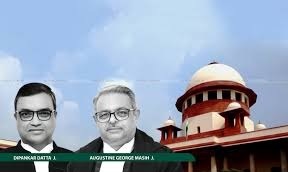
  • Recently, the country's top court delivered a landmark judgment granting bail to a Kashmiri-origin accused in a case allegedly related to narco-terrorism. The Supreme Court (SC) has unequivocally reiterated that the stringent provisions of the stringent security law, the Unlawful Activities (Prevention) Act (UAPA), cannot suppress citizens' fundamental right to life and personal liberty guaranteed by Article 21 of the Indian Constitution.
  • This judgment considers the landmark 2021 K.A. Najeeb case decision as paramount. This order has once again brought to the forefront the contradictory and divergent judicial perspectives that have emerged from time to time within the Supreme Court on issues of bail under anti-terrorism laws.
Legal Framework of the UAPA

Historical Background

  • This law was originally enacted in 1967 to curb unlawful activities and threats to the integrity and sovereignty of the country. Subsequently, through policy amendments, particularly in 2004, 2008, and 2019, it has evolved into India's most prominent anti-terrorism law.

Key Provisions of the Act

  • Central agencies are empowered to declare any organization or individual as a terrorist.
  • Grants unlimited and special powers to the National Investigation Agency (NIA).
  • Option to extend the period of judicial custody of an accused without filing a chargesheet.
  • Making bail conditions significantly more stringent than under normal legal procedures.
  • Permits attachment/confiscation of assets acquired through or used in terrorist acts.

Legal Complexities Relating to Bail (Section 43(D)(5))

  • Section 43(D)(5) of the UAPA makes the chances of an accused securing bail virtually nil. Under this, even if the public prosecutor presents prima facie evidence against the accused, the court cannot grant bail even if it wishes to.
  • This provision reverses the principle of innocence until proven guilty in normal criminal law and places the burden of proving oneself innocent largely on the accused.

Practical Challenges

  • When considering a bail application, courts are forced to rely solely on the documents submitted by the investigating agency.
  • At this stage, there is little scope for a thorough evaluation of the defense's evidence.
  • As a result, undertrials often languish in prison for years before conviction is confirmed.

Supreme Court's View on Bail Questions Conflicting Precedents

Watali Case (2019) – Strengthening State and Investigative Agencies

  • Judicial Position : In this case, the Supreme Court held that courts should broadly accept the prosecution's arguments and documents during bail hearings. A thorough judicial scrutiny of the evidence is not required at this stage; only a superficial prima facie assessment is sufficient.
  • Consequences : Following this decision, bail in UAPA cases became virtually impossible, the jail term of undertrials increased significantly, and the scope for judicial intervention on the claims of investigating agencies was limited.

K.A. Najeeb Case (2021) – Restoration of Fundamental Rights

In this landmark decision, the Court clearly confined the powers of the state within constitutional limits, stating that :

  • Even if a law contains specific restrictions, constitutional courts (High Courts and Supreme Courts) can grant bail to protect citizens' rights.
  • Excessive and Unreasonable delay is a direct violation of Article 21.
  • The mere inclusion of UAPA sections in a case cannot indefinitely restrict a person's civil liberties.

Indeed, this decision struck a balance between national security and individual rights. The current order has reaffirmed that the Najeeb case remains valid and binding law even today.

Decisions that differ from the principles of the Najeeb case decision

  • Gurvinder Singh v. State of Punjab (2024) : In this case, the court held that bail cannot be sought mechanically based solely on the delay in the trial. According to the court, the stringent criteria under Section 43(D)(5) of the UAPA must be met for bail.
  • January 2026 example : In January of this year, the Supreme Court, in a case related to the Northeast Delhi violence, held that the accused cannot be granted relief merely because of the snail's pace of the trial. They can be granted bail because they have not exceeded the constitutional limit of delay that entitles them to bail.

Far-reaching relevance of the recent judicial order

  • This decision once again raises the most sensitive question in Indian jurisprudence: can stringent laws enacted for the security of the state forever override the right to life and dignity guaranteed by Article 21?
  • The Supreme Court has made it clear that keeping citizens in jail for endless periods without a court decision amounts to punishment in disguise, which cannot be permitted in a democracy. The legal provisions of Section 43-D(5) will always remain subject to the constitutional mandate of Article 21.
  • However, this Supreme Court decision also draws attention to the following important points :
    • Lack of uniformity in court decisions on bail under terrorism-related laws (judicial instability).
    • Conflict between the protection of national sovereignty and the protection of civil rights.
    • Urgent need for a larger Constitutional Bench to formulate a consistent and clear principle (Doctrinal Clarity) on this issue.
  • Special Observations of the Court: The country's top court has expressed serious disagreements and reservations on several legal aspects of its own earlier decision of January 2026, denying relief to former JNU student activist Umar Khalid in the Delhi riots case, which also restricted his right to file a bail plea for almost a year.

Corrective Steps to Address Judicial Contradictions (Way Ahead)

  • Constitutional Bench Intervention : A larger bench should clearly define the legal priority between Article 21 and Section 43(D)(5) and the extent to which courts can examine evidence when granting bail.
  • Trial Timelines : Special courts hearing UAPA cases should be held accountable to ensure speedy trials and prevent indefinite languishment of undertrials.
  • Establish Uniform Guidelines : The Supreme Court should issue uniform guidelines for all courts in the country, addressing prison terms, the criteria for the reliability of evidence, and the balance between constitutional guarantees.
  • Adherence to judicial discipline : The stability of the law requires that smaller benches must strictly follow the precedents established by senior benches until an earlier decision is referred to a larger bench for reconsideration.
  • Review by the legislature : The country's Parliament should periodically review laws like the UAPA to prevent its political or administrative misuse, to make detention provisions proportional, and to ensure accountability of investigating agencies.

Conclusion

The current legal debate touches upon fundamental questions of our constitutional fabric :

  • Is bail a general rule and the eternal principle of the jail exception relevant even after the enactment of special laws for national security?
  • Can it be considered justifiable in a mature constitutional democracy to keep a citizen behind bars for years without conviction?
  • How should the country's judiciary draw the fine line between the broader interests of collective security and the fundamental freedoms of the individual?

However, the future of India's criminal justice system and our democratic rights depends on the logical resolution of these unanswered questions. To uphold the spirit of the rule of law in a democratic republic, a balanced approach is required, where national security remains intact and the constitutional rights of citizens are protected.

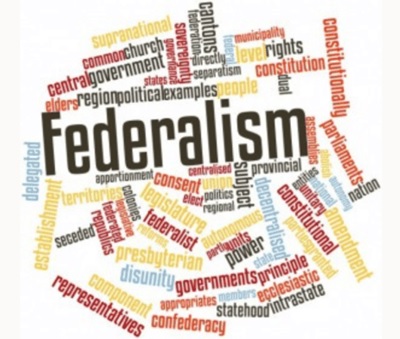
India’s Federalism Challenges and the Need for Consensus Building

  • Federalism has remained one of the most important foundations of India’s political system and nation-building process since Independence because it provides a constitutional framework through which powers, responsibilities and resources are shared between the Union government and the states while maintaining national unity amid immense social, linguistic, cultural and regional diversity. However, the evolution of Indian federalism has never been smooth or fixed, and it has continuously evolved through political debates, constitutional adjustments and institutional changes.
  • The recent debates surrounding the defeated Constitutional Amendment Bill have once again revived discussions regarding the nature and future of Indian federalism. Nevertheless, such disagreements are not new because federalism in India has always remained a “work in progress”, shaped by changing demographic trends, economic transformations and political developments.
  • Since Independence, several issues have repeatedly generated tensions between the Centre and the states, including the centralising turn adopted in the Constitution after Partition, disputes relating to fiscal federalism and resource distribution, the centralising role of the Planning Commission, the misuse of Article 356 and imposition of President’s Rule, allegations regarding the partisan functioning of Governors, language-related conflicts, delimitation concerns and debates over the allocation of parliamentary seats.
  • The article identifies two immediate (proximate) challenges and two deeper structural causes affecting India’s federal framework and argues that only democratic consultation, accommodation, compromise and consensus-building can ensure long-term stability.

I. Proximate Challenges of Indian Federalism

1. Rising Democratic Deficit

  • One of the most immediate challenges confronting Indian federalism is the growing democratic deficit resulting from demographic changes and the continued freezing of parliamentary seat distribution. In any democratic system, the principle of equal citizenship requires that every citizen’s vote should carry equal value and representation should periodically adjust according to population changes so that political equality is preserved.
  • However, India froze the allocation of parliamentary seats on the basis of the 1971 Census through Constitutional amendments enacted in 1976 and later extended in 2002, ensuring that seat distribution would remain unchanged until the first Census conducted after 2026. Although this decision was originally intended to avoid penalising states that successfully controlled population growth, over time it has produced major imbalances in political representation.
  • Population growth trends across India have significantly diverged during the last few decades. Southern states such as Andhra Pradesh, Kerala, Tamil Nadu and Telangana achieved substantial success in reducing fertility rates and many of them have already reached or gone below replacement fertility levels. In contrast, states belonging to the Hindi heartland such as Bihar, Uttar Pradesh, Rajasthan and Madhya Pradesh continued to experience comparatively higher population growth.
  • As a consequence, if parliamentary seats for the 2024 elections had been allocated according to current population estimates rather than the 1971 base, the four southern states would collectively have lost approximately 23 seats, whereas the four northern states would have gained around 31 additional seats. Therefore, a widening gap has emerged between population share and parliamentary representation, creating a growing democratic imbalance.
  • Regional demographic trends further reveal that while the population share of southern India has gradually declined and that of the Hindi heartland has increased, the western and northern regions have largely maintained stable shares. Thus, demographic divergence has transformed into a major political issue with significant implications for future delimitation exercises and Centre–State relations.

2. Rising Fiscal Transfers and Redistribution Pressures

  • Another major challenge affecting Indian federalism is the sharp rise in fiscal redistribution between economically stronger and weaker states. In theory, fiscal federalism implies that states generate and receive resources broadly according to their economic contribution and performance. However, in practice, some level of redistribution remains necessary because it ensures that all citizens, irrespective of their state of residence, enjoy comparable access to public goods, welfare schemes and developmental opportunities.
  • Such redistributive transfers have historically played a crucial role in India’s nation-building process by reducing regional inequalities. Nevertheless, redistribution that continuously expands without corresponding convergence in development outcomes may create resentment among states contributing larger shares to the national economy.
  • During the early 1960s, differences between contributing and receiving states remained relatively limited. At that time, the Hindi heartland states received around 20 percent more resources relative to their economic contribution, whereas southern and western states received approximately 20 percent less.
  • However, economic divergence and increasingly redistributive policies have widened this gap substantially over time. By 2023, the Hindi heartland states were receiving nearly 90 percent more Finance Commission resources relative to their contribution, while the South received approximately 44 percent less and the West about 58 percent less than their economic share.
  • Interestingly, the largest contributing states are not the southern states alone. Major contributors include Gujarat, Maharashtra and Haryana, while important beneficiaries include Odisha and West Bengal.
  • This widening fiscal gap has strengthened perceptions among economically advanced states that they are being penalised for their demographic success and economic performance, while less developed states appear to benefit from slower progress.

II. Deeper Structural Causes Behind Federal Challenges

1. Divergent Demographic and Economic Performance

  • The immediate challenges discussed above are ultimately manifestations of a deeper structural issue—namely, the sharply divergent performance of Indian states in both demographic and economic terms.
  • Southern and western states have experienced significant success in controlling population growth through better education, healthcare, women’s empowerment and social development policies. At the same time, these regions have also achieved rapid economic growth and improved standards of living.
  • Since the 1980s, per-capita GDP growth in southern states, western states and Haryana has progressed at a pace comparable to long-term growth experiences observed in countries such as China. Consequently, these regions have gradually moved ahead of the Hindi heartland states and even states such as West Bengal.
  • This divergence creates serious challenges for federalism because the issues involved are politically sensitive and directly connected to representation, fiscal redistribution and resource allocation. States that perform better economically increasingly perceive that their success results in reduced representation and higher transfer burdens, while states lagging behind continue to receive larger benefits.
  • As a result, debates over federalism are increasingly influenced by concerns that over-performance is being penalised while under-performance is rewarded, thereby intensifying regional dissatisfaction.

2. Erosion of Democratic Sensibility

  • According to the article, perhaps the most significant and worrying factor aggravating India’s federal challenges is the gradual erosion of democratic sensibility and cooperative political culture.
  • The authors argue that Indian politics has increasingly shifted from consensual competition toward confrontational and polarised politics in which political opponents are often viewed not merely as rivals but as adversaries to be defeated.
  • Several major policy initiatives are cited to illustrate concerns regarding unilateral decision-making, including demonetisation, farm laws, Citizenship Amendment Act, 2019, the replacement of the Indian Penal Code by Bharatiya Nyaya Sanhita, electoral revision exercises and recent constitutional initiatives.
  • The criticism presented is that many such decisions involved limited consultation, reduced accommodation and insufficient compromise with states and opposition stakeholders.
  • Consequently, cooperative federalism—the essential foundation of Indian nation-building—is gradually transforming into contentious and, at times, combative federalism. This transformation has contributed to grievances in regions such as Jammu and Kashmir, Ladakh, Manipur, the southern states and among religious minorities.
  • The greatest casualty of this process has been the erosion of trust—trust among citizens themselves, trust between governments and citizens, trust between the Centre and states and trust among states.

III. Democratic Sensibility: The GST Council Example

  • The article presents an important example to illustrate how democratic sensibility and consensus-building can strengthen federalism.
  • Around 2018, during deliberations within the GST Council regarding taxation on gambling activities, T. M. Thomas Isaac, then Finance Minister of Kerala, found himself isolated because his state opposed the prevailing consensus. Feeling that Kerala stood alone against the Centre and the remaining states, he reportedly offered to leave the meeting.
  • At that stage, the majority could easily have proceeded because the numerical balance stood in favour of the proposal. Nevertheless, the then Union Finance Minister Arun Jaitley chose not to impose the majority view. Instead, he persuaded Kerala to remain engaged and worked toward accommodating its concerns while preserving consensus among all participating states.
  • As a result, unanimity was maintained and cooperative federalism prevailed. The incident demonstrates that democratic leadership involves consultation, accommodation, patience and compromise rather than simple majoritarianism.

IV. Way Forward: Consensus Building as the Path Ahead

  • Various proposals have recently emerged to address the growing challenges of Indian federalism, including demands for new federal compacts, revised fiscal transfer mechanisms, modified voting principles and alternative institutional arrangements.
  • However, the article argues that institutional reforms alone cannot resolve these challenges unless accompanied by democratic sensibility.
  • The Union government, owing to its greater constitutional authority and political influence, must take the lead in rebuilding cooperative federalism through wider consultation with states before introducing major reforms.
  • Accommodation of regional concerns must become an essential element of governance so that demographic and economic differences do not evolve into political conflicts.
  • Compromise and self-restraint should replace winner-takes-all approaches because sustainable federalism depends not merely on constitutional provisions but also on political culture.
  • Most importantly, rebuilding trust between citizens, states and the Union government must become a national priority.

Conclusion

India’s federal challenges arise not merely from demographic changes and fiscal imbalances but from deeper structural divergences in development and the gradual weakening of democratic consensus-building mechanisms.

As the stronger partner within the federal framework, the Union government carries greater responsibility for preserving cooperative federalism through consultation, accommodation, compromise and institutional sensitivity.

Ultimately, democratic sensibility prevents power from becoming domination and ensures that diversity strengthens rather than weakens the Indian Union.

Why India’s Courts Are Slow: The Need for Court Managers

Introduction

  • Judicial delays in India have emerged as one of the most serious challenges confronting the country’s legal system because delayed justice not only affects litigants individually but also creates wider economic and social consequences across society.
  • Court delays lead to financial resources remaining locked for long periods, increase the cost of doing business, discourage domestic and foreign investment, and place sustained pressure on public institutions and government resources. Various estimates indicate that the economic impact of judicial delays may amount to nearly 1.5–2 percent of India’s Gross Domestic Product (GDP).
  • With more than 5 crore pending cases across India’s legal system, the scale of the problem has become undeniable and continues to worsen over time. 
  • This situation has revived discussions regarding structural reforms, particularly the need to professionalise court administration through the appointment of court managers.

Judicial Delays in India: A Growing Challenge

  • Delays in Indian courts are caused by a combination of several interrelated factors that affect how cases enter the judicial system, how they are processed within courts, and how institutions supporting the judiciary function. Numerous studies have identified multiple causes behind rising pendency and slow disposal rates.
  • The important causes include poorly framed laws, shortage of judges and supporting staff, inadequate infrastructure facilities, inefficient court procedures, growing litigation, and administrative burdens placed upon judges.
  • Among all these factors, one of the most persistent yet often overlooked issues is the absence of professional administrative support within courts. Courts are no longer merely institutions for dispute resolution; rather, they function as large and complex organisations requiring effective management systems. However, a substantial portion of administrative responsibilities continues to remain with judges themselves.

Administrative Responsibilities Reduce Judicial Efficiency

  • Judges in India perform not only judicial functions but also various administrative responsibilities that consume a considerable amount of their time and energy. Apart from hearing and deciding cases, judges are often required to oversee case management, supervise court staff, monitor infrastructure facilities, coordinate administrative work, and review institutional performance.
  • These responsibilities include management of case flow systems, human resources administration, infrastructure maintenance, staff supervision, performance evaluation mechanisms, and coordination with external agencies and state authorities.
  • As judges devote significant time to these non-judicial functions, less time remains available for adjudication, resulting in slower case disposal and increasing pendency. Professional administrative support can therefore help judges focus on their primary role of delivering justice while improving overall institutional efficiency.

Origin of the Court Manager Initiative

  • The concept of appointing court managers was formally introduced during the period of the 13th Finance Commission (2010–2015). Recognising that judges were increasingly burdened with administrative work, the Commission proposed the creation of a dedicated cadre of professionally trained court managers at both district courts and High Courts.
  • The Commission recommended appointing individuals possessing professional management qualifications, including MBA degrees, who could assist courts in administrative functions. To support implementation of the initiative, the Commission allocated ₹300 crore as a one-time grant for five years.
  • The underlying objective of the proposal was straightforward: judges should focus on deciding cases while court managers should handle administration.
  • Court managers were expected to undertake responsibilities such as case-flow management, human resource administration, infrastructure supervision, institutional planning, performance monitoring, and efficiency improvement measures.

Weak Implementation of the Court Manager Scheme

  • Despite the clear vision behind the initiative, implementation remained limited and uneven across the country. During the five-year grant period, only a small proportion of the allocated funds was actually utilised, with certain reports suggesting utilisation levels as low as 13 percent.
  • Only a few states, including Haryana, Tamil Nadu, Punjab, and Rajasthan, proceeded with appointing court managers, and even these appointments were largely contractual or temporary in nature.
  • By March 2015, when the period of the Finance Commission ended, only around 128 court manager positions had been filled across the entire country, reflecting the limited scale of implementation.
  • The situation deteriorated further after the conclusion of central financial support because responsibility for funding shifted to state governments and High Courts. In many states, absence of dedicated resources resulted in discontinuation of court manager positions altogether.

Reasons Behind the Failure of the Reform

  • The failure of the court manager initiative cannot be attributed solely to funding shortages because structural and institutional issues also contributed significantly.
  • Firstly, the scheme was never institutionalised as a permanent administrative cadre within the judicial system, making it dependent on temporary financial support and therefore vulnerable once central funding ended.
  • Secondly, institutional resistance emerged because many judges considered administrative responsibilities as an integral part of judicial functioning and were hesitant to transfer these duties to external professionals. Court managers were frequently viewed as outsiders by existing court staff, limiting their acceptance and effectiveness.
  • Thirdly, the initiative suffered from unclear role definitions because responsibilities, authority structures, and performance evaluation mechanisms for court managers were not adequately standardised.
  • Finally, there existed a mismatch between professional qualifications and institutional requirements because many appointees possessed general management expertise but lacked sufficient understanding of court procedures and judicial processes. Consequently, they often remained under-equipped to support judicial administration effectively.
  • These combined weaknesses prevented the reform from developing into a sustainable institutional framework.

Supreme Court’s Renewed Intervention

  • The Supreme Court of India has once again revived the issue of court managers and judicial administration reforms. The Court had earlier issued directions regarding appointment and functioning of court managers in August 2018, but implementation remained inadequate across states.
  • In May 2025, the Supreme Court expressed concern regarding the failure to comply with earlier directions and instructed all High Courts to frame or revise service rules relating to court managers within three months. The Court further directed state governments to approve these rules within the subsequent three months.
  • This intervention reflects renewed efforts to professionalise court administration and improve judicial efficiency through institutional reforms.

Importance of Court Managers in Judicial Reforms

  • The success of modern judicial reforms such as digitisation, technological integration, e-courts systems, and process automation will remain limited if judges continue to remain burdened with administrative work.
  • Creation of a permanent and professionally trained cadre of court managers can significantly improve judicial functioning by enhancing administrative efficiency, reducing case backlogs, improving disposal rates, strengthening implementation of technological reforms, and enabling judges to dedicate their time exclusively to adjudication.
  • A clear separation between judicial and administrative responsibilities can therefore become one of the most impactful reforms for improving India’s justice delivery system.

Conclusion

  • Judicial delays in India are not merely the outcome of rising case numbers but also reflect deep administrative challenges within the court system. Continued dependence on judges for managerial functions has reduced institutional efficiency and contributed to mounting pendency.
  • The establishment of a robust and permanent cadre of court managers, accompanied by a clear distinction between judicial and administrative functions, represents one of the most practical and high-impact reforms available to the Indian judiciary.
  • The Supreme Court of India has already provided the framework and implementation timeline; however, the ultimate success of this reform will depend upon whether states and High Courts can institutionalise these changes and transform court administration from an ad hoc arrangement into a professional management system.

SHE-MARTs: Strengthening Women-Led Rural Marketing Ecosystems through Self-Help Groups (SHGs)

Why in News ?

  • The Ministry of Rural Development (MoRD) has initiated a nationwide roadmap for SHE-MARTs (Self Help Entrepreneurs–Marketing Avenues for Rural Transformation) to create women-led rural marketing ecosystems aimed at strengthening women enterprises, increasing rural incomes, and expanding market access for Self-Help Groups (SHGs) across India.
  • The roadmap was discussed during a two-day National Consultation organised under the Deendayal Antyodaya Yojana – National Rural Livelihoods Mission in Bhubaneswar on 14–15 May 2026.

What is SHE-MART ?

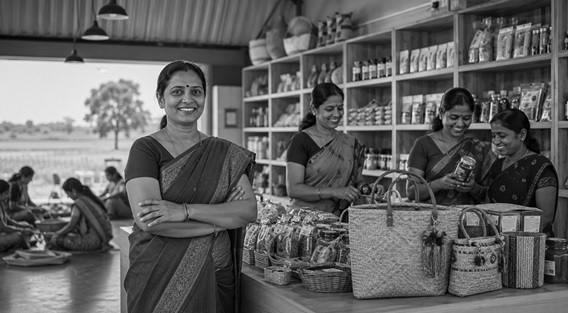
  • SHE-MART (Self Help Entrepreneurs–Marketing Avenues for Rural Transformation), announced in the Union Budget 2026–27, aims to empower women entrepreneurs by creating community-owned retail outlets and aggregation platforms within Cluster Level Federations (CLFs) of Self-Help Groups.
  • The initiative seeks to establish decentralised, professionally managed, community-owned and women-led enterprise ecosystems rather than subsidy-dependent retail outlets.
  • SHE-MARTs are intended to strengthen branding, aggregation, marketing, packaging, retailing and market access for products produced by women-led producer collectives and SHGs.

Objectives of SHE-MART Initiative

  • SHE-MART aims to strengthen women-led enterprises by creating sustainable market opportunities and improving business ecosystems for rural women entrepreneurs.
  • The initiative seeks to expand market access by promoting branding, aggregation, packaging, value addition and organised retail support for SHG products.
  • SHE-MART aims to enhance rural incomes by creating sustainable livelihood and enterprise opportunities for women producer groups and collectives.
  • The initiative also seeks to transform the focus of DAY-NRLM from livelihood promotion to enterprise-led rural market systems with stronger market integration.
  • SHE-MART will contribute towards the government’s target of creating three crore additional “Lakhpati Didis” by 2029.

National Consultation on SHE-MARTs: Major Discussions

  • The consultation witnessed participation from State Rural Livelihood Missions (SRLMs), National Bank for Agriculture and Rural Development, financial institutions, development practitioners, technology experts and ecosystem partners.
  • Discussions during the consultation focused on institutional frameworks, financing models, governance mechanisms, business processes, implementation strategies, monitoring systems and technology integration for operationalising SHE-MARTs.
  • Participants reviewed the draft operational framework and provided suggestions regarding implementation safeguards, retail management systems and community-led governance models.
  • The second day of discussions focused on human resource architecture, women leadership, technical designs, implementation strategies and capacity-building mechanisms.
  • A broad consensus emerged that SHE-MARTs should function as decentralised, professionally managed and community-owned enterprise ecosystems instead of subsidy-based retail structures.

Role of Self-Help Groups (SHGs) in Women Empowerment

Financial Inclusion

  • Self-Help Groups promote financial inclusion by encouraging savings habits among rural women and facilitating access to institutional credit, insurance services and digital banking systems.
  • SHGs have significantly improved the participation of rural women in formal financial institutions and reduced dependence on informal money lenders.
  • Example : The Bank Sakhi Programme trains SHG women to work as banking correspondents and provide banking services in rural areas.

Entrepreneurship Development

  • Self-Help Groups promote women entrepreneurship through skill development programmes, market linkages, enterprise support systems and collective production networks.
  • SHGs enable women to establish micro-enterprises and participate actively in local economic activities.
  • Example : Mahila Arthik Vikas Mahamandal provides entrepreneurship skills and livelihood opportunities to women.

Political Empowerment

  • Self-Help Groups strengthen women’s leadership capabilities and increase their participation in decision-making processes, governance institutions and political activities.

  • Participation in SHGs improves confidence levels and encourages women to engage in community leadership roles.

  • Example: Self Employed Women's Association represents women workers of the informal sector and promotes women empowerment.

Poverty Alleviation and Rural Development

  • Self-Help Groups strengthen livelihood security by creating income opportunities, reducing dependence on money lenders and promoting inclusive rural development.
  • SHGs contribute significantly towards poverty reduction and sustainable development in rural areas.
  • Example : Kudumbashree is a successful model of women-led poverty eradication and local governance.

Social Reform and Gender Equality

  • Self-Help Groups promote social awareness and collective action against social evils such as child marriage, dowry, alcoholism and gender discrimination.
  • SHGs have emerged as important institutions for promoting social empowerment, gender equality and community development.

Major Government Initiatives Supporting Women SHGs

Deendayal Antyodaya Yojana – National Rural Livelihoods Mission (DAY-NRLM)

  • DAY-NRLM is a centrally sponsored programme that has mobilised more than 10.05 crore women into nearly 90.90 lakh Self-Help Groups to promote financial inclusion, livelihood enhancement and women empowerment.
  • The mission focuses on institution building, financial access and sustainable livelihood opportunities for rural women.

Lakhpati Didi Initiative

  • The Lakhpati Didi Initiative operates under DAY-NRLM and aims to ensure that women associated with Self-Help Groups earn a minimum annual income of ₹1 lakh through enterprise development and livelihood diversification.
  • The initiative promotes skill development, value addition, entrepreneurship and market integration.

Self Help Group – Bank Linkage Programme (SHG-BLP)

  • The Self Help Group – Bank Linkage Programme connects SHGs with formal banking institutions to improve access to institutional credit and strengthen financial inclusion among rural women.
  • The programme has played an important role in expanding rural credit access.

SARAS Mela

  • SARAS Mela provides marketing platforms for SHG products by facilitating exhibitions, branding support, direct market access and promotional opportunities.
  • It enables women entrepreneurs to connect with wider consumer markets.

Challenges Before SHE-MARTs

  • SHE-MARTs require professional retail management systems while simultaneously preserving community ownership and women-led governance structures.
  • The initiative will require strong capacity-building mechanisms, technology integration, sustainable financing systems and efficient market linkages.
  • There is also a need to strengthen branding, packaging, aggregation and value addition systems to ensure long-term sustainability of women-led enterprises.
« »
  • SUN
  • MON
  • TUE
  • WED
  • THU
  • FRI
  • SAT
Have any Query?

Our support team will be happy to assist you!

OR