New
GS Foundation (P+M) - Delhi : 19th Jan. 2026, 11:30 AM Republic Day offer UPTO 75% + 10% Off, Valid Till : 28th Jan., 2026 GS Foundation (P+M) - Prayagraj : 09th Jan. 2026, 11:00 AM Republic Day offer UPTO 75% + 10% Off, Valid Till : 28th Jan., 2026 GS Foundation (P+M) - Delhi : 19th Jan. 2026, 11:30 AM GS Foundation (P+M) - Prayagraj : 09th Jan. 2026, 11:00 AM

Current Affairs for 21 January 2026

ECOSOC at 80: United Nations’ Central Platform for Global Development Coordination

Prelims: (International Relations + CA)
Mains: (GS 2 – International Relations, Global Governance, Multilateral Institutions, Sustainable Development)

Why in News ?

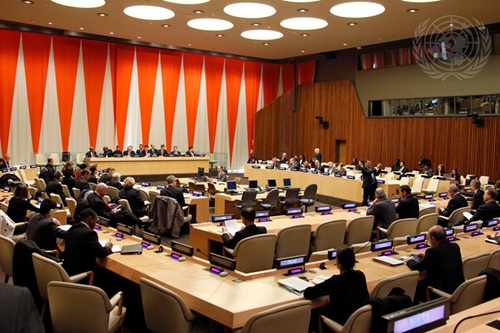
The United Nations Economic and Social Council (ECOSOC) will commemorate its 80th anniversary with a special event on 23 January 2026, marking eight decades of its role as the UN’s principal body for coordinating global economic, social, humanitarian, and development cooperation.

The milestone comes at a time when multilateral institutions are under renewed scrutiny amid global challenges such as climate change, inequality, pandemics, debt distress, and sustainable development financing.

The commemoration is expected to reflect on ECOSOC’s historical contributions, assess its contemporary relevance, and outline reforms and priorities for strengthening global governance.
Background: Establishment and Constitutional Mandate

ECOSOC was established in 1945 under the Charter of the United Nations as one of the six principal organs of the UN.

It was designed to serve as the UN’s central mechanism for promoting higher standards of living, full employment, economic and social progress, and solutions to international economic, social, health, and cultural problems.

Over the decades, ECOSOC has evolved into the primary platform linking UN policy-making with implementation across development, humanitarian assistance, and human rights agendas.

Composition and Institutional Structure

Membership

  • ECOSOC consists of 54 member states.
  • Members are elected by the UN General Assembly for three-year terms.
  • Elections are conducted on a rotational basis, ensuring geographical representation.

Decision-Making and Leadership

  • Decisions are taken by a simple majority vote.
  • The Presidency rotates annually among member states.
  • ECOSOC meets in both regular sessions and high-level segments, including ministerial-level meetings.

Headquarters

  • ECOSOC is headquartered in New York, USA, at UN Headquarters.

Core Functions and Responsibilities

1. Coordination of UN System Activities

ECOSOC coordinates the work of:

  • 14 specialised agencies (e.g., WHO, ILO, FAO, UNESCO),

  • 5 regional commissions, and

  • 8 functional commissions dealing with areas such as human rights, women, population, narcotic drugs, crime prevention, science and technology, and social development.

This coordination function ensures policy coherence across the UN development and humanitarian architecture.

2. Policy Formulation and Recommendations

ECOSOC formulates policy recommendations to:

  • UN member states, and

  • The broader UN system.

These recommendations shape global agendas on poverty eradication, social inclusion, economic growth, gender equality, health, education, and sustainable development.

3. Global Forum for Economic and Social Dialogue

ECOSOC serves as the UN’s central forum for discussing international economic and social issues.

It convenes:

  • Governments,
  • UN agencies,
  • Civil society,
  • Private sector actors, and
  • Academic institutions

to foster multi-stakeholder dialogue and partnerships.

4. Advancing the Sustainable Development Goals (SDGs)

Since the adoption of the 2030 Agenda for Sustainable Development, ECOSOC has played a pivotal role in:

  • Monitoring SDG implementation,
  • Facilitating global follow-up and review, and
  • Hosting the High-Level Political Forum (HLPF), the main UN platform for reviewing progress on the SDGs.

ECOSOC’s Role in Global Governance and Multilateralism

ECOSOC stands at the intersection of:

  • Development finance,
  • Humanitarian response,
  • Social policy,
  • Environmental sustainability, and
  • Human rights.

It has historically contributed to:

  • Institutionalising development cooperation,
  • Mainstreaming human rights into development planning,
  • Promoting international labour standards, and
  • Strengthening health, education, and social protection systems globally.

In an era of complex global challenges, ECOSOC’s convening power and coordinating mandate are increasingly vital for ensuring collective action and multilateral solutions.

Significance of the 80th Anniversary

The 80th anniversary is significant because:

  • It marks eight decades of institutional continuity in global socio-economic governance.
  • It provides an opportunity to assess ECOSOC’s effectiveness, relevance, and reform needs.
  • It reinforces the importance of multilateralism, especially amid geopolitical fragmentation and global crises.
  • It highlights ECOSOC’s central role in implementing the 2030 Agenda, mobilising resources, and fostering partnerships.

The commemorative event is expected to emphasise renewal, innovation, and enhanced coordination within the UN system to meet contemporary global challenges.

FAQs

What is ECOSOC ?

ECOSOC is one of the six principal organs of the United Nations, responsible for coordinating economic, social, humanitarian, and development activities across the UN system.

Why is ECOSOC’s 80th anniversary significant ?

It marks eight decades of global development coordination and provides an opportunity to assess its role, relevance, and future reforms.

How many members does ECOSOC have ?

ECOSOC has 54 member states elected by the UN General Assembly for three-year terms.

What is ECOSOC’s role in the SDGs ?

ECOSOC oversees global follow-up and review of the SDGs and hosts the High-Level Political Forum.

Where is ECOSOC headquartered ?

ECOSOC is headquartered in New York, USA, at the UN Headquarters.

India and Pax Silica: Aligning with a New Global Technology Security Framework

Prelims: (International Relations + CA)
Mains: (GS 2 – Global Governance, Strategic Partnerships; GS 3 – Technology, Industrial Policy, Supply Chains, Strategic Resources)

Why in News ?

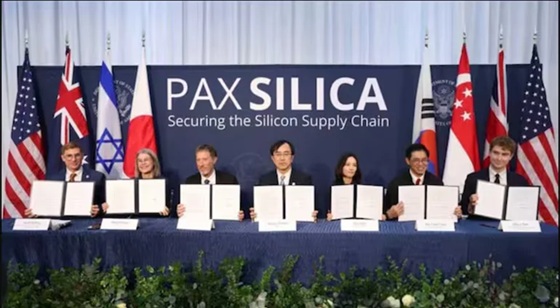
India is likely to be invited to join the U.S.-led Pax Silica initiative, a multilateral framework aimed at securing global supply chains of semiconductors, artificial intelligence (AI), and critical minerals.

The development reflects growing international efforts to reduce strategic vulnerabilities arising from over-concentration of key technology inputs and to build resilient, trusted, and diversified technology ecosystems. India’s potential participation marks a significant step in its integration into emerging global technology governance structures.
Background: Understanding Pax Silica

Pax Silica is a multilateral initiative launched by the United States in December 2025 to promote a stable, secure, and cooperative global technology order.

  • The term “Pax” signifies peace and stability.
  • “Silica” symbolises silicon-based semiconductor technologies, which underpin modern digital economies.

The Pax Silica Declaration outlines three core objectives:

  1. Reducing coercive economic dependencies,
  2. Ensuring secure global technology and AI supply chains, and
  3. Building trusted digital infrastructure.

The initiative reflects concerns that excessive reliance on a single country for critical technologies exposes economies to geopolitical coercion, supply shocks, and strategic vulnerability.

Global Context Behind Pax Silica

The contemporary global economy is increasingly shaped by:

  • Semiconductors,
  • Artificial intelligence,
  • Digital infrastructure, and
  • Rare earth elements (REEs).

These technologies now form the backbone of economic growth, military capability, and national security. However, supply chains for critical minerals and advanced manufacturing remain highly concentrated, particularly:

  • China’s dominance in rare earth mining, processing, and magnet production.
  • China’s use of export controls and restrictions during geopolitical disputes, including tariff tensions with the United States.
  • India has also experienced disruptions in rare-earth magnet supplies, affecting its automobile and electronics sectors.

The COVID-19 pandemic further exposed the fragility of global supply chains, accelerating efforts by major economies to pursue diversification, resilience, and strategic autonomy in critical technology sectors.

Key Members of Pax Silica

Pax Silica brings together technologically advanced and resource-rich countries, combining manufacturing capacity, mineral resources, financial capital, and innovation ecosystems.

Core Participants

  • United States & Japan: Technology leadership and innovation.
  • Netherlands: Advanced lithography technologies.
  • South Korea: Memory chip manufacturing and semiconductor fabrication.
  • Singapore: Semiconductor fabrication and logistics hubs.
  • Australia: Major exporter of lithium and rare earth elements.
  • Israel: AI software, defence technologies, and cybersecurity.
  • United Kingdom: One of the world’s largest AI markets.
  • Qatar & UAE: Financial strength via sovereign wealth funds.

Observers

  • Canada, European Union, OECD, and Taiwan currently participate as observers, indicating broad international interest.

India’s Strategic Relevance

India is not yet a formal member but is expected to be invited soon due to its growing strategic and technological importance.

Key Strengths of India

  • One of the world’s most robust digital public infrastructures (e.g., Aadhaar, UPI).
  • A rapidly expanding AI market and large pool of skilled technology professionals.
  • Government initiatives such as:
    • The India Semiconductor Mission, and
    • National AI strategies backed by substantial public investment.
  • Major investments by:
    • Indian firms like the Tata Group, and
    • Global companies such as Micron, signalling confidence in India’s semiconductor ecosystem.
  • The return of skilled Indian professionals trained abroad strengthens domestic innovation capacity.

Together, these factors position India as a credible and valuable partner in Pax Silica-aligned technology ecosystems.

Existing Supply Chain Initiatives Involving India

India has already taken concrete steps to enhance supply chain resilience through multilateral partnerships:

  • Supply Chain Resilience Initiative (2021) with Australia and Japan.
  • Quad Critical Minerals Initiative, aimed at securing emerging technology supply chains.
  • Bilateral and multilateral collaborations with:
    • Japan, Singapore, and Israel in semiconductor manufacturing and innovation.

These engagements demonstrate India’s alignment with the broader objectives of Pax Silica and its readiness for deeper integration.

Challenges for India in Joining Pax Silica

Despite strategic advantages, India’s potential membership raises several challenges:

1. Strategic Positioning

  • Pax Silica members are largely high-income U.S. allies.
  • India would be the first major developing country and non-ally strategic partner, potentially creating expectation gaps in policy alignment and strategic commitments.

2. Strategic Autonomy

  • India traditionally prioritises strategic autonomy and may resist frameworks that constrain independent foreign or economic policy choices.

3. Industrial Policy Constraints

  • India seeks to protect and nurture its nascent semiconductor and AI industries through:
    • Subsidies,
    • Procurement preferences,
    • Calibrated import controls.
  • These policies may not fully align with the prevailing U.S. policy environment, which often emphasises open markets and competition.

Balancing domestic industrial development with international commitments will therefore be a key challenge.

Strategic Implications and the Road Ahead

The emergence of Pax Silica signals the likely formation of two parallel global technology supply chains:

  • One centred around China, and
  • Another anchored by Pax Silica countries.

Given India’s:

  • Long-standing technological collaboration with Western economies, and
  • Recent supply disruptions from China,

Aligning with Pax Silica appears strategically advantageous. However, India is expected to proceed cautiously, engaging in sustained dialogue to ensure that participation:

  • Strengthens domestic technological and industrial capabilities,
  • Enhances supply chain resilience, and
  • Does not compromise strategic autonomy or developmental priorities.

India’s eventual approach is likely to combine selective alignment with continued policy independence, reflecting its broader foreign policy doctrine.

FAQs

What is Pax Silica ?

Pax Silica is a U.S.-led multilateral initiative launched in December 2025 to secure global supply chains of semiconductors, AI, and critical minerals.

Why was Pax Silica created ?

It aims to reduce coercive economic dependencies, ensure secure technology supply chains, and build trusted digital infrastructure amid growing geopolitical risks.

Why is India strategically important to Pax Silica ?

India offers a large technology workforce, strong digital infrastructure, growing semiconductor investments, and expanding AI capabilities.

What challenges might India face in joining Pax Silica ?

Balancing strategic autonomy, aligning industrial policies, and managing expectations as a developing, non-ally partner pose key challenges.

What is the broader significance of Pax Silica for global governance ?

It signals the emergence of parallel technology ecosystems and reflects the increasing securitisation of critical technology supply chains

Environmental Penalty Fund Rules: Channelising Fines into Ecological Restoration

Prelims: (Environment & Ecology + CA)
Mains: (GS 3 – Environment, Climate Change, Environmental Regulation, Institutional Frameworks)

Why in the News ?

The Union government has notified detailed rules governing the utilisation of the Environmental (Protection) Fund, created from penalties imposed under key environmental laws.

The rules aim to ensure that monetary penalties collected for environmental violations are systematically channelled into environmental restoration, pollution control, and sustainability-related initiatives.

Background of the Environmental (Protection) Fund

The Environmental (Protection) Fund has been created to ensure that penalties imposed for violations of environmental laws are reinvested into environmental protection and restoration.

Its legal foundation lies in the Jan Vishwas Act, 2023, which decriminalised several minor environmental offences while retaining monetary penalties to ensure continued regulatory compliance.

The fund draws resources from penalties levied under major environmental legislations, including:

  • The Environment (Protection) Act, 1986
  • Laws governing air pollution
  • Laws governing water pollution

The newly notified rules provide clarity on how this fund will be credited, administered, audited, and utilised, addressing long-standing concerns regarding the effective deployment of environmental penalties.

Objectives of the Environmental (Protection) Fund

The primary objective of the fund is to transform regulatory penalties into tangible environmental outcomes. The rules seek to:

  • Strengthen pollution prevention, control, and mitigation mechanisms
  • Support remediation of contaminated and degraded environmental sites
  • Promote research, innovation, and adoption of clean and green technologies
  • Enhance the institutional capacity of environmental regulatory bodies

This framework operationalises the “polluter pays” principle, ensuring that environmental harm leads to corrective and restorative action rather than remaining purely punitive.

Permitted Areas of Fund Utilisation

The notified rules specify 11 broad categories of activities eligible for funding. These include:

  • Prevention, control, and mitigation of air, water, and soil pollution
  • Remediation and restoration of contaminated and degraded environmental sites
  • Installation, operation, and maintenance of environmental monitoring equipment
  • Development of laboratory infrastructure for environmental testing and compliance
  • Capacity building of regulatory institutions and technical personnel
  • Research and innovation in clean technologies and sustainable practices
  • Development of IT-enabled systems for environmental monitoring and compliance

These provisions ensure that fund utilisation directly contributes to environmental quality enhancement and regulatory effectiveness rather than being diverted for unrelated purposes.

Administrative Structure and Fund Management

The rules establish a clear institutional framework for administering the fund:

  • The Union Ministry of Environment, Forest and Climate Change (MoEFCC) will be the primary authority, or it may notify another competent body for fund administration.
  • Dedicated Project Management Units (PMUs) will be created at both central and state levels to ensure coordinated implementation.
  • Penalties collected will be credited to the fund following a standardised procedure.
  • The Central Pollution Control Board (CPCB) will develop and maintain an online portal to manage fund-related processes.

This digital platform will serve as a common interface for coordination among central ministries, state governments, pollution control boards, and other stakeholders.

Distribution of Funds Between Centre and States

The rules introduce a transparent sharing mechanism:

  • 75% of the penalty amount collected will be transferred to the Consolidated Fund of the concerned State.
  • 25% will be retained by the Centre for national-level environmental initiatives.

This structure acknowledges that most environmental violations and remediation efforts are local, while also enabling the Centre to support large-scale or cross-cutting environmental projects.

Accountability and Audit Mechanisms

To strengthen transparency and public accountability:

  • The Comptroller and Auditor General of India (CAG) will periodically audit the Environmental (Protection) Fund.
  • The CPCB’s online portal will enable real-time monitoring of fund allocation, utilisation, and project outcomes.

These mechanisms aim to prevent misuse, underutilisation, or diversion of environmental penalty funds and enhance public trust in environmental governance.

Significance for Environmental Governance in India

The notification of these rules marks a major shift in India’s environmental regulatory approach:

  • Penalties are no longer treated merely as revenue but as instruments for environmental improvement.
  • The framework complements the decriminalisation approach under the Jan Vishwas Act by ensuring that monetary penalties serve a corrective and restorative purpose.
  • In a country facing persistent challenges related to pollution, waste management, and ecological degradation, the Environmental (Protection) Fund can become a critical financial tool to bridge regulatory gaps and advance sustainable development goals.

FAQs

1. What is the Environmental (Protection) Fund ?

It is a dedicated fund created from penalties imposed for violations of environmental laws, aimed at financing environmental restoration and pollution control.

2. Which law provided the legal basis for this fund ?

The fund is rooted in the Jan Vishwas Act, 2023, which decriminalised minor offences while retaining monetary penalties.

3. How is the fund distributed between the Centre and States ?

Seventy-five percent of the collected penalties go to the concerned State, while 25% is retained by the Centre.

4. What types of activities can the fund support ?

It can support pollution control, site remediation, environmental monitoring infrastructure, research, clean technologies, and capacity building.

5. Who audits the Environmental (Protection) Fund ?

The Comptroller and Auditor General of India (CAG) audits the fund to ensure transparency and accountability.

Kerala HC Clarifies Celebrity Endorser Liability in Consumer Disputes

Prelims: (Polity & Governance + CA)
Mains: (GS 2 – Governance, Judicial Accountability, Consumer Rights, Regulatory Frameworks)

Why in News ?

The Kerala High Court has set aside consumer proceedings against actor Mohanlal, holding that a brand ambassador cannot be held liable for a company’s alleged unfair trade practices unless there is a clear, direct link between the endorsement and the consumer’s transaction.

The ruling arose from complaints against Manappuram Finance, where borrowers claimed they were charged higher interest rates than advertised.

The court clarified the boundary between promotional activity and transactional responsibility, emphasising that mere appearance in advertisements does not create consumer liability for endorsers.

Background: The Gold Loan Dispute

  • The case arose from gold loans taken by two borrowers in Thiruvananthapuram. They had initially pledged gold with Catholic Syrian Bank at an interest rate of 15%.
  • In 2018, Manappuram Finance took over the loans after a bank manager allegedly promised a lower interest rate.
  • The borrowers claimed they were influenced by advertisements featuring actor Mohanlal, who was Manappuram Finance’s brand ambassador at the time.
  • They alleged that the advertised interest rate was lower than what was eventually charged.

Consumer Complaint and Claims

When the borrowers attempted to close the loan and retrieve their gold, Manappuram allegedly demanded a higher interest rate.

They approached the District Consumer Disputes Redressal Commission, alleging:

  • Deficiency in service, and
  • Unfair trade practices.

They sought a refund of excess interest and compensation of ₹25 lakh.

Mohanlal Made a Party to the Case

Along with Manappuram Finance and its manager, Mohanlal was named as an opposite party solely because of his appearance in the advertisements.

Mohanlal raised a preliminary objection, arguing that:

  • He had no role in the loan transaction,
  • He had no interaction with the borrowers, and
  • He had no control over interest rates or loan terms.

Consumer Fora’s Initial View

  • Mohanlal contended that being a brand ambassador did not make him a service provider.
  • However, relying on the definition of “endorsement” under the Consumer Protection Act, 2019, the District Commission rejected his objection and held the complaint maintainable.
  • The State Consumer Commission later declined to rule on this issue at the revision stage.

Legal Provisions on Endorsements Examined by the Court

  • The court examined Section 2(18) of the Consumer Protection Act, which gives a broad meaning to “endorsement”.
  • It covers any message or depiction that may lead consumers to believe that an advertisement reflects the opinion or experience of the person featured.
  • Similarly, Section 2(47) defines “unfair trade practice” widely, including false representations about price or quality.

Where Endorsers Are Specifically Mentioned

The term “endorser” appears explicitly only in Section 21 of the Act.

This provision deals with false or misleading advertisements and empowers the Central Consumer Protection Authority (CCPA) to impose penalties on manufacturers and endorsers, including:

  • Monetary fines, and
  • Temporary bans on endorsements.

Section 21(5) provides a safeguard for endorsers. It protects them from liability if they have exercised due diligence to verify the truthfulness of the claims made in the advertisement.

Limits of Endorser Liability in Consumer Disputes

Crucially, the Act does not refer to endorsers in provisions dealing with:

  • Consumer complaints on deficiency of service, or
  • Unfair trade practices before consumer commissions.

The Kerala High Court held that this omission was deliberate, noting that endorser liability is confined to proceedings under Section 21 alone.

Role of the 2022 Misleading Advertisement Guidelines

The court also considered the 2022 guidelines issued by the Central Consumer Protection Authority.

While these define endorsers and require due diligence, the court clarified that:

  • They operate within the scope of Section 21, and
  • Do not expand endorser liability to all consumer disputes.

What the Kerala High Court Held ?

The Kerala High Court noted that Mohanlal’s role was confined to appearing in advertisements as a brand ambassador.

No Direct Link to the Transaction

The court examined the consumer complaint to identify any direct connection between the actor and the borrowers’ gold loan transaction.

It found only two references to Mohanlal:

  • His status as brand ambassador, and
  • An assurance allegedly given by the company’s manager referring to advertisements featuring him.

This, the court held, was insufficient to establish liability.

Liability Cannot Be Presumed

The pleadings did not show that:

  • Mohanlal persuaded the borrowers,
  • Participated in the loan transaction, or
  • Made any assurance to them.
    • The assurance, as pleaded, came solely from the company’s manager.
    • Therefore, the court ruled that no liability for unfair trade practice or deficiency of service could be fixed on the actor.
    • The court clarified that merely falling within the definition of an “endorser” does not attract liability.
    • A direct and specific link between the endorser and the consumer transaction must be established to fasten responsibility.

Company, Not Endorser, Answerable

  • Even if advertisements formed part of the background facts, an unfair trade practice arises when the service provider fails to deliver what was advertised.
  • On the pleadings, that failure could only be attributed to Manappuram Finance, not the endorser.

FAQs

1. What did the Kerala High Court rule regarding celebrity endorsements ?

It held that celebrities cannot be held liable for consumer disputes unless there is a direct link between their endorsement and the consumer transaction.

2. Under which law was the case examined ?

The case was examined under the Consumer Protection Act, 2019.

3. Does the law allow penalties against endorsers at all ?

Yes, but only under Section 21 of the Act, in cases of false or misleading advertisements, subject to due diligence safeguards.

4. Why was Mohanlal absolved of liability ?

Because he had no role in the loan transaction, made no direct assurance to consumers, and had no control over loan terms.

5. What is the broader impact of this ruling ?

It clarifies the legal boundaries of celebrity liability and protects endorsers from being unfairly dragged into consumer disputes without direct involvement.

What is Guillain-Barré Syndrome (GBS)? Causes, Symptoms, Treatment and Precautions

  • Recently, several cases of Guillain-Barré Syndrome (GBS) have been reported in Mansa town of Neemuch district, Madhya Pradesh.
  • The death of two patients has raised concern among the health department and the general public.
  • Although GBS is a rare disease, it can become life-threatening if not diagnosed and treated on time.


What is Guillain-Barré Syndrome ?

  • Guillain-Barré Syndrome is a rare autoimmune neurological disorder.
  • In this condition, the body’s immune system mistakenly attacks the peripheral nervous system.

The peripheral nervous system:

  • Connects the brain and spinal cord to the rest of the body
  • Controls muscle movement
  • Transmits sensations such as pain, temperature, and touch
  • When these nerves are damaged, symptoms like weakness, numbness, and paralysis may develop.
  • Medically, GBS is also called Acute Inflammatory Demyelinating Polyneuropathy (AIDP).
  •  It can occur at any age but is more commonly seen in people between 30–50 years.

Causes of Guillain-Barré Syndrome

The exact cause is not fully known, but GBS often occurs after:

  • Viral infections (flu, dengue, COVID-19, gastrointestinal infections)
  • Bacterial infections
  • Vaccination (very rare cases)
  • Major surgery or serious illness
  • In these situations, the immune system becomes overactive and mistakenly attacks the nerves.

Major Symptoms of GBS

Symptoms may develop slowly or progress very rapidly.

Early Symptoms

  • Mild fever or recent infection
  • Tingling or numbness in the legs
  • Feeling of weakness
  • Fatigue

Severe Symptoms

  • Paralysis spreading upward from the legs
  • Weakness in the arms
  • Difficulty walking
  • Trouble speaking or swallowing
  • Breathing difficulty
  • Weakness of facial muscles
  • Symptoms can worsen within hours, days, or weeks.
  • In some cases, patients may not be able to breathe independently and may require ICU care.

Can GBS Be Life-Threatening ?

Yes, if treatment is delayed, GBS can be fatal. However, with modern medical care, most patients recover.

The risk of death increases when:

  • Breathing muscles are affected
  • Severe infections occur
  • Heart rhythm becomes abnormal
  • Treatment is delayed

Treatment of Guillain-Barré Syndrome

There is no permanent cure, but treatment helps reduce severity and speed recovery.

Main Treatments

  • Intravenous Immunoglobulin (IVIG) therapy
  • Plasma Exchange (Plasmapheresis)
  • Physiotherapy and rehabilitation
  • Respiratory support (ventilator if needed)
  • Most patients start walking within 6 months.
  • Full recovery may take 1–2 years.
  • Some patients may have long-term weakness, fatigue, or numbness.

Prevention and Precautions

GBS cannot be completely prevented, but risk can be reduced:
  • Prevent infections (maintain hygiene, drink clean water, wash hands regularly)
  • If weakness appears after fever or infection, consult a doctor immediately
  • Avoid self-medication
  • Inform a doctor if any unusual symptoms appear after vaccination

Implementation of PESA Law in Jharkhand After 25 Years – Historic Revival of Tribal Self-Governance

  • The Jharkhand government has officially notified the Jharkhand PESA Rules, 2025.
  • With this, a 25-year long wait since the formation of the state has finally ended.
  • This step was taken following continuous judicial pressure from the Jharkhand High Court and long-standing demands of tribal organizations.
  • The decision formally grants legal recognition to tribal self-governance in Fifth Schedule areas, giving real powers to Gram Sabhas.

What is the PESA Act (Panchayats (Extension to Scheduled Areas) Act, 1996) ?

PESA is a Central law that extends the provisions of Part IX of the Constitution (Panchayati Raj) to Scheduled Tribal Areas.

Core objectives of PESA:

  • Make the Gram Sabha the supreme authority in local governance.
  • Protect tribal culture, traditions, land, and natural resources.
  • Ensure mandatory community consent in development decisions.

States where PESA is implemented:

  • Andhra Pradesh
  • Telangana
  • Himachal Pradesh
  • Rajasthan
  • Maharashtra
  • Gujarat
  • Madhya Pradesh
  • Chhattisgarh
  • Jharkhand
  • Odisha

Historical Background of PESA

1. Colonial Legacy

  • During British rule, land and forest laws alienated tribal communities from their traditional lands and resources.
  • Their age-old lifestyles were often declared illegal.

2. Bhuria Committee (1994–95)

  • Recommended a separate governance model for tribal areas.
  • Emphasized that Gram Sabhas, not bureaucracy, should control local resources.

3. 73rd Constitutional Amendment

  • Introduced Panchayati Raj in 1992, but tribal areas were initially excluded due to their distinct social structure.
  • To bridge this gap, the PESA Act was enacted in 1996.

Key Features of Jharkhand PESA Rules, 2025

1. Gram Sabha as the Highest Authority

  • Each revenue village will have its own Gram Sabha.
  • The chairperson will be recognized as per traditional systems (such as Manki–Munda or Majhi–Pargana).

2. Rights over Natural Resources

Gram Sabhas will have control over:

  • Minor forest produce (tendu leaves, mahua, lac, etc.)
  • Village water sources
  • Minor minerals (sand, stone)

3. Land Protection

  • Mandatory consultation with Gram Sabha before any land acquisition.
  • Gram Sabha empowered to prevent and reverse illegal land transfers.

4. Dispute Resolution

  • Minor disputes can be settled at the village level.
  • Fines up to 2,000 can be imposed for minor social offences.

5. Police Accountability

  • Any arrest must be reported to the Gram Sabha within 48 hours.

6. Financial Autonomy

  • Gram Sabha will manage its own funds (food, labour, cash).
  •  Participation of Gram Sabha ensured in the utilization of DMFT (District Mineral Foundation Trust) funds.

Expected Benefits and Impact

  • Restoration of Identity and Traditions: Traditional tribal governance systems gain legal recognition.
  • Economic Empowerment: Community control over forest produce boosts income and local employment.
  • Democratic Inclusion: Mandatory participation of one man and one woman from each family strengthens women’s representation.
  • Resource Sovereignty: Models like Gadchiroli show that community-led resource management can generate substantial revenue for education, health, and development.

Implementation Challenges

  • Administrative Dominance: District administration holds significant power in defining village boundaries.
  • Legal Ambiguity: In several cases, final authority still lies with district officials.
  • Limited Role in Mega Projects: Gram Sabha influence may remain weak in large mining and industrial projects.
  • Lack of Legal Harmonization: Clear coordination between PESA and the Forest Rights Act (FRA) is still missing.

Way Forward

  • Legal Convergence: Align PESA with FRA and the Supreme Court’s Samata judgment.
  • Capacity Building: Provide financial and technical training to Gram Sabhas.
  • Strengthen TAC: Enhance the monitoring role of the Tribal Advisory Council.
  • Fast-track Justice: Establish special grievance redress mechanisms in Scheduled Areas.

Tribal Advisory Council (TAC)

  • A constitutional advisory body established under the Fifth Schedule of the Indian Constitution.
  • Advises the Governor on matters related to the welfare and advancement of Scheduled Tribes (STs).
  • Ensures tribal interests and perspectives are incorporated into policy-making.
  • Consists of up to 20 members, of which three-fourths are ST legislators.
  • Exists in all states having Scheduled Areas and in some other states as well.
« »
  • SUN
  • MON
  • TUE
  • WED
  • THU
  • FRI
  • SAT
Have any Query?

Our support team will be happy to assist you!

OR