
- UPSC Exam
- State PCS
- One Day Exam
- Current Affairs
- PT Quiz
- Downlaods
- About Coaching
- Blog
- Videos

| Prelims: (International Relations + CA) Mains: (GS 2 – Global Governance, Strategic Partnerships; GS 3 – Technology, Industrial Policy, Supply Chains, Strategic Resources) |
India is likely to be invited to join the U.S.-led Pax Silica initiative, a multilateral framework aimed at securing global supply chains of semiconductors, artificial intelligence (AI), and critical minerals.
The development reflects growing international efforts to reduce strategic vulnerabilities arising from over-concentration of key technology inputs and to build resilient, trusted, and diversified technology ecosystems. India’s potential participation marks a significant step in its integration into emerging global technology governance structures.
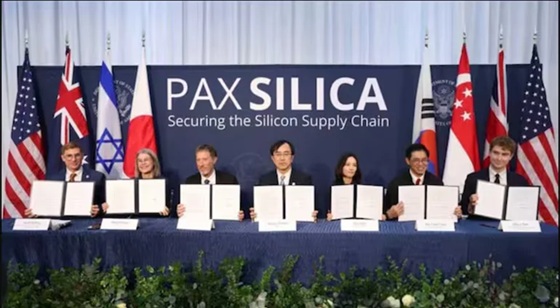
Pax Silica is a multilateral initiative launched by the United States in December 2025 to promote a stable, secure, and cooperative global technology order.
The Pax Silica Declaration outlines three core objectives:
The initiative reflects concerns that excessive reliance on a single country for critical technologies exposes economies to geopolitical coercion, supply shocks, and strategic vulnerability.
The contemporary global economy is increasingly shaped by:
These technologies now form the backbone of economic growth, military capability, and national security. However, supply chains for critical minerals and advanced manufacturing remain highly concentrated, particularly:
The COVID-19 pandemic further exposed the fragility of global supply chains, accelerating efforts by major economies to pursue diversification, resilience, and strategic autonomy in critical technology sectors.
Pax Silica brings together technologically advanced and resource-rich countries, combining manufacturing capacity, mineral resources, financial capital, and innovation ecosystems.
India is not yet a formal member but is expected to be invited soon due to its growing strategic and technological importance.
Together, these factors position India as a credible and valuable partner in Pax Silica-aligned technology ecosystems.
India has already taken concrete steps to enhance supply chain resilience through multilateral partnerships:
These engagements demonstrate India’s alignment with the broader objectives of Pax Silica and its readiness for deeper integration.
Despite strategic advantages, India’s potential membership raises several challenges:
Balancing domestic industrial development with international commitments will therefore be a key challenge.
The emergence of Pax Silica signals the likely formation of two parallel global technology supply chains:
Given India’s:
Aligning with Pax Silica appears strategically advantageous. However, India is expected to proceed cautiously, engaging in sustained dialogue to ensure that participation:
India’s eventual approach is likely to combine selective alignment with continued policy independence, reflecting its broader foreign policy doctrine.
FAQsWhat is Pax Silica ? Pax Silica is a U.S.-led multilateral initiative launched in December 2025 to secure global supply chains of semiconductors, AI, and critical minerals. Why was Pax Silica created ? It aims to reduce coercive economic dependencies, ensure secure technology supply chains, and build trusted digital infrastructure amid growing geopolitical risks. Why is India strategically important to Pax Silica ? India offers a large technology workforce, strong digital infrastructure, growing semiconductor investments, and expanding AI capabilities. What challenges might India face in joining Pax Silica ? Balancing strategic autonomy, aligning industrial policies, and managing expectations as a developing, non-ally partner pose key challenges. What is the broader significance of Pax Silica for global governance ? It signals the emergence of parallel technology ecosystems and reflects the increasing securitisation of critical technology supply chains |



Our support team will be happy to assist you!

 Contact Us
  New Batch : 9555124124/ 7428085757
  Tech Support : 9555124124/ 7428085757