New
GS Foundation (P+M) - Delhi : 19th Jan. 2026, 11:30 AM Spring Sale UPTO 75% + 10% Off, Valid Till : 6th Feb., 2026 GS Foundation (P+M) - Prayagraj : 09th Jan. 2026, 11:00 AM Spring Sale UPTO 75% + 10% Off, Valid Till : 6th Feb., 2026 GS Foundation (P+M) - Delhi : 19th Jan. 2026, 11:30 AM GS Foundation (P+M) - Prayagraj : 09th Jan. 2026, 11:00 AM

Current Affairs for 22 January 2026

AMOC Collapse Threatens National Security

(Prelims: Current Events of International Importance, Geography of India and the World)
(Mains, General Studies Paper 1: Important Geophysical Events, Geographical Features)

Context

Recently, Iceland declared the potential collapse of the Atlantic Meridional Overturning Circulation (AMOC) a direct threat to its national security and existence.

AMOC

About the Atlantic Meridional Overturning Circulation (AMOC)

  • It is a vast system of ocean currents that transports warm, salty water northward from tropical regions and returns cold, deep water southward. It is often called the "climate engine" of the Atlantic Ocean.
  • It controls the movement of warm and cold water across vast ocean distances, affecting weather patterns, sea levels, and global temperatures.
  • It is driven by differences in temperature (thermal) and salinity (haline), hence the term "thermohaline circulation."
  • The most well-known component of the AMOC is the Gulf Stream, which carries warm water from the Gulf of Mexico across the North Atlantic to Europe.

Importance of the AMOC

  • Regulates regional temperatures and keeps the climate mild, especially in Northern Europe.
  • Distributes ocean nutrients and supports marine ecosystems and fisheries.
  • Stabilizes weather patterns and reduces the frequency of extreme events.
  • Regulates sea level, especially along the east coast of North America.

Signs of Weakening

In recent decades, scientists have observed signs that the AMOC is weakening. Key indicators include:

  • Rapid melting of Greenland ice leads to an increase in freshwater in the North Atlantic, which disrupts salinity.
  • Rising ocean temperatures alter density gradients and reduce the movement of water downstream.
  • Changes in Atlantic sea-surface patterns have been observed through satellite and oceanographic data.
  • According to a study in Nature Climate Change (2021), the AMOC is now at its weakest point in more than a millennium, indicating a potential tipping point.

Consequences of AMOC Collapse

  • A complete or partial collapse of the AMOC could lead to severe and irreversible climate changes, including:
    • Harsher winters and shorter cropping seasons in Europe
    • Sea level rise along the US East Coast due to redistribution of ocean mass
    • Impacts on billions of people in Africa and Asia from disruptions in monsoon systems
    • Changes in marine biodiversity and the collapse of key fishing grounds
  • These widespread impacts could destabilize economies, ecosystems, and even geopolitical relations.

Government Enhances Financial Autonomy of Central Silk Board 

Prelims: (Polity & Governance + CA)
Mains: (GS 2 – Governance, Institutional Reforms; GS 3 – Agriculture, Rural Development, MSMEs, Textile Sector)

Why in News?

The government has increased the financial approval limit of the Central Silk Board (CSB) from ₹50 lakh to ₹1 crore by amending Rule 22 of the Central Silk Board Rules, 1955.

This move is aimed at enhancing the Board’s operational autonomy, enabling faster decision-making and more efficient implementation of schemes related to sericulture and silk industry development.

Background: Central Silk Board — Institutional Profile

The Central Silk Board is a statutory body established in 1948 through an Act of Parliament.

  • Nodal Ministry: Ministry of Textiles, Government of India
  • Headquarters: Bengaluru, Karnataka

The Board functions as the apex national body for the promotion, regulation, and development of the silk industry in India.
central-silk-board

Mandate and Core Functions of the Central Silk Board

The CSB is entrusted with a broad mandate to strengthen India’s sericulture ecosystem.

Key Functions

  • Advising the Central Government on all matters relating to the development of the silk industry, including:
    • Import and export of raw silk,
    • Market development, and
    • Policy formulation.
  • Preparing and furnishing reports on the silk sector as required by the government.
  • Promoting scientific sericulture practices to:
    • Increase productivity,
    • Improve quality,
    • Enhance farm incomes.
  • Creating greater employment opportunities and improving livelihoods in rural and semi-urban areas.

Significance of the Revised Financial Approval Limit

The amendment increasing CSB’s financial approval ceiling from ₹50 lakh to ₹1 crore is significant for several reasons:

  • Operational Efficiency: Enables quicker sanction of projects without repeated higher-level approvals.
  • Institutional Autonomy: Strengthens the Board’s decision-making powers.
  • Scheme Implementation: Facilitates timely execution of research, extension, training, and infrastructure projects.
  • Industry Responsiveness: Allows faster responses to emerging challenges in the silk value chain.

This reform aligns with the broader objective of decentralisation and administrative efficiency in public institutions.

Silk Production in India: Current Status

India holds a significant position in the global silk economy.

Global Standing

  • India is the second-largest producer and consumer of silk in the world.

Production Growth

  • Raw silk production increased from:
    • 31,906 metric tonnes (MT) in 2017–18 to
    • 38,913 MT in 2023–24,
      reflecting steady sectoral growth.

Major Producing States

  • Karnataka – the largest silk-producing state.
  • Andhra Pradesh – another major contributor.
  • Other important states include Tamil Nadu, West Bengal, Assam, and parts of the North-East.

Major Silk Varieties Produced

  • Mulberry silk – accounts for the largest share.
  • Eri silk – known for sustainability and warmth.
  • Tasar silk – largely forest-based.
  • Muga silk – exclusive to Assam and prized for its natural golden colour.

Role of CSB in Strengthening Sericulture

The Central Silk Board plays a critical role in:

  • Research and development in silkworm breeding and rearing technologies.
  • Extension services and farmer training.
  • Quality control and certification.
  • Market development and export promotion.
  • Supporting rural employment, especially among women and small farmers.

Through its network of research institutes, training centres, and state partnerships, CSB acts as the backbone of India’s sericulture sector.

Strategic Implications and Way Forward

The enhanced financial autonomy of CSB is expected to:

  • Improve project execution timelines,
  • Strengthen research and innovation,
  • Support climate-resilient sericulture,
  • Enhance India’s competitiveness in the global silk market, and
  • Boost rural livelihoods and MSME growth in the textile sector.

Going forward, the focus will be on:

  • Value addition and branding of Indian silk,
  • Export diversification,
  • Technological upgradation, and
  • Strengthening farmer-market linkages.

FAQs

1.What is the Central Silk Board?

It is a statutory body established in 1948 to promote and regulate the development of India’s silk industry.

2.What recent change has the government made regarding CSB?

The government increased CSB’s financial approval limit from ₹50 lakh to ₹1 crore by amending Rule 22 of the CSB Rules, 1955.

3. Which ministry controls the Central Silk Board?

The Central Silk Board works under the administrative control of the Ministry of Textiles.

4.Which state is the largest producer of silk in India?

Karnataka is the largest silk-producing state in India.

5 What are the major types of silk produced in India?

Mulberry, Eri, Tasar, and Muga.

New Ganga Basin Initiative to Safeguard the Endangered Indian Skimmer

Prelims: (Environment + CA)
Mains: (GS 3 – Environment, Biodiversity, Conservation, Sustainable Development)

Why in News?

The Bombay Natural History Society (BNHS) has launched a new conservation project under the National Mission for Clean Ganga (NMCG) at Dehradun to protect the Indian Skimmer in the Ganga Basin.

The initiative aims to strengthen habitat protection, monitor populations, and address threats facing this endangered riverine bird species.

Background: Indian Skimmer — Taxonomy and Identity

The Indian Skimmer (Rynchops albicollis) is one of the three species belonging to the skimmer genus Rynchops in the family Laridae.

The bird derives its name from its unique feeding behaviour — it flies low over water surfaces and “skims” for fish using its specialised beak.

The Indian Skimmer is a flagship species for riverine ecosystem conservation, particularly in large, sandy, lowland rivers of South Asia.

endangered-indian-skimmer

Habitat and Distribution

Habitat

  • Primarily found on:
    • Large, sandy, lowland rivers,
    • Around lakes and adjacent marshes,
    • In estuaries and coastal areas during the non-breeding season.

Geographical Distribution

  • Native to South Asia.
  • Mainly found in:
    • India, Bangladesh, and Pakistan,
    • With smaller populations extending into Nepal and Myanmar.

Key Indian Habitat

  • The Chambal River is one of the most important strongholds for Indian Skimmers in India.

Physical Features and Feeding Adaptations

The Indian Skimmer has a distinctive and striking appearance:

  • Plumage: Black upper body with a contrasting white underbelly.
  • Beak: Bright orange with a lower mandible significantly longer than the upper one.
  • This elongated lower mandible allows the bird to skim the water surface to catch small fish and aquatic organisms.
  • Wings: Long and angular, adapted for fast, low, and precise flight over water bodies.

These specialised traits make the species highly dependent on undisturbed riverine habitats.

Conservation Status and Threats

IUCN Status: Endangered

Major Threats

  • Loss and degradation of river habitats due to:
    • River regulation,
    • Floodplain encroachment.
  • Unplanned water releases from dams, leading to nest flooding and breeding failure.
  • Sand mining, which destroys nesting grounds on river sandbars.
  • Predation by dogs, birds of prey, and other animals, particularly at nesting sites.
  • Disturbance from human activities such as fishing, boating, and tourism.

BNHS–NMCG Conservation Initiative: Objectives and Significance

The newly launched project under NMCG seeks to:

  • Identify and protect key breeding and foraging habitats in the Ganga Basin.
  • Conduct scientific population monitoring and ecological studies.
  • Work with local communities to promote river stewardship and reduce disturbance at nesting sites.
  • Strengthen coordination with government agencies for river management and biodiversity conservation.

Significance

  • The project integrates river cleaning and biodiversity conservation, reflecting the broader ecological mandate of the National Mission for Clean Ganga.
  • Protecting the Indian Skimmer contributes to the health of riverine ecosystems, benefiting multiple species and human livelihoods dependent on rivers.

Strategic Importance for Riverine Biodiversity Conservation

The Indian Skimmer serves as an indicator species for river health. Its decline signals:

  • Degradation of sandy riverbanks,
  • Altered river flows, and
  • Declining fish populations.

Conserving this species supports:

  • Maintenance of ecological integrity of rivers,
  • Sustainable water management,
  • Alignment with India’s commitments under global biodiversity frameworks.

FAQs

1.What is the Indian Skimmer?

It is an endangered riverine bird species known for its unique feeding behaviour of skimming fish from the water surface.

2.Why is the Indian Skimmer endangered?

Due to habitat loss, dam-related flow changes, sand mining, predation, and human disturbance.

3.Who has launched the new conservation project for Indian Skimmer?

The Bombay Natural History Society (BNHS) under the National Mission for Clean Ganga (NMCG).

4.Where is the Indian Skimmer mainly found in India?

Major populations are found along large rivers, especially the Chambal River.

5. What is the significance of protecting the Indian Skimmer?

It helps conserve riverine ecosystems and serves as an indicator of river health.

Punjab Border Fence Realignment: Balancing Security Needs and Farmers’ Livelihoods

Prelims: (Defence & Security + CA)
Mains: (GS 2 – Federalism, Centre–State Relations, Governance; GS 3 – Internal Security, Border Management, Rural Livelihoods)

Why in News?

The Punjab Chief Minister has stated that the Central government has agreed in principle to move the security fence closer to the India–Pakistan International Border, a step that could restore farmers’ access to farmland currently lying beyond the fence.

The proposal, discussed intermittently over the years but never implemented, has resurfaced, reviving debates over its origins, security implications, and the long-standing grievances of border farmers.

Background: Punjab’s Border Fence and the Farmers’ Dilemma

Punjab shares a 532-km-long border with Pakistan, secured by an electrified barbed-wire fence.

Due to uneven terrain, the fence does not run exactly along the International Border but lies anywhere from a few feet to nearly 2 km inside Indian territory.
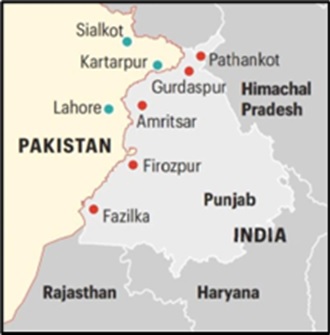
punjab-state

As a result:

  • About 21,500 acres of privately owned farmland, and
  • Nearly 10,000 acres of government land

fall between the fence and the actual border.

Farmers cultivating this land face strict access controls:

  • Entry gates open only for limited hours on fixed days.
  • There are caps on the number of people and tractors allowed.
  • Each tractor must be escorted by two BSF Kisan Guards, severely restricting daily farming operations.

Over decades, these constraints have transformed the fence into a major livelihood and governance flashpoint.

Why the Punjab Border Fence Was Built?

The electrified barbed-wire fence was first installed in 1988 across Gurdaspur, Amritsar, and Ferozepur districts.
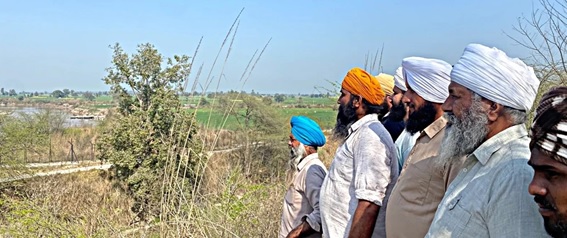
punjab-border-fence-realignment

Primary objectives:

  • Curb militant infiltration,
  • Prevent cross-border terrorism, and
  • Check drug and arms smuggling during the peak of militancy in Punjab.

During that volatile period:

  • Farmers did not protest strongly, as dissent was often viewed with suspicion.
  • In 1992, farmers formed the Border Area Sangharsh Committee to raise concerns, but the issue remained unresolved.

Subsequently, with the creation of Tarn Taran, Fazilka, and Pathankot districts, the fence now affects border communities across six districts in Punjab.

Kapoor Committee and Farmer Compensation

To address the hardships faced by farmers, the Kapoor Committee, headed by then Punjab Chief Secretary S. L. Kapoor, was constituted in 1986.

Key recommendations: Provide compensation to farmers whose land lay beyond the fence.

Implementation: In 1988, an inconvenience allowance of ₹2,500 per acre was announced.

Ground reality:

  • Farmers report that compensation has been irregular, not indexed to inflation, and not paid annually as intended.
  • Over time, the real value of the allowance has eroded, deepening economic distress.

Farmers Seek Fence Shift Amid Evolving Security Landscape

Border farmers argue that the security environment has fundamentally changed since the fence was erected.

Key arguments:

  • Advances in surveillance technologies, including drones, sensors, and satellite monitoring, have improved border security.
  • The presence of modern intelligence and patrol systems reduces dependence on physical fencing alone.
  • With thousands of acres trapped behind the fence, farmers face:
    • Daily security checks,
    • Delays in farm operations,
    • Restrictions on machinery use, and
    • Difficulties in transporting crops.

Farmers contend that shifting the fence closer to the International Border would:

  • Ease cultivation and livelihood pressures, and
  • Not compromise national security, given improved monitoring capabilities and defence preparedness.

Why the Border Fence Remains Unmoved?

Despite repeated proposals, the fence has not been shifted due to several practical and administrative constraints.

BSF’s concerns:

  • The fence is nearly 40 years old and in poor physical condition.

  • Shifting it would require:
    • Dismantling large sections,
    • Procuring new barbed wire and materials,
    • Reconstructing infrastructure, and
    • Realigning patrol routes and access points.

Political and administrative challenges:

  • Farmers remain sceptical, noting that:
    • Similar assurances have surfaced during elections,
    • Announcements in 2023 about a possible fence shift were not followed by implementation.

This history has created a trust deficit between farmers and authorities.

Strategic Implications and Way Forward

The proposal to realign the fence highlights the need to balance:

  • National security imperatives, and
  • Livelihood rights of border communities.

A forward-looking approach could include:

  • Phased realignment in select stretches,
  • Use of technology-driven border management systems,
  • Enhanced compensation mechanisms,
  • Institutionalised consultation with border farmers, and
  • Joint Centre–State coordination for implementation.

Such measures can help integrate security objectives with inclusive governance and rural justice.

FAQs

1.Why is the Punjab border fence being reconsidered?

Because large tracts of farmland lie beyond the fence, restricting farmers’ access and livelihoods, and security conditions have evolved.

2. When was the border fence originally built?

The electrified fence was installed in 1988 during the height of militancy in Punjab to curb infiltration and smuggling.

3. What is the Kapoor Committee?

A committee constituted in 1986 to examine farmers’ hardships and recommend compensation for land beyond the fence.

4. Why do farmers want the fence shifted now?

Due to improved surveillance technologies and ongoing hardships in accessing and cultivating their land.

5. Why has the fence not been shifted so far?

Due to logistical, financial, and administrative challenges, along with lack of sustained political follow-through.

U.S. Protectionism and China’s Ascendancy: How Trump’s Policies Are Reordering Global Trade

Prelims: (International Relations + CA)
Mains: (GS 2 – Foreign Policy, Global Governance; GS 3 – International Trade, Economic Diplomacy, Strategic Resources)

Why in News?

U.S. President Donald Trump’s second term has triggered sweeping geopolitical and economic disruptions, with his aggressive trade and foreign policies paradoxically strengthening China’s global economic position.

  • In his first year back in office, President Trump signed hundreds of executive orders, relaunched a trade war, withdrew the United States from key international institutions, ordered mass deportations, and authorised military actions in Yemen, Iran, and Nigeria, reshaping global stability.
  • Instead of isolating China, these actions have accelerated shifts in global trade alignments, weakened confidence in U.S. leadership, and expanded Beijing’s economic and diplomatic influence.

Background: Trump’s Upheaval and Its Unintended Impact
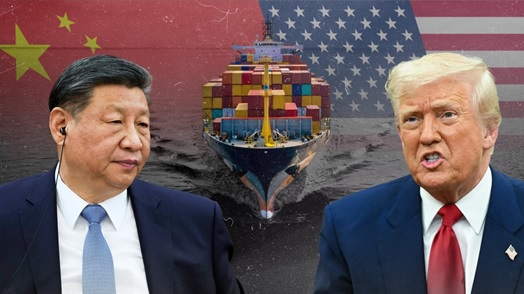
trump-trade-policy

From Ally to Threat: Europe’s Shock

  • Where Russia once dominated Europe’s threat perception, the United States has now emerged as a major source of uncertainty.
  • This has unsettled transatlantic relations and altered Europe’s strategic calculations, pushing European states toward greater defence autonomy and economic diversification.

Markets Signal Global Anxiety

  • Rising geopolitical and economic instability under Trump has driven investors toward safe-haven assets, pushing gold and silver prices to record highs.
  • Market volatility reflects fears linked to the unpredictability of U.S. trade and foreign policies.

The China Paradox

  • Despite Trump’s intent to isolate China through tariffs and technology restrictions, China has emerged economically stronger.
  • By December 2025, China’s trade surplus surged to historic highs.
  • China achieved 5% economic growth in 2025, meeting official targets.
  • A booming trade surplus offset domestic challenges such as:
    • Weak consumption, and
    • A prolonged property crisis.

Rather than retreating, China responded by deepening integration with global markets, reinforcing its position in international trade and reshaping global trade relationships.

Canada–China Reset After Years of Strain

Canadian Prime Minister Mark Carney’s visit to Beijing marked a pivotal reset in bilateral ties after nearly a decade of diplomatic chill.

Key Outcomes

  • Agreement on:
    • Tariff reductions for Canadian canola and seafood, and
    • Limited access for Chinese electric vehicles (EVs) to the Canadian market.
  • Carney and President Xi Jinping signalled the beginning of a “new strategic partnership”, reflecting pragmatic realignment driven by shifting global trade dynamics and shared economic interests.

Beijing Draws Global Leaders

Carney’s visit fits into a broader pattern of world leaders re-engaging with China:

  • South Korean President Lee Jae Myung visited Beijing earlier this month — the first such visit since 2019.
  • UK Prime Minister Keir Starmer and German Chancellor Friedrich Merz are also expected to visit soon.

As the U.S. retreats from its traditional role as the anchor of global trade under Trump, countries are increasingly bypassing Washington to deepen partnerships with China and among themselves, reshaping the global economic order.

Global Supply Chains Are Stretching, Not Shrinking

Recent analyses indicate that global trade is reconfiguring rather than retreating.

Key Trends

  • Average trade distances are at record highs, with expanding flows across Asia, West Asia, and Africa more than offsetting reduced U.S. trade.
  • Trade surged in early 2025 as firms front-loaded shipments ahead of expected tariff changes.

This suggests that protectionism is not deglobalising trade but redirecting and rerouting it through alternative corridors and partnerships, many of which increasingly involve China.

China’s Rising Influence in Global Perceptions

A January 2026 paper by Timothy Garton Ash and colleagues highlights a growing global expectation that China’s influence will expand over the next decade.

Shifting Global Perceptions

  • More countries now view Beijing as an ally or necessary partner, even as confidence in U.S. leadership declines.
  • Another study shows that expectations of U.S. leadership under Trump have fallen sharply, including in countries such as India and South Africa.
  • Many Europeans no longer see the U.S. as a reliable ally and are accelerating rearmament.
  • Russians now view the European Union as a greater adversary than the U.S.
  • Ukrainians increasingly look to Brussels rather than Washington for support.

These perception shifts indicate a fundamental rebalancing in global power alignments.

India’s Cautious Rebalancing Toward China

New Delhi has begun a calibrated opening in its engagement with China, reflecting a pragmatic reassessment of foreign policy options amid a sharply deteriorating economic relationship with the United States under the Trump administration.

Key Developments

  • Even as border disputes and strategic differences persist, India and China have addressed some “low-hanging fruit” in bilateral ties.
  • India now expects reciprocity from Beijing, particularly in:
    • Easing curbs on Indian businesses, and
    • Sensitive sectors such as rare earth magnets.

Trade Data Signals the Shift

  • In December, India’s exports to China surged nearly 70% to $2 billion.
  • Shipments to the United States fell by almost 2% to $6.8 billion, as steep U.S. tariffs reshaped export priorities.
  • The U.S. has imposed tariffs of up to 50% on Indian goods, among the highest levied on any country — even exceeding those on China.

These measures have disrupted trade flows, strained diplomatic ties, and pushed India to diversify markets and recalibrate external economic partnerships.

Strategic Implications and the Road Ahead

Trump’s protectionist turn is accelerating:

  • A shift away from U.S.-centric trade structures,
  • A rise in China-centred economic networks, and
  • The emergence of a more fragmented yet interconnected global economy.

While the U.S. aims to reduce dependence on adversaries, its policies are instead:

  • Weakening its leadership credibility,
  • Driving allies and partners toward alternative alignments, and
  • Enabling China to consolidate economic and diplomatic influence.

For countries like India, the challenge will be to balance:

  • Strategic competition with China,
  • Economic pragmatism,
  • Diversification of trade partners, and
  • Preservation of strategic autonomy.

FAQs

1.Why is Trump’s trade policy strengthening China?

Because U.S. protectionism has redirected global trade flows toward China and weakened confidence in U.S. leadership, enhancing Beijing’s economic influence.

2.How has Europe responded to Trump’s policies?

Europe increasingly views the U.S. as a source of uncertainty, is rearming, and is recalibrating strategic and economic partnerships.

3.What changes are occurring in global supply chains?

Supply chains are stretching and rerouting rather than shrinking, with expanding trade across Asia, West Asia, and Africa.

4.How are global perceptions of China and the U.S. shifting?

More countries expect China’s influence to grow, while confidence in U.S. leadership has declined significantly.

5.Why is India rebalancing its engagement with China?

Due to deteriorating trade relations with the U.S., high tariffs on Indian goods, and the need to diversify markets while safeguarding strategic interests.

Himachal’s Call for Higher Apple Import Duties: Protecting Domestic Orchardists

Prelims: (Economics + CA)
Mains: (GS 2 – Federalism, Centre–State Relations; GS 3 – Agriculture, Farm Incomes, Trade and Industrial Policy, Climate Change)

Why in News?

The Chief Minister of Himachal Pradesh has urged the Centre to raise import duty on foreign apples from 50% to 100% and impose a seasonal ban on imports from July to November to protect nearly 2.5 lakh apple farmers. Apples account for about 80% of the state’s fruit output.
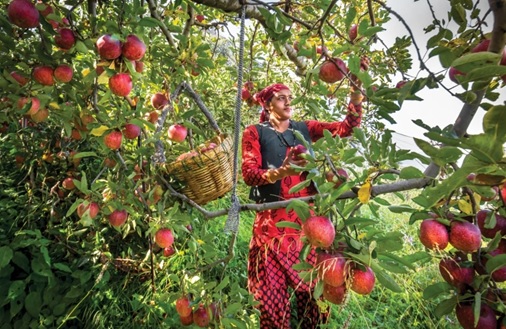
  • The demand follows the Centre’s decision to reduce import duty on New Zealand apples to 25% for April–August under the India–New Zealand Free Trade Agreement (FTA).
  • Jammu and Kashmir has raised similar concerns, warning that rising imports are compounding the structural challenges faced by domestic apple growers.

apple-import-duties

Background: India Cuts Import Duty on New Zealand Apples Under FTA

Under the India–New Zealand Free Trade Agreement:

  • Import duty on New Zealand apples has been reduced from 50% to 25% under a quota system.
  • The quota begins at 32,500 tonnes in the first year and rises to 45,000 metric tonnes (MT) by the sixth year.
  • Imports must meet a minimum import price of $1.25 (₹113.6) per kg.
  • Shipments beyond the quota will continue to attract the higher 50% duty.

The move is part of India’s broader strategy to expand trade partnerships but has triggered concerns in domestic horticulture belts.

Apple Production in India: J&K and Himachal at the Core

India produces approximately 28 lakh metric tonnes (LMT) of apples annually.

  • Jammu & Kashmir: Around 20 LMT, the largest producer.
  • Himachal Pradesh: About 5–6 LMT, the second-largest producer.
  • Remaining output comes from Uttarakhand and a few north-eastern states, where apple cultivation is still emerging.

The apple economy is valued at:

  • Roughly ₹12,000 crore in J&K, and
  • About ₹4,500 crore in Himachal Pradesh,

making farmers in these two states particularly vulnerable to tariff concessions and rising imports.

Farmers’ Concerns Over Cheaper Imports

Seasonal Overlap and Market Timing

  • In India, apples are harvested between July and November.
  • Off-season sales depend heavily on cold storage and Controlled Atmosphere (CA) facilities.
  • New Zealand harvests apples between January/February and May, allowing it to supply fresh produce when Indian farmers rely on stored apples.

This timing overlap directly affects domestic competitiveness.

Impact on Domestic Prices and Sales

  • Farmers fear that lower import duties will make foreign apples cheaper than domestic produce, affecting market realisations.
  • In Jammu & Kashmir, high-density varieties like Gala reach markets by June, while Royal Delicious peaks by September.
  • Since the duty cut applies from April to August, growers anticipate losses during crucial marketing windows.

Threat to Market Share

Orchardists from Himachal Pradesh and Jammu & Kashmir argue that cheaper imports will:

  • Depress domestic prices,
  • Reduce market share of Indian apples,
  • Hit farmers hardest during the off-season, and
  • Undermine incomes in India’s principal apple-growing regions.

Challenges Beyond Import Competition

1. Climate Stress and Falling Yields

Apple production has been adversely affected by:

  • Erratic weather,
  • Reduced snowfall,
  • Prolonged dry spells,
  • Floods, cloudbursts, and landslides.

These factors have weakened orchards and lowered productivity.

2. Rising Disease Burden

Changing climatic conditions have led to a rise in:

  • Fire blight,
  • Apple scab,
  • Powdery mildew,
  • Sooty blotch, and
  • Bitter rot.

Reduced snowfall and higher temperatures have also intensified water scarcity, increasing disease vulnerability.

3. Production Losses and Quality Decline

  • In 2023, Himachal’s apple output fell to 4.84 LMT, nearly 28% lower than 2022, following devastating floods.
  • Although production recovered to 6.87 LMT in 2025, excessive rainfall and natural disasters caused quality deterioration, with nearly 1 LMT rejected for poor size and quality.

4. Infrastructure and Transport Bottlenecks

Logistical disruptions have compounded farmers’ problems:

  • The prolonged closure of the Jammu–Srinagar National Highway (NH-44) due to landslides stranded hundreds of trucks during peak harvest.
  • Delayed market access led to spoilage and financial losses.

Farmers’ Demands for Protection

In light of cumulative pressures, farmers’ groups have demanded:

  • 100% import duty on foreign apples,
  • A July–November import ban,
  • Special category protection for domestic apple growers, and
  • Higher subsidies and support mechanisms.

Farmer leaders argue that, unlike countries such as New Zealand—where apple farming is heavily subsidised and insured—Indian growers receive limited direct support.

They stress that instead of increasing exposure to foreign competition, policy should prioritise:

  • Targeted support,
  • Productivity enhancement,
  • Climate resilience, and
  • Infrastructure development for domestic horticulture.

Strategic Implications and Way Forward

The debate highlights a broader policy tension between:

  • Trade liberalisation under FTAs, and
  • Protection of vulnerable agricultural sectors.

A balanced approach could include:

  • Calibrated tariff structures,
  • Seasonal safeguards,
  • Enhanced crop insurance and climate adaptation support,
  • Investment in cold-chain infrastructure, and
  • Market diversification for Indian apples.

Such measures can align India’s trade commitments with farmer welfare and food security objectives.

FAQs

1.Why is Himachal Pradesh demanding higher import duty on apples?

To protect nearly 2.5 lakh apple farmers from cheaper imports that threaten domestic prices and livelihoods.

2. What change has India made under the India–New Zealand FTA?

India reduced import duty on New Zealand apples from 50% to 25% under a quota system for April–August.

3. Which states dominate apple production in India?

Jammu & Kashmir and Himachal Pradesh account for the bulk of India’s apple output.

4. What non-trade challenges do apple farmers face?

Climate change, rising plant diseases, production losses, infrastructure bottlenecks, and market access issues.

5. What protections are farmers demanding?

A 100% import duty, a seasonal import ban, special category protection, and higher subsidies and support.

« »
  • SUN
  • MON
  • TUE
  • WED
  • THU
  • FRI
  • SAT
Have any Query?

Our support team will be happy to assist you!

OR
X