
- UPSC Exam
- State PCS
- One Day Exam
- Current Affairs
- PT Quiz
- Downlaods
- About Coaching
- Blog
- Videos

| Prelims: (Defence & Security + CA) Mains: (GS 2 – Federalism, Centre–State Relations, Governance; GS 3 – Internal Security, Border Management, Rural Livelihoods) |
The Punjab Chief Minister has stated that the Central government has agreed in principle to move the security fence closer to the India–Pakistan International Border, a step that could restore farmers’ access to farmland currently lying beyond the fence.
The proposal, discussed intermittently over the years but never implemented, has resurfaced, reviving debates over its origins, security implications, and the long-standing grievances of border farmers.
Background: Punjab’s Border Fence and the Farmers’ Dilemma
Punjab shares a 532-km-long border with Pakistan, secured by an electrified barbed-wire fence.
Due to uneven terrain, the fence does not run exactly along the International Border but lies anywhere from a few feet to nearly 2 km inside Indian territory.
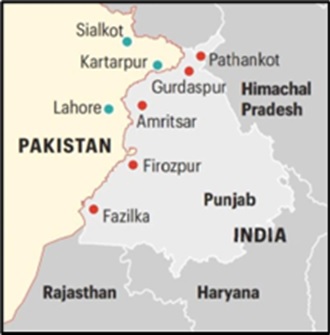
As a result:
fall between the fence and the actual border.
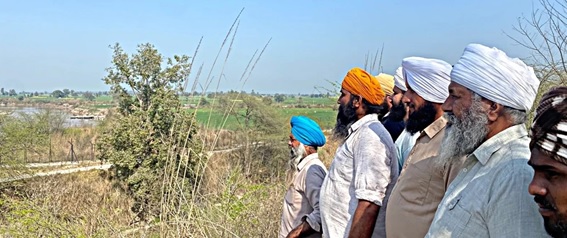
Farmers cultivating this land face strict access controls:
Over decades, these constraints have transformed the fence into a major livelihood and governance flashpoint.
The electrified barbed-wire fence was first installed in 1988 across Gurdaspur, Amritsar, and Ferozepur districts.
Primary objectives:
During that volatile period:
Subsequently, with the creation of Tarn Taran, Fazilka, and Pathankot districts, the fence now affects border communities across six districts in Punjab.
To address the hardships faced by farmers, the Kapoor Committee, headed by then Punjab Chief Secretary S. L. Kapoor, was constituted in 1986.
Key recommendations: Provide compensation to farmers whose land lay beyond the fence.
Implementation: In 1988, an inconvenience allowance of ₹2,500 per acre was announced.
Ground reality:
Border farmers argue that the security environment has fundamentally changed since the fence was erected.
Key arguments:
Farmers contend that shifting the fence closer to the International Border would:
Despite repeated proposals, the fence has not been shifted due to several practical and administrative constraints.
BSF’s concerns:
The fence is nearly 40 years old and in poor physical condition.
Political and administrative challenges:
This history has created a trust deficit between farmers and authorities.
The proposal to realign the fence highlights the need to balance:
A forward-looking approach could include:
Such measures can help integrate security objectives with inclusive governance and rural justice.
FAQs1.Why is the Punjab border fence being reconsidered? Because large tracts of farmland lie beyond the fence, restricting farmers’ access and livelihoods, and security conditions have evolved. 2. When was the border fence originally built? The electrified fence was installed in 1988 during the height of militancy in Punjab to curb infiltration and smuggling. 3. What is the Kapoor Committee? A committee constituted in 1986 to examine farmers’ hardships and recommend compensation for land beyond the fence. 4. Why do farmers want the fence shifted now? Due to improved surveillance technologies and ongoing hardships in accessing and cultivating their land. 5. Why has the fence not been shifted so far? Due to logistical, financial, and administrative challenges, along with lack of sustained political follow-through. |



Our support team will be happy to assist you!

 Contact Us
  New Batch : 9555124124/ 7428085757
  Tech Support : 9555124124/ 7428085757