
- UPSC Exam
- State PCS
- One Day Exam
- Current Affairs
- PT Quiz
- Downlaods
- About Coaching
- Blog
- Videos

| Prelims: (Economics + CA) Mains: (GS 3 – Indian Economy & Public Sector Reforms; GS 3 – Fiscal Policy; GS 2 – Governance & Policy Implementation) |
Since the announcement of the revamped Disinvestment Policy (2020) and the Public Sector Enterprises (PSE) Policy, 2021, the Union Government initially emphasised strategic disinvestment and privatisation.
However, recent policy developments — including the launch of the National Monetisation Pipeline (NMP) 2.0 — indicate a clear shift from outright asset sales to value extraction through dividends and asset monetisation.
The current approach prioritises leasing of brownfield assets and higher dividend payouts instead of large-scale privatisation.
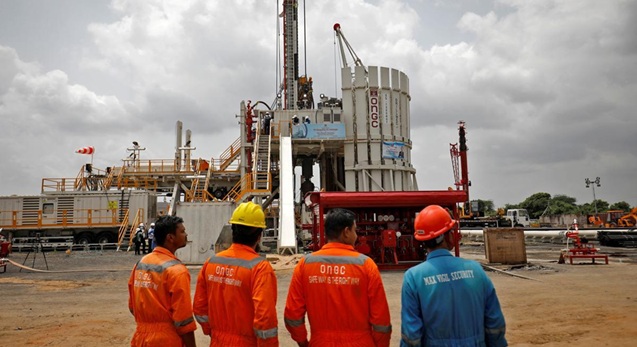
India’s disinvestment journey began in the early 1990s as part of economic liberalisation reforms. Initially, the focus was on minority stake sales to mobilise fiscal resources without relinquishing control.
The policy gained sharper ideological clarity post-2020, when the government announced a revamped framework emphasising:
The underlying rationale was that the government should minimise direct business operations, allowing private firms to manage enterprises more efficiently.
The Public Sector Enterprises Policy (2021) categorised sectors as strategic and non-strategic, proposing:
This signalled an intent to reduce the state’s commercial footprint.
Temporary Surge
In 2022–23, disinvestment revenue reached ₹35,294 crore — aided by stake sales in companies such as:
This ended a four-year declining trend.
Disinvestment proceeds fell sharply thereafter:
Policy signals reflecting reduced emphasis on privatisation include:
Challenges included:
These factors made several CPSEs unattractive to investors.
Under the 2020 Consistent Dividend Policy, the Department of Investment and Public Asset Management (DIPAM) advised CPSEs to:
Dividend receipts rose significantly:
Dividend income now exceeds disinvestment proceeds.
Launched in 2021, NMP focuses on monetising brownfield infrastructure assets via leasing arrangements.
Key features:
Approximately 90% of the ₹6 lakh crore target (2021–25) has reportedly been achieved.
This marks a significant expansion of monetisation as a fiscal tool.
1. Fiscal Stability
Provides predictable revenue through dividends and lease payments instead of one-time asset sales.
2. Political Acceptability
Asset monetisation faces less resistance compared to full-scale privatisation.
3. Retention of Ownership
The government retains control while unlocking asset value.
4. Improved Asset Utilisation
Private participation enhances operational efficiency in infrastructure use.
5. Macroeconomic Management
Helps fund infrastructure development without significantly expanding fiscal deficits.
Fiscal Risks
Excessive dividend extraction may reduce reinvestment capacity of CPSEs, weakening long-term growth.
Structural Inefficiencies
Monetisation does not resolve managerial inefficiencies within CPSEs.
Market Risks
Private participation depends on economic conditions; revenues may fluctuate.
Policy Inconsistency
Shifting from privatisation to monetisation may create uncertainty among investors.
Governance Concerns
Need for transparent bidding, strong regulation, and professional management.
FAQs1. What is the key difference between disinvestment and asset monetisation ? Disinvestment involves sale of government equity, often with transfer of ownership. Asset monetisation leases assets while retaining ownership. 2. Why has the government reduced emphasis on privatisation ? Limited investor interest, political resistance, and structural inefficiencies in CPSEs have slowed strategic sales. 3. What is the objective of the National Monetisation Pipeline ? To generate revenue by leasing brownfield infrastructure assets without transferring ownership. 4. Why are dividend receipts rising ? The government has encouraged CPSEs to distribute higher dividends under revised policy guidelines. 5. What is the main risk of over-reliance on dividends ? Excessive payouts may reduce reinvestment capacity, affecting long-term growth and competitiveness. |



Our support team will be happy to assist you!

 Contact Us
  New Batch : 9555124124/ 7428085757
  Tech Support : 9555124124/ 7428085757