
- UPSC Exam
- State PCS
- One Day Exam
- Current Affairs
- PT Quiz
- Downlaods
- About Coaching
- Blog
- Videos

Trump has renewed efforts to expand the Abraham Accords by urging more Muslim-majority countries to recognize Israel. The move is being linked to broader peace initiatives in West Asia, but has sparked debate as Pakistan opposes the proposal while Saudi Arabia and Qatar insist on progress toward Palestinian statehood before normalization.
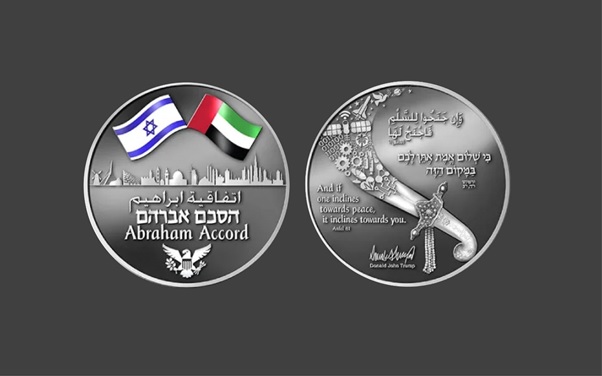
Arab nations followed the 2002 Arab Peace Initiative, which stated that no country would recognize Israel until an independent Palestinian state was created. However, by 2020, changing geopolitical realities created an urgent need for a new approach. The Abraham Accords are a series of agreements that normalize diplomatic, economic, and security relations between Israel and several Arab and Muslim-majority countries.
The accords were brokered by the United States and signed in 2020. They are named after Abraham, a figure respected in Judaism, Islam, and Christianity.
Unlike traditional peace treaties between countries at war, the accords focus on cooperation in trade, technology, investment, tourism, and security.
Israel and several Gulf countries were increasingly concerned about Iran’s regional influence, missile program, and support for armed groups across the Middle East.
Many Gulf nations wanted to diversify their economies beyond oil. Israel offered expertise in technology, innovation, agriculture, water management, and cyber security.
The United States believed that improving relations between Israel and Arab countries could create a more stable regional environment and open the door for future peace initiatives.
|
Phase |
Year |
Countries Involved |
|---|---|---|
|
First Phase |
September 2020 |
United States (Mediator), Israel, United Arab Emirates (UAE), Bahrain |
|
Second Phase |
2020–2021 |
Morocco, Sudan |
Several other countries have shown interest in expanding cooperation with Israel, while discussions continue with nations such as Saudi Arabia and others regarding future normalization.
Trade and investment between Israel and participating countries have increased significantly.
Countries now work more closely on defence, intelligence sharing, and counterterrorism.
Partnerships have expanded in sectors such as artificial intelligence, renewable energy, healthcare, agriculture, and cyber security.
Direct flights and people-to-people contacts have increased, improving regional connectivity.
Despite their success, the Abraham Accords still face major challenges:
Israel’s Establishment and the Abraham AccordsAfter World War II and the Holocaust, Israel declared its independence in 1948, triggering the first Arab-Israeli War. Over the following decades, major conflicts such as the Six-Day War (1967) and the Yom Kippur War (1973) reshaped Middle Eastern geopolitics. Peace agreements with Egypt in 1979 and later with Jordan gradually increased Israel’s diplomatic acceptance in the Arab world. The Oslo Accords of 1993 opened channels for dialogue between Israel and the Palestinians, while shared concerns about Iran and growing economic interests brought several Gulf countries closer to Israel. This changing geopolitical landscape ultimately paved the way for the Abraham Accords in 2020, under which the UAE, Bahrain, Morocco, and Sudan normalized relations with Israel. |
The Abraham Accords have transformed Middle Eastern diplomacy by bringing Israel and several Arab nations closer together. They have created new opportunities for trade, security cooperation, and regional development.
However, lasting peace in West Asia will require more than diplomatic agreements. A sustainable solution to the Palestinian issue and broader regional cooperation will be essential for the long-term success of the accords.



Our support team will be happy to assist you!

 Contact Us
  New Batch : 9555124124/ 7428085757
  Tech Support : 9555124124/ 7428085757