
- UPSC Exam
- State PCS
- One Day Exam
- Current Affairs
- PT Quiz
- Downlaods
- About Coaching
- Blog
- Videos

|
Prelims : International Relations + Economy + Agriculture + CA Mains : GS Paper 3 – Agriculture; Food Security; Economic Development |
India is facing a deepening fertiliser crisis due to supply disruptions caused by the ongoing conflict involving Iran, which has significantly impacted global energy and fertiliser supply chains.
This highlights India’s structural vulnerability due to its heavy dependence on fertiliser imports.

is sourced from :
Prelims
Q. The recent fertiliser crisis in India is primarily linked to :
(a) Decrease in domestic demand
(b) Technological failure in agriculture
(c) Disruption in global supply chains due to geopolitical conflict
(d) Reduction in government subsidies
Mains
“India’s fertiliser crisis highlights structural vulnerabilities in its agricultural and economic system.” Discuss.
FAQsQ1. What caused the fertiliser crisis ? Supply disruptions due to geopolitical conflict. Q2. Why is fertiliser important ? It is essential for crop productivity. Q3. How does it affect inflation ? Through increased food prices. Q4. What is the biggest vulnerability ? Dependence on imports. Q5. What is the long-term solution ? Self-reliance and diversification. |
| Prelims : Defence; Science & Technology + CA Mains : GS Paper 3 – Security; Defence Technology; Maritime Security |
The INS Nireekshak has recently been highlighted in the context of India’s growing focus on underwater capabilities, diving operations, and maritime safety.
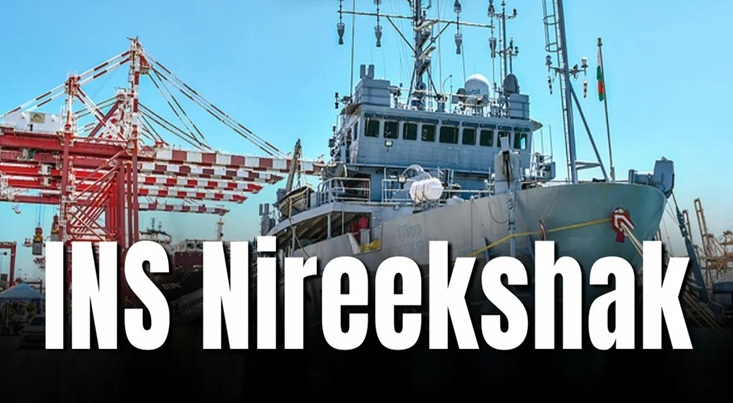
The INS Nireekshak is a diving support vessel (DSV) of the Indian Navy designed to conduct complex underwater operations.
Prelims
Q. INS Nireekshak is associated with :
(a) Aircraft carrier operations
(b) Submarine construction
(c) Diving and underwater support operations
(d) Missile defence systems
Mains
“Specialised vessels like INS Nireekshak play a crucial role in enhancing India’s maritime security.” Discuss.
FAQsQ1. What is INS Nireekshak ? A diving support vessel of the Indian Navy. Q2. What is its main function ? Deep-sea diving and underwater operations. Q3. Why is it important ? Supports submarine rescue and maritime security. Q4. What technologies does it use ? ROVs, sonar, and diving systems. Q5. Where is its strategic relevance ? Indian Ocean Region. |
| Prelims : Science & Technology + Economy + CA Mains : GS Paper 3 – Science & Technology; Economic Development; Regulation of Emerging Technologies |
India has recently notified the Promotion and Regulation of Online Gaming Rules, 2026, marking a significant policy intervention in the rapidly expanding online gaming and esports ecosystem.
Thus, the development signals a transition from a largely unregulated environment to a formal, rule-based digital gaming economy.

Esports (Electronic Sports) refers to organised, competitive video gaming conducted in a structured environment where individuals or teams compete professionally in tournaments.
In India, esports is gradually gaining recognition as a legitimate sporting and economic activity within the digital domain.
This indicates a shift from recreational gaming to a professional and commercially viable competitive industry.
Thus, esports is evolving into a multi-dimensional economic sector with significant job creation potential.
These measures aim to create a safe and responsible gaming environment.
This reflects the government’s focus on curbing social and economic risks associated with gambling.
to :
Prelims
Q. The Online Gaming Rules, 2026 aim to :
(a) Promote gambling
(b) Ban all online games
(c) Regulate gaming and distinguish skill-based games from betting
(d) Eliminate esports
Mains
“Esports represents a rapidly growing sector in India’s digital economy but requires effective regulation.” Discuss.
FAQsQ1. What is esports ? Competitive video gaming as a professional activity. Q2. Why are new rules important ? They regulate the sector and ensure safety. Q3. What is the main objective ? Balance growth and regulation. Q4. What is the key challenge ? Distinguishing skill from chance. Q5. What is the future of esports in India ? High growth potential with proper regulation. |
| Prelims : Economy + CA Mains : GS Paper 3 – Infrastructure; Energy; Economic Reforms |
India’s electricity trading system is undergoing a major structural reform with the introduction of market coupling, a move expected to fundamentally transform how electricity prices are discovered and traded.
This transition represents one of the most significant reforms in India’s power sector since the Electricity Act, 2003.
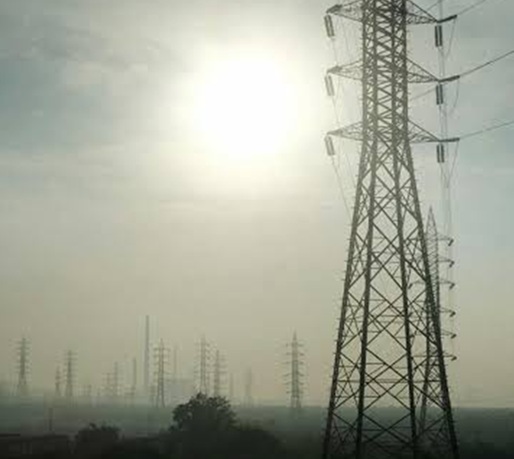
Market coupling is a mechanism in which buy and sell bids from all electricity exchanges are aggregated and cleared through a single algorithm to determine a uniform market price.
In essence, market coupling replaces fragmented price discovery with a unified, efficient pricing mechanism.
Thus, the current system suffers from fragmentation and inefficiencies in price discovery.
This ensures scientific and data-driven pricing.
Prelims
Q. What is the primary objective of market coupling in electricity trading ?
(a) Increasing the number of exchanges
(b) Introducing multiple price systems
(c) Creating a uniform price through integrated bids
(d) Eliminating electricity trading
Mains
“Market coupling represents a transformative reform in India’s electricity sector.” Critically analyse its potential benefits and challenges.
FAQsQ1. What is market coupling ? A system that creates a single electricity price by integrating bids across exchanges. Q2. Who regulates electricity trading in India ? Central Electricity Regulatory Commission. Q3. What is its key benefit ? Efficient and transparent price discovery. Q4. Which market is targeted first ? Day-Ahead Market. Q5. What is the main concern ? Impact on existing exchanges and centralisation risks. |
| Prelims : Economy; Governance + CA Mains : GS Paper 3 – Industrial Growth; Science & Technology; Government Policies |
The Government of India has been actively promoting indigenous technological capabilities and industrial competitiveness through initiatives such as the Technology Development and Investment Promotion Scheme (TDIPS).
The scheme reflects India’s strategy to transition from a technology-importing economy to a technology-producing economy.

The Technology Development and Investment Promotion Scheme (TDIPS) is a government initiative designed to encourage the development, adoption, and commercialisation of advanced technologies within India’s industrial ecosystem.
Its core objective is to enhance technological self-reliance and global competitiveness of Indian industries.
Prelims
Q. The Technology Development and Investment Promotion Scheme aims to :
(a) Increase agricultural subsidies
(b) Promote indigenous technology and industrial growth
(c) Regulate financial markets
(d) Expand public sector employment
Mains
“Technological self-reliance is key to India’s economic growth.” Discuss in the context of schemes like TDIPS.
FAQsQ1. What is TDIPS ? A scheme to promote technology development and industrial investment. Q2. What is its main objective ? Enhancing technological self-reliance. Q3. Which sectors benefit ? High-tech and strategic industries. Q4. What type of support is provided ? Financial incentives and policy support. Q5. Why is it important ? Boosts industrial competitiveness and innovation. |

Our support team will be happy to assist you!


 Contact Us
  New Batch : 9555124124/ 7428085757
  Tech Support : 9555124124/ 7428085757

