- UPSC Exam
- State PCS
- One Day Exam
- Current Affairs
- PT Quiz
- Downlaods
- About Coaching
- Blog
- Videos

| (Preliminary Examination: Current Events of National Importance, General Science) (Mains Examination, General Studies Paper 3: Science and Technology – Developments and Applications and Their Impact on Everyday Life) |
Recently, the Food Safety and Standards Authority of India (FSSAI) clarified that eggs available in the country are completely safe for human consumption. The authority termed recent claims linking eggs to the risk of cancer as misleading, devoid of scientific basis, and unnecessarily spreading public fear.

Scientists have identified a genetic mechanism that could help develop new treatment options for the mysterious and highly lethal Candida auris fungus.

C. auris can affect the body in two main ways:
In this case, the fungus remains present in a specific area, such as the skin, mouth, or rectum, but the patient does not show any obvious symptoms. However, the infection can spread from one person to another.
When it enters the bloodstream or wounds, it can cause a serious and life-threatening infection.
| Prelims: (Security + CA) Mains: (GS 2 – International Relations, Global Security, West Asia) |
The United States launched “Operation Hawkeye Strike” in Syria, targeting Islamic State (IS) infrastructure and weapons storage sites, in direct retaliation for an attack on US forces near Palmyra. The operation signals a firm US counter-terror response amid continued instability in West Asia.
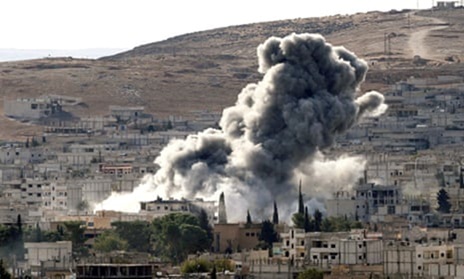
Despite the territorial defeat of the Islamic State’s self-declared Caliphate in 2019, IS continues to operate as a decentralised insurgent and terrorist network across parts of Syria and Iraq.
The prolonged Syrian civil war, foreign military presence, and fragmented governance have created conditions for extremist groups to regroup and launch asymmetric attacks.
The US maintains a limited military presence in Syria to:
Operation Hawkeye Strike reflects Washington’s strategy of targeted military action rather than large-scale deployment.
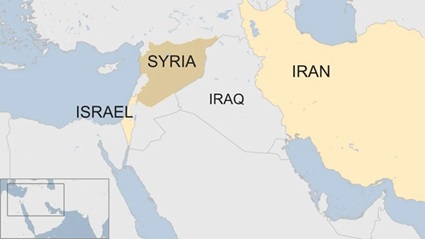
FAQsQ1. What is Operation Hawkeye Strike ? It is a US military operation targeting Islamic State infrastructure in Syria. Q2. Why did the US launch this operation ? In response to an attack on US forces near Palmyra. Q3. Is the Islamic State still active ? Yes. Although territorially weakened, IS operates as an insurgent and terrorist network. Q4. What is India’s position on IS ? India has banned IS and all its affiliates under the UAPA, 1967. Q5. Why is Syria strategically important ? Due to its location in West Asia, ongoing conflict, and role in regional security dynamics. |
| Prelims: (Geography + CA) Mains: (GS 1 – Physical Geography; GS 3 – Climate Change, Oceanography, Environmental Conservation) |
Recent scientific studies have highlighted that the Southern Ocean absorbs a significant share of carbon dioxide released by human activities, thereby mitigating global surface warming and playing a crucial role in regulating Earth’s climate system.
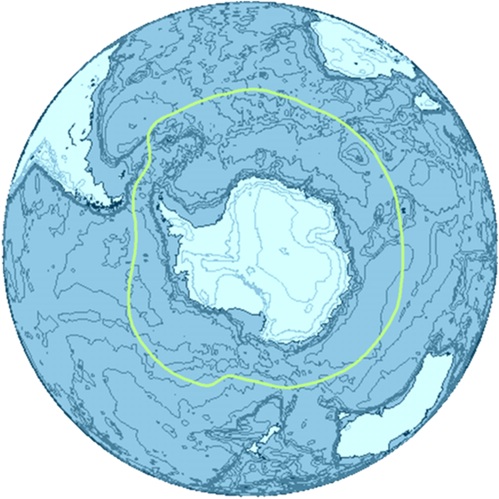
Global warming driven by rising greenhouse gas emissions has intensified research on natural climate regulators, particularly oceans. While oceans collectively absorb over 90% of excess heat and about one-fourth of anthropogenic CO₂, the Southern Ocean’s contribution is disproportionately large compared to its surface area. Its unique circulation patterns, cold waters, and interaction with the atmosphere make it a critical carbon and heat sink, slowing the pace of global temperature rise.
FAQsQ1. Why is the Southern Ocean important for climate regulation ? It absorbs large amounts of heat and carbon dioxide, slowing global surface warming. Q2. What is the Antarctic Circumpolar Current ? It is the world’s strongest and longest ocean current, circulating around Antarctica. Q3. How does the Southern Ocean differ from other oceans ? Its uninterrupted circulation, extreme conditions, and high carbon uptake make it unique. Q4. What is the Drake Passage ? A narrow sea passage between South America and Antarctica that enabled formation of the Southern Ocean current system. Q5. Why is the Southern Ocean relevant for UPSC exams ? It links physical geography, climate change, oceanography, and environmental conservation, making it important for both Prelims and Mains. |
| Prelims: (Education + Governance + Current Affairs) Mains: (GS 2 – Government Policies, Education, Role of State; GS 3 – Human Capital Development, Economy, Inclusive Growth) |
NITI Aayog has released a report titled “Internationalisation of Higher Education in India: Prospects, Potential, and Policy Recommendations”, aligned with the National Education Policy (NEP) 2020. The report comes soon after the introduction of the Viksit Bharat Shiksha Adhishthan Bill, 2025, aimed at reforming higher education regulation, and seeks to correct the sharp imbalance between outbound and inbound student mobility, positioning India as a global education and research hub.
India is one of the world’s largest exporters of students, yet hosts a relatively small number of international learners. This asymmetry has led to significant capital outflows, talent loss, and missed opportunities for knowledge diplomacy.
The NEP 2020 explicitly envisages India as a global study destination, promoting international campuses, foreign faculty, academic collaborations, and global rankings. However, progress has been uneven due to regulatory complexity, perception gaps, and limited internationalisation capacity across institutions.
Against this backdrop, NITI Aayog’s roadmap seeks to provide a strategic, financial, and governance framework to transform India from a student-sending country into a knowledge and research hub by 2047.
FAQsQ1. What is the main objective of NITI Aayog’s report on higher education ? To internationalise Indian higher education and position India as a global education and research hub. Q2. What is the current inbound–outbound student ratio for India ? Approximately 1:28, indicating a severe imbalance. Q3. What is Bharat Vidya Kosh ? A proposed national research sovereign wealth fund to support global competitiveness in higher education. Q4. What is the Tagore Framework ? A proposed multilateral academic mobility programme inspired by Erasmus+, tailored for India’s partner regions. Q5. How does this roadmap align with NEP 2020 ? It operationalises NEP 2020’s vision of globalisation, research excellence, and international collaboration. |
| Prelims: (International Relations + CA) Mains: (GS 2 - Bilateral Relations; GS 3 - International Trade, Economic Deevelopment) |
India and New Zealand have concluded negotiations on a Free Trade Agreement (FTA), aiming to double bilateral trade to USD 5 billion within five years and attract USD 20 billion in New Zealand investment over 15 years. The agreement is expected to be formally signed in the first half of 2026.
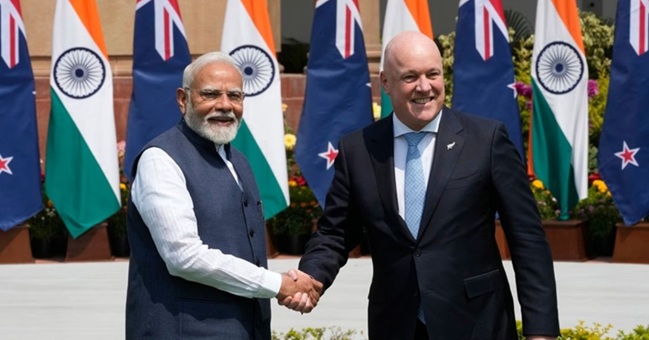
India’s trade diplomacy has increasingly focused on comprehensive FTAs with developed economies to expand export markets, attract investment, and strengthen strategic partnerships in the Indo-Pacific. For New Zealand, India represents a large growth market, while for India, the FTA provides access to a high-income, rules-based economy, complementing India’s broader engagement with Australia, ASEAN, and Pacific partners.
FAQsQ1. What is the India–New Zealand FTA ? It is a comprehensive trade agreement aimed at expanding goods, services, investment, and people-to-people ties between the two countries. Q2. When will the FTA be signed ? The agreement is expected to be formally signed in the first half of 2026. Q3. Which sectors benefit most for India ? Textiles, apparel, pharmaceuticals, automobiles, electronics, and services such as IT and healthcare. Q4. Did India open its dairy sector under the FTA ? No. India protected sensitive sectors including dairy, agriculture, and edible oils. Q5. What is the significance of MFN status in services ? MFN ensures Indian service providers receive treatment no less favourable than other trading partners, expanding professional opportunities. |
| Prelims: (Environment + Polity + CA) Mains: (GS 2 – Constitution, Fundamental Rights, Role of Judiciary; GS 3 – Environmental Pollution, Climate Change, Sustainable Development) |
Recurring episodes of severe air pollution in Delhi–NCR, particularly during winter months, have revived the debate on whether the right to a clean and healthy environment should be explicitly recognised as a fundamental constitutional right in India, rather than remaining only a judicial interpretation under Article 21.

India is witnessing persistent environmental degradation, with air pollution emerging as a major public health crisis in urban and peri-urban regions. Seasonal spikes in pollution—especially in Delhi–NCR—are driven by a combination of vehicular emissions, industrial activity, fossil fuel consumption, construction dust, waste burning, and stubble burning.
Despite multiple policy interventions, enforcement gaps and institutional limitations continue to undermine environmental governance. These recurring crises have prompted renewed scrutiny of the State’s constitutional responsibility to ensure environmental health and raised questions about the adequacy of existing legal protections in the face of growing climate and pollution-related risks.
Environmental pollution has direct and long-term consequences for public health:
Children, the elderly, and economically vulnerable groups are disproportionately affected, highlighting the equity dimension of environmental harm.
Among air pollutants, particulate matter (PM) is considered the most dangerous:
Recognising these risks, the Commission for Air Quality Management (CAQM) has strengthened the Graded Response Action Plan (GRAP), mandating measures such as school closures, traffic restrictions, and staggered office timings during severe pollution episodes—reflecting growing administrative acknowledgment of environmental health threats.
Although the original Constitution did not explicitly mention environmental rights, constitutional protection has evolved through interpretation and amendments:
Together, these provisions establish a shared constitutional responsibility between the State and citizens.
With rapid industrialisation since the mid-1980s, environmental harm intensified, prompting judicial activism:
The Environment (Protection) Act, 1986 strengthened this framework by defining the environment as an interconnected system of air, water, land, and living organisms.
Judicial pronouncements have consistently held that: The right to live with dignity includes the right to pollution-free air and water.
Indian courts have incorporated key global environmental principles:
Absolute Liability
Precautionary Principle
Polluter Pays Principle
These principles emphasise prevention, accountability, and sustainable development as core governance values.
Under the public trust doctrine:
This doctrine aligns with Article 39, which advocates equitable distribution of material resources for the common good.
Recent judicial trends have further expanded environmental rights by acknowledging the impact of climate change. The Supreme Court has recognised protection from adverse climate effects as part of Articles 21 and 14, reflecting the evolving nature of environmental constitutionalism in India.
Despite progressive judicial interpretation, the absence of an explicit fundamental right to a healthy environment creates limitations:
There is a growing argument for formally incorporating the right to a clean and healthy environment as a Fundamental Right, which would:
FAQsQ1. Is the right to a healthy environment a Fundamental Right in India ? Not explicitly. It is currently recognised through judicial interpretation of Article 21. Q2. Which constitutional provisions support environmental protection ? Articles 21, 48A, 51A(g), and 39 collectively support environmental governance. Q3. What role has the judiciary played in environmental protection ? Courts have expanded environmental rights through PILs, doctrines, and landmark judgments. Q4. What is the public trust doctrine ? It holds that the State manages natural resources as a trustee for public benefit, not private exploitation. Q5. Why is explicit constitutional recognition being demanded ? To improve enforceability, accountability, and clarity in protecting environmental and public health rights. |

Our support team will be happy to assist you!

 Contact Us
  New Batch : 9555124124/ 7428085757
  Tech Support : 9555124124/ 7428085757