Prelims: (Security + CA)
Mains: (GS 2 – International Relations, Global Security, West Asia) |
Why in News ?
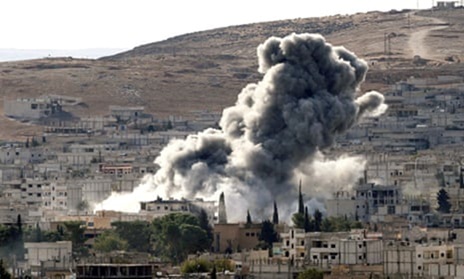
The United States launched “Operation Hawkeye Strike” in Syria, targeting Islamic State (IS) infrastructure and weapons storage sites, in direct retaliation for an attack on US forces near Palmyra. The operation signals a firm US counter-terror response amid continued instability in West Asia.
Background & Context
Despite the territorial defeat of the Islamic State’s self-declared Caliphate in 2019, IS continues to operate as a decentralised insurgent and terrorist network across parts of Syria and Iraq.
The prolonged Syrian civil war, foreign military presence, and fragmented governance have created conditions for extremist groups to regroup and launch asymmetric attacks.
The US maintains a limited military presence in Syria to:
- Prevent IS resurgence
- Support allied forces
- Protect its personnel and strategic interests
Operation Hawkeye Strike reflects Washington’s strategy of targeted military action rather than large-scale deployment.
Operation Hawkeye Strike: Key Details
- Launched by the United States military
- Targets included:
- IS weapons depots
- Logistical infrastructure
- Operational facilities
- Triggered by:
- Attack on US forces in Palmyra, a historically and strategically significant region in central Syria
- Objective:
- Degrade IS operational capability
- Deter future attacks on US and allied forces
Islamic State (IS): Profile
- Also known as:
- ISIS (Islamic State of Iraq and Syria)
- Ideology:
- Sunni extremist, Salafi-jihadist organisation
- Origin:
- Emerged from al-Qaeda in Iraq
- Core Areas of Operation:
Crimes and Activities
- Genocide and crimes against humanity
- Mass executions and terror attacks
- Sexual slavery and forced recruitment
- Destruction of cultural heritage
Status in India
- Banned under the Unlawful Activities (Prevention) Act, 1967 (UAPA)
- All manifestations and affiliated organisations are prohibited
Syria: Strategic Overview
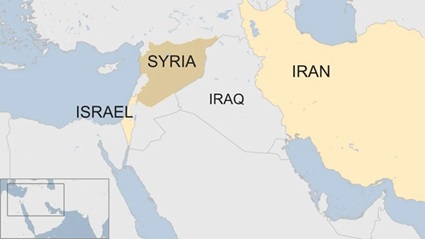
- Location: West Asia
- Borders:
- Turkey (North)
- Iraq (East)
- Jordan (South)
- Israel and Lebanon (West)
- Coastline: Mediterranean Sea
Physical Geography
- Syrian Desert
- Euphrates River Valley
- Anti-Lebanon Mountains
- Mount Hermon (highest peak)
Conflict-Affected Regions
- Aleppo
- Homs
- Idlib
- Golan Heights (disputed with Israel)
Strategic Significance of the Operation
- Reinforces US commitment to counter-terrorism in West Asia
- Signals deterrence against attacks on US forces
- Aims to prevent IS regrouping and regional destabilisation
- Highlights the persistence of terrorism despite territorial defeats
Implications for Regional and Global Security
- Continued instability in Syria sustains global terror threats
- Risk of escalation involving regional and extra-regional powers
- Underscores the limits of military solutions without political reconciliation
- Reinforces the importance of intelligence-led, precision counter-terror operations
Relevance for India
- IS remains a direct internal security threat, with global recruitment networks
- West Asian stability is critical for:
- India’s energy security
- Diaspora safety
- Trade and maritime routes
- India’s firm legal stance under UAPA aligns with global counter-terror efforts
FAQs
Q1. What is Operation Hawkeye Strike ?
It is a US military operation targeting Islamic State infrastructure in Syria.
Q2. Why did the US launch this operation ?
In response to an attack on US forces near Palmyra.
Q3. Is the Islamic State still active ?
Yes. Although territorially weakened, IS operates as an insurgent and terrorist network.
Q4. What is India’s position on IS ?
India has banned IS and all its affiliates under the UAPA, 1967.
Q5. Why is Syria strategically important ?
Due to its location in West Asia, ongoing conflict, and role in regional security dynamics.
|






 Contact Us
  New Batch : 9555124124/ 7428085757
  Tech Support : 9555124124/ 7428085757