New
GS Foundation (P+M) - Delhi : 19th Jan. 2026, 11:30 AM Republic Day offer UPTO 75% + 10% Off, Valid Till : 28th Jan., 2026 GS Foundation (P+M) - Prayagraj : 09th Jan. 2026, 11:00 AM Republic Day offer UPTO 75% + 10% Off, Valid Till : 28th Jan., 2026 GS Foundation (P+M) - Delhi : 19th Jan. 2026, 11:30 AM GS Foundation (P+M) - Prayagraj : 09th Jan. 2026, 11:00 AM

Current Affairs for 23 January 2026

Khadi as a Driver of Sustainable Agriculture

(Prelims: Current Events of National Importance, History of India, and the Indian National Movement)
(Mains, General Studies Papers 1 and 3: Modern Indian history from the mid-18th century to the present—significant events, personalities, themes; topics related to resource mobilization, progress, development, and employment)

Introduction

  • Rooted in the Gandhian ideals of Swadeshi and Gram Swaraj, Khadi represents much more than hand-woven cloth. It symbolizes self-reliance, dignity of labor, sustainable livelihoods, and rural resilience.
  • In the contemporary context of Atmanirbhar Bharat, climate action, and inclusive development, Khadi has re-emerged as a strategic tool linking agriculture, cottage industries, sustainability, and rural employment.

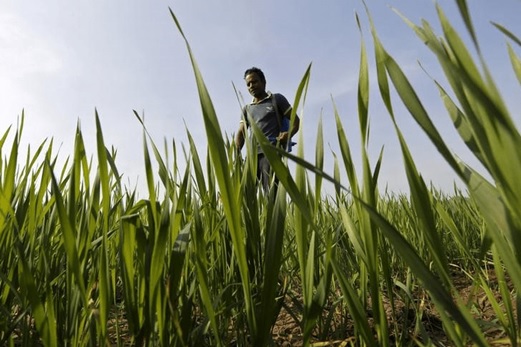
sustainable-agriculture

Gandhian Philosophy and Rural Self-Reliance

  • Mahatma Gandhi envisioned Khadi as a means to achieve economic Swaraj, enabling villages to become self-sufficient units of production and consumption.
  • Khadi spinning and wearing symbolized resistance to colonial exploitation, while also ensuring household livelihoods, especially during the agricultural off-season. This philosophy laid the foundation for Khadi's role in strengthening rural economies and reducing dependence on external markets.

Institutionalization and Farm-to-Cloth Links

  • After independence, the establishment of the Khadi and Village Industries Commission (KVIC) in 1957 transformed Khadi into a structured rural development tool. Khadi's value chain directly links agriculture with cottage industries.
  • It sources raw materials such as cotton from farms, silk from sericulture, wool from sheep rearing, and jute from agro-based farming.
  • This farm-to-cloth ecosystem generates employment for farmers, spinners, weavers, and related workers, maximizes local resource utilization, and preserves traditional skills.

Khadi-Agriculture Synergy and Livelihood Security

  • Khadi provides income diversification for small and marginal farmers, especially during lean periods in agriculture. By providing employment during the off-season, it enhances livelihood security and reduces vulnerability to climate shocks and crop failures.
  • Women benefit significantly through home-based spinning and weaving, which promotes economic independence and social empowerment without the need for large capital investments or migration.

Economic Contribution and Rural Employment

  • Khadi and Village Industries have emerged as a major rural economic engine:
  • Turnover (FY 2024-25): ₹1.70 lakh crore
  • Employment: Approximately 1.94 crore people (up from 1.30 crore in 2013-14)
  • KVIC Turnover (FY 2023-24): ₹1.55 lakh crore
  • Sales growth: 400% and production growth 315% since 2013-14
  • New Jobs Created (over the last decade): 10.17 lakh, representing 81% employment growth.
  • By reducing distress-induced migration and strengthening rural economies, Khadi contributes to GDP growth, rural industrialization, and the goal of doubling farmers' income.

Policy Support and Government Initiatives

  • Khadi's link with agriculture and rural livelihoods is strengthened through key schemes:
  • Honey Mission: Beekeeping for additional income and improved pollination
  •  Potter Empowerment Scheme: Electric potter wheels and training
  • SFURTI: Cluster-based development for infrastructure, skills, and marketing
  • PMEGP: Promotion of micro-enterprises for self-employment
  • Alignment with Atmanirbhar Bharat, Make in India, and Vocal for Local
  • These initiatives establish Khadi as a bridge between traditional livelihoods and modern rural entrepreneurship.

Role in Sustainability and the Green Economy

  • Khadi supports sustainable agriculture and climate action through:
  • Use of organic cotton and natural fibers
  • Eco-friendly practices such as natural dyes, minimal water use, and low chemical inputs
  • Hand-spinning and weaving result in negligible carbon emissions
  • Support for a low-carbon and circular economy model with minimal dependence on electricity
  • Khadi is aligned with India's Net Zero 2070 commitment and demonstrates how traditional industries can drive green growth.
  • Integration with the Millet Mission (Shri Anna) further strengthens climate-smart livelihoods as millets require less water, enhance nutrition, and are suitable for dry regions.

Khadi Modernization

  • To remain relevant, Khadi has embraced innovation, digitization, and market expansion.
  • E-Khadi platforms enable artisans to sell directly to consumers.
  • The Solar Charkha Mission promotes solar-powered spinning.
  • Design interventions appeal to youth and urban markets.
  • Branding through Khadi India and Vocal for Local.
  • Events like the Khadi Festival and digital outreach increase visibility.
  • Globally, Khadi is gaining recognition as a sustainable and ethical textile, in line with the international demand for environmentally conscious fashion.

Conclusion

  • Khadi remains a symbol of simplicity, dignity of labor, and economic independence, while also becoming a symbol of sustainable living and inclusive development. Deeply intertwined with agriculture, it strengthens rural resilience through local production, job creation, and environmental stewardship.
  • As India moves towards Amrit Kaal and India@2047, Khadi can become the hallmark of green, inclusive and self-reliant development, enabling India to establish itself as a global leader in ethical and sustainable production.

NISAR: Science from Space, Impact on Earth

(Prelims: Current Events of National Importance, General Science)
(Mains, General Studies Paper 3: Achievements of Indians in Science and Technology; Indigenous Technology Development and Development of New Technologies; Information Technology, Space)

Introduction

The NISAR (NASA–ISRO Synthetic Aperture Radar) mission is a historic achievement in the field of Earth Observation. This mission is a symbol of scientific cooperation between India and the United States and will prove extremely useful for disaster management, climate studies, and resource planning. NISAR demonstrates how space-based science can directly impact human life and policymaking on Earth.

NISAR

About the NISAR Mission

Introduction

  • NISAR is a joint satellite mission between ISRO and NASA, specifically designed to continuously monitor subtle changes in the Earth's surface.
  • This is the world's first mission to combine L-band and S-band synthetic aperture radar (SAR) on a single platform.

Key Features

  • All-weather and day-and-night Earth observation capability
  • Ability to detect surface changes down to the millimeter level
  • Regular mapping of almost the entire Earth's landmass

Scientific and Technological Significance

The NISAR mission will advance new understanding in the field of Earth science. SAR technology is unaffected by clouds, rain, and darkness, providing continuous and accurate data.

Key Scientific Contributions

  • Monitoring earthquakes and volcanic activity
  • Estimating glacial melt and ice thickness in polar regions
  • Studying land subsidence and landslides
  • Monitoring sea-level rise and coastal erosion

Role in Disaster Management

  • NISAR's most direct impact will be in the field of disaster risk reduction. Availability of timely and accurate data will make early warning systems more effective.
  • It will be able to identify earthquake-prone areas, assess flood and cyclone-prone areas, monitor landslide-prone slopes, and quickly assess damage after a disaster.

Impact on Agriculture, Water Resources, and the Environment

  • Data obtained from NISAR will also be extremely useful in agriculture and natural resource management. Monitoring crop cycles, soil moisture, and irrigation patterns will help increase agricultural productivity.
  • It will be effective in planning and managing water resources, studying deforestation and land-use change, and analyzing long-term trends related to climate change.

Strategic and Diplomatic Importance

  • The NISAR mission provides a new impetus to India's space diplomacy. This mission will provide open data to the global scientific community, enhancing India's soft power.
  • It will enhance ISRO's technical credibility, expand India's role in global climate and disaster research, and strengthen international cooperation.

Challenges

While NISAR is a highly ambitious mission, challenges remain, such as managing vast data, analytical capabilities, and effectively utilizing it for policymaking. This requires inter-departmental coordination and the development of institutional capabilities.

Conclusion

The NISAR mission is an excellent example of how scientific information obtained from space can help improve the quality of life on Earth. This mission will not only elevate India's space capabilities but will also play a vital role in disaster management, climate adaptation, and achieving the Sustainable Development Goals.

India Unveils Responsible Nations Index to Redefine Global Performance Metrics

Prelims: (Polity & Governance + CA)
Mains: (GS 2 – International Relations, Governance, Ethics in Public Administration; GS 3 – Sustainable Development)

Why in News?

India has launched the Responsible Nations Index (RNI) at the Dr. Ambedkar International Centre, New Delhi, marking the country’s first globally anchored index focused on ethical governance and responsible national conduct.

The initiative aims to move beyond traditional measures such as GDP and military power by assessing countries through a broader lens of responsibility, sustainability, and global cooperation.
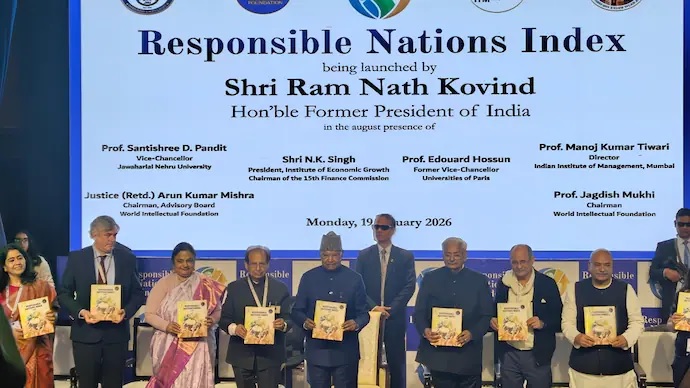
Redefine-Global-Performance-Metrics

Background and Institutional Framework

The Responsible Nations Index is:

  • India’s first globally anchored index, reflecting the country’s growing role in shaping international norms and evaluation frameworks.
  • Developed by the World Intellectual Foundation (WIF) in collaboration with:
    • Jawaharlal Nehru University (JNU),
    • IIM Mumbai, and
    • Dr. Ambedkar International Centre.

The Index covers 154 countries and is based on transparent, globally sourced data, ensuring credibility, comparability, and international acceptance.

Concept and Objectives of the Responsible Nations Index

The RNI is designed to assess countries on the basis of:

  • Responsible governance,
  • Social well-being,
  • Environmental stewardship, and
  • Global responsibility.

Unlike conventional indices that focus on economic output or military capability, the RNI seeks to provide a value-based and ethics-oriented assessment of national performance.

Core Objectives

  • Promote responsible state behaviour,
  • Encourage sustainable and inclusive development,
  • Foster ethical leadership in global affairs,
  • Enable evidence-based policy reforms.

Structure and Core Dimensions of the Index

The Index is structured around three core dimensions:

Internal Responsibility

  • Focuses on:
    • Human dignity,
    • Justice,
    • Well-being of citizens,
    • Quality of governance and social inclusion.

2. Environmental Responsibility

  • Assesses:
    • Stewardship of natural resources,
    • Climate action,
    • Sustainability practices,
    • Ecological resilience.

3. External Responsibility

  • Measures a country’s:
    • Contribution to peace and security,
    • International cooperation,
    • Global stability and multilateral engagement.

Together, these dimensions provide a holistic view of national responsibility at both domestic and international levels.

Significance of the Responsible Nations Index

The RNI holds strategic and normative importance for the global community:

  • Promotes ethical benchmarks in international governance.
  • Encourages a shift from power-centric metrics to value-based evaluation.
  • Supports dialogue on:
    • Global food security,
    • Climate justice,
    • Sustainable leadership,
    • Responsible globalisation.
  • Enhances India’s soft power by positioning it as a norm-shaper rather than just a norm-follower.

The Index is expected to contribute to a more balanced and inclusive understanding of national performance on the global stage.

Implications for Global Governance

The launch of the RNI reflects a broader global shift toward:

  • Accountability-driven governance,
  • Sustainability-oriented development,
  • Ethics-centred international relations.

It aligns with global agendas such as:

  • The UN Sustainable Development Goals (SDGs),
  • Climate commitments under the Paris Agreement,
  • Multilateral efforts toward peace and human security.

By institutionalising responsibility as a core metric, the RNI can influence policy discourse, investment decisions, and international cooperation frameworks.

FAQs

1.What is the Responsible Nations Index (RNI)?

It is India’s first globally anchored index that evaluates countries based on responsibility in governance, society, environment, and global engagement.

2. Who developed the RNI?

The Index was developed by the World Intellectual Foundation (WIF) in collaboration with JNU, IIM Mumbai, and the Dr. Ambedkar International Centre.

3. How many countries are covered under the Index?

The RNI covers 154 countries.

4. What are the three core dimensions of the RNI?

Internal responsibility, environmental responsibility, and external responsibility.

5.Why is the RNI significant?

It shifts global evaluation from GDP- and power-based metrics to ethical, sustainable, and responsibility-driven measures of national performance.

Bombay HC Affirms Liberty of Adult Trafficking Survivors, Limits ‘Protective’ Custody

Prelims: (Polity & Governance + CA)
Mains: (GS 2 – Constitution, Judiciary, Fundamental Rights, Governance, Vulnerable Sections)

Why in News?

The Bombay High Court set aside an order placing an adult trafficking survivor in a protective home for one year, holding that such custody without legal justification violates constitutional liberty.

The court clarified that protective homes under the Immoral Traffic (Prevention) Act (PITA) are meant for rehabilitation, not confinement. It stressed that an adult survivor’s fundamental rights under Articles 19 and 21 do not stand suspended merely because she was trafficked.

The case arose from a police raid in Maharashtra, where the petitioner alone was detained on the assumption that her lack of family support or income made her likely to return to sex work—an assumption the court found impermissible.

bombay-hc-affirms-biberty

Limits of Custody Under the Immoral Traffic (Prevention) Act

What PITA Allows After Rescue

  • Under Section 17 of PITA, a rescued person may be kept in safe custody only briefly if immediate production before a magistrate is not possible.
  • This initial custody is capped at 10 days.

Magisterial Inquiry and Time Limits

  • Once produced before a magistrate, the law mandates an inquiry.
  • During this stage, interim custody may continue, but only up to three weeks.
  • Any placement beyond this period is not automatic and requires strict statutory compliance.

When Long-Term Placement Is Permissible

  • A longer stay in a protective home — one to three years — can be ordered only if the magistrate records a clear finding that the person is “in need of care and protection.”
  • The Bombay High Court emphasised that these timelines reflect legislative intent to prevent rescue from turning into confinement.

Protective Homes vs Corrective Institutions

  • PITA draws a clear distinction:
    • Protective homes (Section 2(g)): Meant for care and rehabilitation of victims.
    • Corrective institutions (Section 2(b)): Meant for detention of offenders and governed by Section 10A.
  • Only persons found guilty of offences under the Act can be sent to corrective institutions.

Constitutional Rights of Adult Survivors

Fundamental Freedoms Remain Intact

  • For adults, constitutional freedoms under Article 19 — including:
    • Freedom of movement,
    • Choice of residence,
    • Right to pursue a livelihood —
      remain intact even after trafficking.

Consent as the Core Principle

  • The High Court held that “care” for an adult survivor must be voluntary.
  • Once an adult clearly expresses a desire to leave a protective home, continued confinement ceases to be care and becomes unlawful detention.
  • In this case, the woman’s repeated refusal to stay made consent central, not optional.

When Care Becomes Detention: The Court’s Test

Substance Over Labels

  • The Court clarified that the difference between care and detention depends on effect, not terminology.
  • Care involves voluntary support — counselling, shelter with consent, and assistance in rebuilding life.
  • Detention is defined by compulsion and restriction.

Consent and Autonomy as the Core

  • When an adult is kept in a protective home against her wishes, with restrictions on movement and choice, it amounts to detention.
  • Such restraint on personal liberty must be justified by concrete material on record, not assumptions.

Victims Are Not Offenders

  • The Court cautioned against treating trafficking survivors as offenders by default.
  • PITA “was not meant to punish a victim of sexual exploitation.”
  • In the absence of conduct attracting penal provisions, restrictions cannot be imposed.

Role of the Magistrate

  • Under PITA, only a magistrate, after conducting a proper inquiry, can determine whether a rescued person genuinely requires care and protection.
  • Any placement in a protective home must follow this satisfaction and statutory safeguards.

When Detention May Be Justified

Detention may be permissible only in limited situations, such as:

  • Medical evidence of impaired decision-making capacity,
  • Demonstrable danger to society if released,
  • The person being an accused in a criminal case.

Why Detention Failed in This Case

  • None of these conditions were met.
  • There was:
    • No medical evidence of incapacity,
    • No finding of danger to others,
    • No criminal charge against the woman.
  • The Court rejected speculative fears — including the possibility of returning to sex work — as insufficient grounds for confinement.

What the Law Penalises Under PITA?

Prostitution Is Not a Crime

  • PITA does not criminalise prostitution itself.
  • Courts have clarified that engaging in sex work does not automatically make a person an offender.

Focus on Exploitation, Not Individuals

  • The Act targets the commercial exploitation surrounding prostitution.
  • The law is aimed at those who control, profit from, or facilitate exploitation — not the individuals trapped within it.

Who the Act Criminally Targets

Criminal liability arises for:

  • Managing or running a brothel,
  • Living off the earnings of another person’s prostitution,
  • Procuring or trafficking persons for prostitution, even with apparent consent,
  • Detaining a person for sexual exploitation.

Limited Punishable Conduct

  • Certain acts linked to prostitution are punishable only when they affect public order, such as:
    • Soliciting in public spaces,
    • Operating near schools, hospitals, or places of worship.
  • Courts stress these are regulatory, not moral, provisions.

Poverty Is Not Grounds for Detention

  • The Bombay High Court rejected the view that economic vulnerability justifies confinement.
  • Lack of family support or fear of returning to sex work cannot override constitutional rights.
  • Poverty may warrant assistance, but never the curtailment of liberty.

FAQs

1.What did the Bombay High Court rule regarding protective custody?

It held that placing an adult trafficking survivor in a protective home without legal justification violates constitutional liberty.

2. What is the purpose of protective homes under PITA?

They are meant for rehabilitation and care, not detention or confinement.

3. Can an adult survivor be kept in a protective home against her will?

No. Care for adults must be voluntary; forced stay amounts to unlawful detention.

4. Does PITA criminalise prostitution?

No. The Act targets exploitation and trafficking, not prostitution itself.

5. When can detention of a rescued person be justified?

Only in limited situations such as impaired capacity, danger to society, or if the person is accused of a crime.

Supreme Court Reconsiders Prior Approval in Corruption Investigations

Prelims: (Polity & Governance + CA)
Mains: (GS 2 – Constitution, Judiciary, Accountability, Governance, Rule of Law)

Why in News?

The Supreme Court has delivered a split verdict on the constitutional validity of Section 17A of the Prevention of Corruption Act, 1988, which mandates prior government approval before investigating certain corruption allegations against public servants.

The matter has now been referred to a larger Bench for final adjudication, with significant implications for the future of India’s anti-corruption framework.

Background: Prevention of Corruption Act, 1988

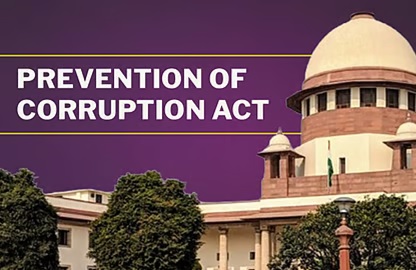
The Prevention of Corruption Act, 1988 (PCA) is India’s principal legislation addressing corruption by public servants in the discharge of official duties.
supreme-court-reconsiders

Origins

  • The Act traces its roots to the Santhanam Committee (1962–64), which recommended a robust legal framework to curb corruption in public life.
  • The PCA consolidated earlier laws and introduced comprehensive penal provisions covering:
    • Bribery,
    • Criminal misconduct, and
    • Abuse of official position.

Scope

  • The term “public servant” is defined broadly to include:
    • Government employees,
    • Judges, and
    • Individuals entrusted with public duties.

Over time, judicial scrutiny and legislative amendments have shaped the balance between protecting honest officials and ensuring accountability for corrupt practices.

Section 17A and Its Legislative Intent

Introduction

  • Section 17A was inserted through the 2018 amendment to the PCA.

Provision

  • It mandates that prior approval of the appropriate government is required before initiating any inquiry or investigation against a public servant for decisions or recommendations made while discharging official functions.

Legislative Rationale

  • Lawmakers argued that honest officers were becoming risk-averse due to fear of frivolous or malicious investigations.
  • There were concerns that excessive scrutiny could lead to “policy paralysis”, discouraging officials from taking bold or time-sensitive decisions, especially in economic and administrative matters.

Comparison with Section 19

  • The PCA already contains Section 19, which requires prior sanction before a court can take cognisance of corruption offences.
  • Section 17A extends this protective mechanism to the pre-investigation stage, significantly altering the investigative process.

Judicial Precedents on Prior Sanction

The Supreme Court has historically been cautious about executive control over corruption investigations.

Key Judgments

  • Vineet Narain vs Union of India (1998): The Court struck down the “Single Directive,” which required prior government approval before investigating senior officials.
  • Subramanian Swamy vs Director, CBI (2014): Section 6A of the Delhi Special Police Establishment Act, which required prior approval to investigate senior officers, was declared unconstitutional for violating Article 14 (equality before law).

These rulings established that differential treatment based on rank or position undermines the principle of equal accountability under law.

Supreme Court’s Split Verdict on Section 17A

A two-judge Bench of the Supreme Court delivered a split verdict while examining the constitutional validity of Section 17A.

View Upholding Section 17A

  • One judge upheld the provision, reasoning that:
    • Prior approval is necessary to protect honest officers from harassment.
    • It prevents the emergence of a “play-it-safe” bureaucratic culture.
  • However, this view came with a crucial caveat:
    • The approval mechanism should involve an independent body, such as the Lokpal or Lokayukta, rather than being controlled solely by the executive.

View Striking Down Section 17A

  • The other judge declared Section 17A unconstitutional, holding that:
    • It effectively reintroduces safeguards that were previously invalidated by the Court.
    • It fails the test of reasonable classification under Article 14.
    • Adequate protection already exists under Section 19 at the prosecution stage, making Section 17A redundant and excessive.

Outcome

  • Due to the split verdict, the issue has been referred to a larger Bench for authoritative resolution.

Governance and Accountability Implications

The case raises fundamental questions about governance and accountability.

Competing Concerns

  • Excessive procedural safeguards may:
    • Dilute the effectiveness of anti-corruption agencies,
    • Delay investigations, and
    • Allow evidence to be destroyed.
  • Unchecked investigative powers may:
    • Be misused as tools of political or administrative vendetta,
    • Undermine morale in public services.

The debate highlights the challenge of balancing:

  • Administrative efficiency,
  • Decision-making autonomy, and
  • Constitutional principles of equality and rule of law.

The outcome of the larger Bench decision will significantly shape the future of corruption control mechanisms in India.

Way Forward and Systemic Reforms

Beyond the constitutional question, the case underscores broader systemic issues in combating corruption.

Key Reform Directions

  • Ensure speedy investigations and time-bound trials to enhance deterrence.
  • Introduce mechanisms to penalise false or malicious complaints without shielding genuine wrongdoing.
  • Strengthen institutional independence of investigative agencies.
  • Ensure transparency and accountability in approval mechanisms, if retained.
  • Enhance judicial oversight to maintain public trust in anti-corruption institutions.

A balanced framework must protect honest officials while ensuring that corruption does not escape timely and effective scrutiny.

FAQs

1.What is Section 17A of the Prevention of Corruption Act?

It requires prior government approval before initiating investigations against public servants for decisions taken in official capacity.

2.Why has Section 17A been challenged?

It is argued to undermine equality before law and reintroduce executive control over corruption investigations.

3.What did the Supreme Court decide?

A two-judge Bench delivered a split verdict, and the matter has been referred to a larger Bench.

4.How does Section 17A differ from Section 19?

Section 19 requires prior sanction at the prosecution stage, whereas Section 17A applies at the pre-investigation stage.

5.Why is this case significant for governance?

It will determine the balance between protecting honest officials and ensuring effective anti-corruption enforcement.

Centre Notifies Eco-Sensitive Zone Around Kumbhalgarh Sanctuary to Protect Aravalli Ecosystem

Prelims: (Environment + CA)
Mains: (GS 3 – Environment, Conservation, Sustainable Development, Climate Change)

Why in News?

  • The Central Government has declared the biodiversity-rich area ranging from 0 to 1 km around the Kumbhalgarh Wildlife Sanctuary in Rajasthan as an Eco-Sensitive Zone (ESZ).
  • The sanctuary lies in one of the most fragile ecological landscapes of the Aravalli Range, and the notification aims to regulate human activities and strengthen conservation in the region.

eco-sensitive-zone

Background: Kumbhalgarh Wildlife Sanctuary

  • The Kumbhalgarh Wildlife Sanctuary is located in Rajasthan and derives its name from the historic Kumbhalgarh Fort, a UNESCO World Heritage Site that lies within its boundaries.
  • The sanctuary is part of the Aravalli mountain ecosystem, one of the oldest mountain ranges in the world, known for its ecological sensitivity and biodiversity significance.

Geographical Setting and Drainage Pattern

Drainage Systems

  • Eastern Section:
    • Serves as the origin point of the Banas River, which ultimately flows into the Bay of Bengal via the Chambal and Yamuna river systems.
  • Western Slopes:
    • Rainwater forms small rivers such as Sukdi, Sumer, Mithdi, and Kot.
    • These rivers are tributaries of the Luni River, which flows toward the Arabian Sea.

This dual drainage system highlights the sanctuary’s hydrological importance in linking eastern and western river basins.

Flora of the Sanctuary

The sanctuary’s vegetation is dominated by dry deciduous forest and scrubland species, adapted to the semi-arid climate of the Aravallis.

Major Floral Species

  • Herbs and shrubs dominate the landscape.
    • Tree species such as:
    • Churel,
    • Dhok,
    • Khair,
    • Salar,
      grow abundantly.

These plant communities support soil stability, groundwater recharge, and wildlife habitat.

Fauna of the Sanctuary

Kumbhalgarh Wildlife Sanctuary serves as a natural refuge for a wide range of wildlife, including both carnivores and herbivores.

Key Faunal Species

  • Carnivores: Wolf, Leopard, Sloth Bear, Hyena, Jackal, Jungle Cat
  • Herbivores: Sambar, Nilgai, Chinkara, Hare
  • Unique species: Chausingha (Four-horned antelope) — a rare and regionally significant species.

The presence of top predators and rare herbivores reflects the sanctuary’s ecological integrity.

Eco-Sensitive Zone (ESZ): Concept and Purpose

What is an ESZ?

Eco-Sensitive Zones are areas notified around protected areas to act as buffer zones, regulating development and human activities to minimise ecological damage.

Objectives of Declaring ESZ Around Kumbhalgarh

  • Prevent habitat degradation and fragmentation,
  • Regulate mining, construction, and industrial activity,
  • Promote sustainable livelihoods and eco-tourism,
  • Protect water sources and biodiversity corridors.

The 0–1 km ESZ around Kumbhalgarh aims to balance conservation with community development.

Ecological and Strategic Significance

The Aravalli Range plays a crucial role in:

  • Preventing desertification,
  • Regulating regional climate,
  • Acting as a natural groundwater recharge zone.

Protecting Kumbhalgarh and its surrounding areas strengthens:

  • Landscape-level conservation,
  • Wildlife corridors,
  • Long-term ecological resilience in north-western India.

Way Forward

Effective implementation of the ESZ notification requires:

  • Strong coordination between central, state, and local authorities,
  • Community participation in conservation,
  • Sustainable livelihood alternatives,
  • Continuous ecological monitoring.

Such measures will ensure that development proceeds without compromising ecological security.

FAQs

1.Where is Kumbhalgarh Wildlife Sanctuary located?

It is located in Rajasthan and includes the historic Kumbhalgarh Fort within its boundaries.

2. Why has an Eco-Sensitive Zone been declared around it?

To regulate human activities, protect biodiversity, and conserve the fragile Aravalli ecosystem.

3. Which rivers originate from the sanctuary region?

The Banas River originates from the eastern section, while western slopes feed tributaries of the Luni River.

4. What are some important animals found in the sanctuary?

Leopard, Sloth Bear, Wolf, Hyena, Chausingha, Sambar, Nilgai, and Chinkara.

5. What is the significance of ESZs around protected areas?

They act as buffer zones to minimise ecological damage and promote sustainable development.

RBI Flags Strong Domestic Growth Amid Rising Global Uncertainties

Prelims: (Indian Economy + CA)
Mains: (GS 3 – Indian Economy, Growth & Development, External Sector, Macroeconomic Stability)

Why in News?

The Reserve Bank of India (RBI), in its State of the Economy article, has assessed India’s macroeconomic conditions using high-frequency indicators for December 2025. The assessment highlights continued growth momentum, resilient domestic demand, and optimism about future prospects, despite elevated global geopolitical and geo-economic risks. The views expressed in the article are those of the authors and do not represent the official stance of the RBI.

RBI-Flags

Key Growth Signals – Domestic Economy

Robust demand conditions

  • High-frequency indicators point to sustained buoyancy in growth impulses.
  • Demand remains upbeat, driven by strong consumption and broad-based economic activity.

Revival of rural demand

  • Retail automobile sales recorded broad-based growth across categories.
  • Key drivers include:
    • GST rate cuts improving affordability,
    • Year-end promotional offers,
    • Pre-buying ahead of expected price hikes in January.

Commercial activity and logistics

  • Retail commercial vehicle sales maintained strong growth, indicating:
    • Improved goods movement,
    • Healthy logistics activity,
    • Strong underlying economic momentum.

GST and formal economy indicators

  • E-way bill generation continued healthy growth, reflecting:
    • GST rate rationalisation,
    • Stock clearance,
    • Firms pushing year-end sales.
  • These trends point to continued formalisation and compliance within the economy.

Macro-Economic Indicators

GDP Growth

  • As per the National Statistics Office’s first advance estimate,
    Real GDP growth for 2025–26 is projected at 7.4%, up from 6.5% a year earlier, indicating an acceleration in economic activity.

Inflation Trends

  • In December, CPI inflation rose to 1.3%, driven by:
    • A lower rate of deflation in the food group,
    • An increase in core inflation.
  • While inflation remains moderate, the RBI signals the need for vigilance amid external risks.

Global Geopolitical and Geo-Economic Risks

Key developments at the start of 2026

  • US intervention in Venezuela,
  • Ongoing Middle East conflict,
  • Uncertainty over a Russia–Ukraine peace deal,
  • Escalation of the Greenland dispute.

Implications

  • Elevated geo-economic risks,
  • High policy uncertainty,
  • Potential spillover effects on:
    • Trade flows,
    • Energy prices,
    • Capital movements.

These uncertainties pose challenges to global growth and financial stability, requiring proactive macroeconomic management.

Structural Reforms and Policy Environment (2025)

Major reforms highlighted

  • Rationalisation of tax structures,
  • Implementation of labour codes (labour market reforms),
  • Financial sector deregulation.

Expected outcomes

  • Improved growth prospects,
  • Enhanced productivity,
  • Strengthened medium- to long-term economic fundamentals.

The RBI underscores that reform momentum remains a key pillar of India’s economic resilience.

External Sector and Trade Strategy

Export diversification

  • India has significantly expanded its export footprint by targeting:
    • New markets in Africa and Latin America,
    • Reducing dependence on traditional markets.

Trade negotiations

  • Ongoing negotiations with 14 countries and groupings, covering nearly 50 nations, including:
    • European Union (EU),
    • Gulf Cooperation Council (GCC),
    • United States.

These efforts aim to secure better market access and strengthen India’s integration into global value chains.

Challenges and Way Ahead

Persisting global instability

  • Strategy: Strengthen domestic demand while boosting export competitiveness.

Risk of imported inflation

  • Tackle through:
    • Monetary measures (interest rate adjustments),
    • Fiscal actions (reducing import duties),
    • Trade policies (boosting domestic supply chains).

Balancing growth and inflation

  • Maintain a calibrated approach between:
    • Innovation vs. stability,
    • Growth vs. consumer protection.

Ensuring inclusive and sustainable growth

  • Deepen structural reforms to enhance productivity and economic resilience.

Managing policy uncertainty

  • Continue prudent regulation and supervision to safeguard financial stability.

FAQs

1.What is the RBI’s State of the Economy article?

It is a periodic analytical note assessing India’s macroeconomic conditions using high-frequency data.

2. What growth rate is projected for India in 2025–26?

Real GDP growth is estimated at 7.4%, according to the NSO’s first advance estimate.

3. Why is inflation being closely monitored?

Rising global uncertainties and food price dynamics pose risks of imported and domestic inflation.

4. How is India strengthening its external sector?

Through export diversification, new trade negotiations, and expanding market access.

5. What reforms are supporting long-term growth?

Tax rationalisation, labour market reforms, and financial sector deregulation are key drivers.

« »
  • SUN
  • MON
  • TUE
  • WED
  • THU
  • FRI
  • SAT
Have any Query?

Our support team will be happy to assist you!

OR