New
GS Foundation (P+M) - Delhi : 19th Jan. 2026, 11:30 AM Republic Day offer UPTO 75% + 10% Off, Valid Till : 28th Jan., 2026 GS Foundation (P+M) - Prayagraj : 09th Jan. 2026, 11:00 AM Republic Day offer UPTO 75% + 10% Off, Valid Till : 28th Jan., 2026 GS Foundation (P+M) - Delhi : 19th Jan. 2026, 11:30 AM GS Foundation (P+M) - Prayagraj : 09th Jan. 2026, 11:00 AM

Khadi as a Driver of Sustainable Agriculture

(Prelims: Current Events of National Importance, History of India, and the Indian National Movement)
(Mains, General Studies Papers 1 and 3: Modern Indian history from the mid-18th century to the present—significant events, personalities, themes; topics related to resource mobilization, progress, development, and employment)

Introduction

  • Rooted in the Gandhian ideals of Swadeshi and Gram Swaraj, Khadi represents much more than hand-woven cloth. It symbolizes self-reliance, dignity of labor, sustainable livelihoods, and rural resilience.
  • In the contemporary context of Atmanirbhar Bharat, climate action, and inclusive development, Khadi has re-emerged as a strategic tool linking agriculture, cottage industries, sustainability, and rural employment.

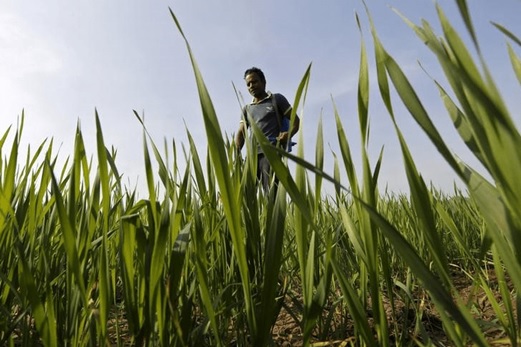
sustainable-agriculture

Gandhian Philosophy and Rural Self-Reliance

  • Mahatma Gandhi envisioned Khadi as a means to achieve economic Swaraj, enabling villages to become self-sufficient units of production and consumption.
  • Khadi spinning and wearing symbolized resistance to colonial exploitation, while also ensuring household livelihoods, especially during the agricultural off-season. This philosophy laid the foundation for Khadi's role in strengthening rural economies and reducing dependence on external markets.

Institutionalization and Farm-to-Cloth Links

  • After independence, the establishment of the Khadi and Village Industries Commission (KVIC) in 1957 transformed Khadi into a structured rural development tool. Khadi's value chain directly links agriculture with cottage industries.
  • It sources raw materials such as cotton from farms, silk from sericulture, wool from sheep rearing, and jute from agro-based farming.
  • This farm-to-cloth ecosystem generates employment for farmers, spinners, weavers, and related workers, maximizes local resource utilization, and preserves traditional skills.

Khadi-Agriculture Synergy and Livelihood Security

  • Khadi provides income diversification for small and marginal farmers, especially during lean periods in agriculture. By providing employment during the off-season, it enhances livelihood security and reduces vulnerability to climate shocks and crop failures.
  • Women benefit significantly through home-based spinning and weaving, which promotes economic independence and social empowerment without the need for large capital investments or migration.

Economic Contribution and Rural Employment

  • Khadi and Village Industries have emerged as a major rural economic engine:
  • Turnover (FY 2024-25): ₹1.70 lakh crore
  • Employment: Approximately 1.94 crore people (up from 1.30 crore in 2013-14)
  • KVIC Turnover (FY 2023-24): ₹1.55 lakh crore
  • Sales growth: 400% and production growth 315% since 2013-14
  • New Jobs Created (over the last decade): 10.17 lakh, representing 81% employment growth.
  • By reducing distress-induced migration and strengthening rural economies, Khadi contributes to GDP growth, rural industrialization, and the goal of doubling farmers' income.

Policy Support and Government Initiatives

  • Khadi's link with agriculture and rural livelihoods is strengthened through key schemes:
  • Honey Mission: Beekeeping for additional income and improved pollination
  •  Potter Empowerment Scheme: Electric potter wheels and training
  • SFURTI: Cluster-based development for infrastructure, skills, and marketing
  • PMEGP: Promotion of micro-enterprises for self-employment
  • Alignment with Atmanirbhar Bharat, Make in India, and Vocal for Local
  • These initiatives establish Khadi as a bridge between traditional livelihoods and modern rural entrepreneurship.

Role in Sustainability and the Green Economy

  • Khadi supports sustainable agriculture and climate action through:
  • Use of organic cotton and natural fibers
  • Eco-friendly practices such as natural dyes, minimal water use, and low chemical inputs
  • Hand-spinning and weaving result in negligible carbon emissions
  • Support for a low-carbon and circular economy model with minimal dependence on electricity
  • Khadi is aligned with India's Net Zero 2070 commitment and demonstrates how traditional industries can drive green growth.
  • Integration with the Millet Mission (Shri Anna) further strengthens climate-smart livelihoods as millets require less water, enhance nutrition, and are suitable for dry regions.

Khadi Modernization

  • To remain relevant, Khadi has embraced innovation, digitization, and market expansion.
  • E-Khadi platforms enable artisans to sell directly to consumers.
  • The Solar Charkha Mission promotes solar-powered spinning.
  • Design interventions appeal to youth and urban markets.
  • Branding through Khadi India and Vocal for Local.
  • Events like the Khadi Festival and digital outreach increase visibility.
  • Globally, Khadi is gaining recognition as a sustainable and ethical textile, in line with the international demand for environmentally conscious fashion.

Conclusion

  • Khadi remains a symbol of simplicity, dignity of labor, and economic independence, while also becoming a symbol of sustainable living and inclusive development. Deeply intertwined with agriculture, it strengthens rural resilience through local production, job creation, and environmental stewardship.
  • As India moves towards Amrit Kaal and India@2047, Khadi can become the hallmark of green, inclusive and self-reliant development, enabling India to establish itself as a global leader in ethical and sustainable production.
Have any Query?

Our support team will be happy to assist you!

OR