(Prelims: Current Events of National Importance, General Science)
(Mains, General Studies Paper 3: Achievements of Indians in Science and Technology; Indigenous Technology Development and Development of New Technologies; Information Technology, Space) |
Introduction
The NISAR (NASA–ISRO Synthetic Aperture Radar) mission is a historic achievement in the field of Earth Observation. This mission is a symbol of scientific cooperation between India and the United States and will prove extremely useful for disaster management, climate studies, and resource planning. NISAR demonstrates how space-based science can directly impact human life and policymaking on Earth.
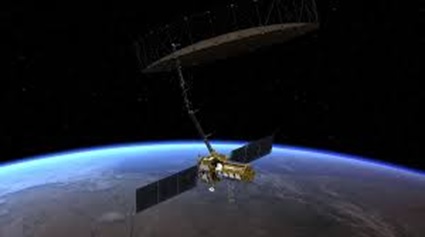
About the NISAR Mission
Introduction
- NISAR is a joint satellite mission between ISRO and NASA, specifically designed to continuously monitor subtle changes in the Earth's surface.
- This is the world's first mission to combine L-band and S-band synthetic aperture radar (SAR) on a single platform.
Key Features
- All-weather and day-and-night Earth observation capability
- Ability to detect surface changes down to the millimeter level
- Regular mapping of almost the entire Earth's landmass
Scientific and Technological Significance
The NISAR mission will advance new understanding in the field of Earth science. SAR technology is unaffected by clouds, rain, and darkness, providing continuous and accurate data.
Key Scientific Contributions
- Monitoring earthquakes and volcanic activity
- Estimating glacial melt and ice thickness in polar regions
- Studying land subsidence and landslides
- Monitoring sea-level rise and coastal erosion
Role in Disaster Management
- NISAR's most direct impact will be in the field of disaster risk reduction. Availability of timely and accurate data will make early warning systems more effective.
- It will be able to identify earthquake-prone areas, assess flood and cyclone-prone areas, monitor landslide-prone slopes, and quickly assess damage after a disaster.
Impact on Agriculture, Water Resources, and the Environment
- Data obtained from NISAR will also be extremely useful in agriculture and natural resource management. Monitoring crop cycles, soil moisture, and irrigation patterns will help increase agricultural productivity.
- It will be effective in planning and managing water resources, studying deforestation and land-use change, and analyzing long-term trends related to climate change.
Strategic and Diplomatic Importance
- The NISAR mission provides a new impetus to India's space diplomacy. This mission will provide open data to the global scientific community, enhancing India's soft power.
- It will enhance ISRO's technical credibility, expand India's role in global climate and disaster research, and strengthen international cooperation.
Challenges
While NISAR is a highly ambitious mission, challenges remain, such as managing vast data, analytical capabilities, and effectively utilizing it for policymaking. This requires inter-departmental coordination and the development of institutional capabilities.
Conclusion
The NISAR mission is an excellent example of how scientific information obtained from space can help improve the quality of life on Earth. This mission will not only elevate India's space capabilities but will also play a vital role in disaster management, climate adaptation, and achieving the Sustainable Development Goals.






 Contact Us
  New Batch : 9555124124/ 7428085757
  Tech Support : 9555124124/ 7428085757