New
Final Result - UPSC CSE Result, 2025 GS Foundation (P+M) - Delhi : 23rd March 2026, 11:30 AM Navratri offer UPTO 75% + 10% Off | Valid till 26th March GS Foundation (P+M) - Prayagraj : 17th March 2026 Final Result - UPSC CSE Result, 2025 GS Foundation (P+M) - Delhi : 23rd March 2026, 11:30 AM Navratri offer UPTO 75% + 10% Off | Valid till 26th March GS Foundation (P+M) - Prayagraj : 17th March 2026

Current Affairs for 23 March 2026

Safeguarding Children Online: India’s Regulatory Gaps and Emerging Risks

Prelims : (Polity & Governance + Social Issues + CA)
Mains : (GS 2 – Governance, Cyber Laws, Vulnerable Sections; GS 1 – Society, Children Issues)

Why in News ?

India’s approach to protecting children on social media is under scrutiny due to rising risks such as harmful content exposure, online grooming, and cybercrime. Despite multiple laws and platform-led safeguards, enforcement gaps and technological loopholes continue to undermine child safety online.

Background and Context

With rapid digitalisation, children in India are increasingly accessing :

  • Social media platforms
  • Online gaming ecosystems
  • Video streaming services

This has created a dual challenge :

  • Enabling digital inclusion and learning
  • Ensuring online safety and protection

Current Legal Framework

India relies on a multi-layered regulatory system, including :

  • Digital Personal Data Protection Act, 2023
  • Information Technology Act, 2000
  • Protection of Children from Sexual Offences Act, 2012

Key Provision :

  • Mandatory parental consent before processing children’s personal data

Risks for Children in the Online Space

1. Exposure to Harmful Content

  • Increased screen time exposes children to :
    • Violent or inappropriate content
    • Addictive digital environments
  • Impacts :
    • Anxiety and stress
    • Social isolation
    • Behavioral changes

2. Threat of Online Grooming

  • Predators exploit children through :
    • Social media
    • Messaging platforms
  • Leads to :
    • Emotional manipulation
    • Sexual exploitation risks

3. Rising Cybercrime Against Children

  • NCRB data shows :
    • 32% increase in cybercrimes against children (2021–2022)
  • Includes :
    • Identity theft
    • Blackmail
    • Online harassment

Increasing Internet Usage Among Children

According to a report by NITI Aayog (2023) :

  • Up to 5 years: ~1.5 hours/day
  • 6–10 years: ~2.5 hours/day
  • 11–15 years: ~4 hours/day
  • 16–18 years: ~6 hours/day

Insight :

  • Screen time increases with age
  • Higher exposure leads to : 
    • Greater vulnerability
    • Increased risk of harmful interactions

Platform-Level Safeguards

Digital platforms have introduced safety mechanisms :

1. Age-Gating Systems

  • Restrict access based on age
  • Often bypassed through false information

2. Parental Controls

  • Allow monitoring of : 
    • Content
    • Screen time
  • Limited effectiveness in practice

3. Child-Focused Platforms

  • Platforms like YouTube Kids :
    • Provide curated content
    • Enable parental customisation
  • Attempts at dedicated child platforms (e.g., Instagram Kids) have faced concerns and delays

Policy Developments

  • Government is considering a graded regulatory framework : 
    • Age-based restrictions
    • Differential access to features
  • Emphasis on : 
    • Safer default settings
    • Increased platform accountability

Key Challenges

1. Enforcement Gaps

  • Laws exist but implementation is inconsistent

2. Technological Loopholes

  • Easy age misrepresentation
  • Difficulty in verifying user identity

3. Platform Limitations

  • Safety tools : 
    • Can be bypassed
    • May not be uniformly effective

4. Low Digital Literacy

  • Parents and children often unaware of : 
    • Risks
    • Safety practices

Significance of the Issue

1. Protection of Vulnerable Population

  • Children are highly susceptible to online harm

2. Mental Health Concerns

  • Digital exposure affects emotional and psychological well-being

3. National Cybersecurity

  • Rising cybercrime impacts broader digital ecosystem

4. Need for Regulatory Evolution

  • Traditional laws struggle to keep pace with digital innovation

5. Balancing Access and Safety

  • Ensuring safe digital participation without restricting opportunities

Way Forward

  • Strengthen age verification mechanisms
  • Enhance platform accountability and compliance
  • Promote digital literacy among parents and children
  • Develop child-centric cyber safety policies
  • Encourage global cooperation on child online protection standards

FAQs

1. What laws protect children online in India ?

Key laws include the Digital Personal Data Protection Act, IT Act, and POCSO Act.

2. What is online grooming ?

It is when predators build trust with children online to exploit them.

3. Why are current safeguards insufficient ?

Due to weak enforcement, technological loopholes, and easy bypass of safety features.

4. What is age-gating ?

It is a system used by platforms to restrict access based on age.

5. What is the main policy challenge ?

Balancing children’s digital access with effective safety and protection mechanisms.

Forex Reserves as India’s Shield Against External Shocks

Prelims : (Economy + External Sector + CA)
Mains : (GS 3 – Economy, External Sector, Balance of Payments)

Why in News ?

Amid escalating geopolitical tensions in West Asia, India’s external sector has come under pressure. In recent weeks:

  • Forex reserves declined by $19 billion
  • The rupee depreciated by 2.9% to ₹93.72
  • Stock markets fell nearly 9%
  • Foreign investors withdrew around ₹1.03 lakh crore (~$11 billion)

These developments have renewed focus on the role of foreign exchange (forex) reserves in stabilising the economy during crises.
What are Foreign Exchange (Forex) Reserves ?

Forex reserves are assets held by a country’s central bank, primarily in foreign currencies such as the US dollar.

In India, they are managed by the Reserve Bank of India.

Components of Forex Reserves:

  • Foreign Currency Assets (FCA)
  • Gold reserves
  • Special Drawing Rights (SDRs)
  • Reserve Tranche Position (RTP) with IMF

Functions of Forex Reserves

1. Financing Current Account Deficit (CAD)

  • Covers the gap between : 
    • Imports and exports
  • Ensures continuity of external payments

2. Exchange Rate Stabilisation

  • RBI sells dollars during : 
    • Capital outflows
  • Helps prevent excessive rupee depreciation

3. Enhancing Macroeconomic Credibility

  • Signals economic strength to : 
    • Global investors
    • Credit rating agencies

4. Crisis Buffer

  • Acts as a first line of defence during : 
    • External shocks
    • Financial instability

Current Status of India’s Forex Reserves

  • As of March 13, 2026: $709.75 billion
  • Import cover: Over 12 months

Interpretation :

  • Well above the minimum safe threshold (generally 3–6 months)
  • Indicates strong external sector resilience

However, recent depletion signals emerging vulnerabilities.

Historical Perspective: Lessons from Crises

1. 1991 Balance of Payments Crisis

  • Reserves fell to : 
    • Cover only 2–3 weeks of imports
  • India faced near-default situation

Emergency Measures:

  • Pledged gold to : 
    • Union Bank of Switzerland
    • Bank of England
  • Sharp rupee devaluation (~18.7%)
  • IMF assistance

Outcome:

  • Triggered economic liberalisation reforms : 
    • End of License Raj
    • Opening to FDI
    • Trade liberalisation

2. Other External Sector Stress Episodes

  • Asian Financial Crisis
  • Global Financial Crisis
  • Taper Tantrum
  • COVID-19 Pandemic
  • Russia-Ukraine War
  • Ongoing West Asian conflict (2025–26)

Key Lesson :

Maintaining adequate forex reserves is critical for economic stability.

Current Concerns

1. FPI Outflows

  • Foreign Portfolio Investors withdrawing capital
  • Increases demand for dollars
  • Weakens rupee

2. Rising Crude Oil Prices

  • India imports over 85% of oil
  • Higher prices → larger import bill

3. Supply Chain Disruptions

  • Geopolitical tensions affecting : 
    • Trade flows
    • Logistics

4. Widening Current Account Deficit

  • Combined impact of : 
    • Higher imports
    • Capital outflows

Significance of Forex Reserves

1. Economic Stability

  • Prevents sudden currency crashes

2. Investor Confidence

  • Attracts foreign investment

3. Policy Flexibility

  • Allows RBI to intervene in markets

4. External Sector Resilience

  • Helps withstand global shocks

5. Strategic Autonomy

  • Reduces dependence on external borrowing

Way Forward

  • Maintain adequate reserve buffers
  • Diversify : 
    • Export markets
    • Energy sources
  • Encourage stable capital inflows such as : 
    • Foreign Direct Investment (FDI)
  • Strengthen domestic manufacturing
  • Monitor and manage : 
    • Current Account Deficit

FAQs

1. What are forex reserves ?

They are foreign currency assets held by a country’s central bank to manage external payments and currency stability.

2. Why are forex reserves important ?

They act as a buffer during crises, stabilise the currency, and build investor confidence.

3. What is a safe level of forex reserves ?

Generally, reserves covering 3–6 months of imports are considered adequate; India currently exceeds this.

4. What caused India’s 1991 crisis ?

A severe shortage of foreign exchange reserves leading to inability to pay for imports.

5. What are current risks to India’s forex reserves?

FPI outflows, rising oil prices, supply disruptions, and a widening current account deficit.

From Penetration to Protection: Rethinking Insurance Adequacy in India

Prelims : (Economy + Financial Sector + CA)
Mains : (GS 3 – Economy, Financial Inclusion, Insurance Sector)

Why in News ?

Recent data on life insurance claims in India has highlighted a paradox—while claim settlement ratios remain high, the actual financial support provided to households is relatively limited. This has triggered a debate on shifting focus from insurance penetration to adequacy of coverage.

Background and Context

India’s insurance sector has traditionally been assessed using indicators such as :

  • Insurance penetration (premium as % of GDP)
  • Insurance density (premium per capita)

These metrics suggest that India is an “underinsured” economy. However, this interpretation may be misleading.

Changing Nature of Insurance Products

  • Many insurance products function more as :
    • Savings or investment instruments
    • Rather than pure risk protection tools
  • This leads to :
    • Higher premiums
    • But limited risk coverage

Key Data Insights

  • Over 10 lakh death claims settled by life insurers
  • Total payout: ₹33,000 crore
  • Average payout: ~₹3.3 lakh per claim

Interpretation:

  • 97% claim settlement ratio indicates operational efficiency
  • However, low average payout suggests : 
    • Inadequate financial protection
    • Insufficient income replacement for families

Core Issue: Underinsurance vs Inadequate Coverage

Conventional View:

  • India is underinsured due to : 
    • Low penetration
    • Limited access

Emerging Perspective :

  • Many households already have :
    • Individual insurance policies
    • Employer-provided coverage
    • Government schemes
  • The real issue is :
    • Inadequate sum assured, not lack of insurance

Rethinking Insurance Measurement

A shift is needed from premium-based metrics to protection-based indicators.

Key Questions :

  • How many households have life insurance coverage ?
  • Is the coverage sufficient relative to : 
    • Household income
    • Future financial needs?

Data Availability :

  • Regulatory filings
  • Census data
  • Insurance company databases

This makes improved measurement both feasible and necessary.

Structural Issues in the Insurance Sector

  • Dominance of endowment and ULIP-type products
  • Low awareness about : 
    • Term insurance
    • Risk-based coverage
  • Misalignment between : 
    • Consumer needs
    • Product offerings

Significance of the Issue

1. Financial Security of Households

  • Inadequate insurance leads to : 
    • Income shocks
    • Increased vulnerability

2. Effectiveness of Financial Inclusion

  • Mere access without adequacy : 
    • Fails to ensure real protection

3. Policy Misalignment

  • Focus on premium growth : 
    • Does not reflect actual welfare

4. Long-Term Economic Stability

  • Weak risk protection can : 
    • Increase dependence on informal support systems

5. Need for Consumer-Centric Reforms

  • Emphasises protection over investment orientation

Policy Implications

1. Improving Financial Protection

  • Shift policy focus to : 
    • Adequate life cover
    • Income replacement

2. Product Reforms

  • Encourage : 
    • Pure risk-based products such as term insurance
  • Reduce emphasis on hybrid investment products

3. Better Data Framework

  • Develop indicators focusing on : 
    • Coverage adequacy
    • Household-level protection

4. Public Awareness

  • Change perception of insurance from : 
    • Savings tool → Risk protection mechanism

Way Forward

  • Promote affordable term insurance products
  • Strengthen regulatory oversight on product design
  • Encourage digital platforms for : 
    • Wider and transparent access
  • Integrate insurance planning with : 
    • Financial literacy programs
  • Align incentives of insurers with : 
    • Long-term customer protection

FAQs

1. What is meant by underinsurance ?

It refers to a situation where insurance coverage is insufficient to meet financial needs, even if policies exist.

2. Why is India considered underinsured ?

Traditionally due to low insurance penetration and density, though this view is now being reconsidered.

3. What is the issue with current insurance products?

Many function as investment tools rather than providing adequate risk protection.

4. Why is average claim payout important?

It reflects the real financial support available to families after a loss.

5. What is the key policy shift required?

Moving from increasing insurance access to ensuring adequate coverage and protection.

Shift in U.S. Tariff Strategy Raises Global Trade Uncertainty

Prelims : (Economy + International Trade + CA)
Mains : (GS 2 – International Relations, Trade Agreements; GS 3 – Economy, Globalisation)

Why in News ?

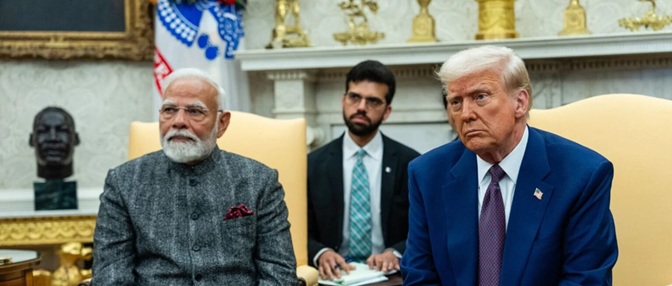
The United States has recalibrated its tariff strategy by moving away from emergency powers under the International Emergency Economic Powers Act (IEEPA) towards a more structured framework under Section 301 of the Trade Act of 1974, raising concerns about global trade stability and predictability.
Background and Context

Evolution of U.S. Tariff Policy

  • The U.S. has historically used tariffs as a tool to : 
    • Protect domestic industries
    • Address trade imbalances
    • Counter unfair trade practices

IEEPA-Based Tariffs

  • Allowed the U.S. President to impose tariffs during : 
    • National emergencies
  • Criticised for : 
    • Broad and discretionary use
    • Lack of predictability

Shift to Section 301 Framework

  • Section 301 allows :
    • Investigation into unfair trade practices
    • Imposition of targeted tariffs
  • Provides :
    • Legal backing
    • Procedural clarity

However, the shift does not eliminate concerns about unilateral trade actions.

Key Features of the New Tariff Approach

  1. Structured Investigations
    • Tariffs imposed after formal investigations into trade practices
  2. Legal Robustness
    • Stronger statutory basis compared to emergency provisions
  3. Focus on Strategic Sectors
    • Targeting sectors linked to : 
      • Technology
      • Manufacturing
      • National security
  4. Tariff Stability Concerns
    • Despite legal backing, frequent changes continue to affect predictability

Key Challenges

1. Legal and Policy Uncertainty

  • Frequent shifts in tariff frameworks
  • Lack of long-term predictability for trading partners

2. Weakening of Multilateralism

  • Increasing reliance on unilateral tariff measures
  • Undermines the role of the World Trade Organization

3. Erosion of Trust in Trade Agreements

  • Countries question : 
    • Reliability of tariff concessions
    • Stability of negotiated agreements

4. Impact on Global Supply Chains

  • Disruptions in :
    • Production networks
    • Value chains
  • Consequences :
    • Increased costs
    • Rise in protectionist policies

Implications for India

  • Exposure to : 
    • Tariff volatility in key export sectors
  • Need to reassess : 
    • Trade dependence on U.S. markets
  • Opportunity to : 
    • Reposition in global value chains

Significance of the Shift

1. Transformation of Global Trade Dynamics

  • Marks a move towards strategic and selective protectionism

2. Decline of Rules-Based Trade Order

  • Weakens WTO-centric dispute resolution mechanisms

3. Increased Trade Fragmentation

  • Encourages regional and bilateral trade blocs

4. Impact on Developing Economies

  • Greater vulnerability due to dependence on major markets

5. Rise of Economic Nationalism

  • Countries prioritising domestic industries over global integration

Way Forward

For India :

  • Diversify export markets to reduce U.S. dependency
  • Strengthen domestic manufacturing through : 
    • Production Linked Incentive (PLI) schemes
    • Logistics improvements
  • Engage in strategic trade negotiations focusing on : 
    • Stable tariff commitments
    • Effective dispute resolution mechanisms
  • Align with like-minded countries to revive multilateral norms

For the Global Trade System :

  • Reinforce a rules-based trading order under the WTO
  • Ensure legal certainty in tariff regimes
  • Promote transparent and predictable trade policies
  • Strengthen dispute resolution mechanisms

FAQs

1. What is Section 301 of the Trade Act ?

It is a U.S. legal provision allowing investigation and action against unfair trade practices.

2. What was IEEPA used for in trade ?

It allowed the U.S. President to impose tariffs during national emergencies.

3. Why is the shift in tariff policy significant ?

It affects global trade predictability and weakens multilateral systems like the WTO.

4. How does this impact India ?

It creates uncertainty for exports and necessitates diversification and strategic trade planning.

5. What is the broader global implication ?

It may lead to increased protectionism, disrupted supply chains, and weakening of rules-based trade order.

Enhancing EV Battery Safety Amid Rising Fire Concerns

Prelims: (Science & Technology + Environment + CA)
Mains: (GS 3 – Science & Technology, Infrastructure, Disaster Management)

Why in News?

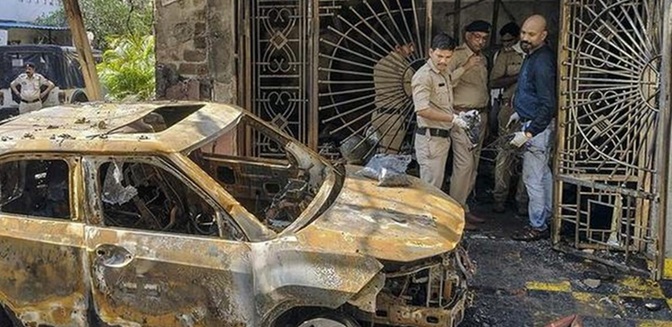
Concerns over electric vehicle (EV) safety have intensified due to incidents of battery fires, particularly following flooding and improper charging practices. This has prompted regulatory authorities and industry stakeholders to strengthen safety standards and promote safer battery technologies.
Background and Context

Electric Vehicles (EVs) are a key component of India’s transition towards :

  • Clean energy mobility
  • Reduced carbon emissions
  • Sustainable urban transport

However, the increasing adoption of EVs has also brought attention to battery-related safety risks, particularly :

  • Fire hazards
  • Thermal runaway incidents
  • Post-flood electrical failures

Nature of EV Batteries

  • EVs primarily use lithium-ion batteries
  • These batteries store high energy in compact spaces
  • Under certain conditions, they can undergo thermal runaway (uncontrolled heat generation)

Risk from Flooding

Flooding poses a significant risk to EV safety :

  • Water can enter battery packs
  • Causes short circuits and internal damage
  • Fires may occur : 
    • Immediately
    • Or even days after submersion

Key Concern:

Delayed ignition makes detection and prevention difficult.

EV vs Petrol Vehicle Fires

Comparative Risk

  • Petrol/diesel vehicles catch fire more frequently
  • EVs are not inherently more dangerous

However, EV Battery Fires:

  • Burn hotter and faster
  • Are difficult to extinguish
  • Release oxygen internally, sustaining combustion

Firefighting Challenge:

  • Requires : 
    • Large quantities of water
    • Specialized fire suppression systems

Role of Surrounding Factors

Fire risks are often aggravated by external conditions :

  • Storage of LPG cylinders nearby
  • Presence of multiple vehicles in confined spaces
  • Power outages affecting : 
    • Electronic locks
    • Safety mechanisms

These factors can escalate damage during fire incidents.

Industry Measures to Improve EV Battery Safety

1. Advanced Cooling Technologies

  • Use of coolant channels to regulate battery temperature
  • New innovations : 
    • Evaporative cooling systems
    • Faster heat dissipation during thermal spikes

2. Safer Battery Design Innovations

  • Development of solid-state batteries :
    • Use solid electrolytes instead of liquid
    • Lower risk of leakage and fire
  • Improved internal design :
    • Firewalls between battery cells
    • Prevents chain reaction during failure

User-Level Safety Precautions

Consumers play a crucial role in ensuring EV safety :

  • Use only manufacturer-approved chargers
  • Avoid : 
    • Overcharging
    • Unsafe overnight charging setups
  • Ensure home electrical systems : 
    • Can handle high loads
  • Get batteries inspected after : 
    • Accidents or impacts
  • Allow battery cooling before charging after long drives
  • Maintain clear and ventilated charging areas

Strengthened Safety Standards in India

Role of the Bureau of Indian Standards

  • Updated EV battery safety norms in 2023

AIS-156 Standards (Automotive Industry Standard)

Key requirements :

  • Testing for thermal propagation
  • Ensuring : 
    • Minimum 5-minute window for passenger evacuation during fire
  • Enhanced safety compliance for manufacturers

Key Issues and Challenges

  • Lack of widespread consumer awareness
  • Limited availability of specialised firefighting infrastructure
  • Need for rapid adoption of advanced battery technologies
  • Managing risks in : 
    • Flood-prone urban areas
  • Balancing cost vs safety innovation

Significance of Strengthened EV Safety Measures

1. Promoting Sustainable Mobility

  • Builds public confidence in EV adoption

2. Enhancing Public Safety

  • Reduces risk of fire-related accidents

3. Supporting Climate Goals

  • Ensures safe transition to low-carbon transport

4. Strengthening Regulatory Framework

  • Aligns India with global safety standards

5. Encouraging Technological Innovation

  • Pushes industry towards safer battery solutions

Way Forward

  • Promote awareness campaigns on EV safety practices
  • Invest in firefighting infrastructure for EV-specific risks
  • Encourage R&D in : 
    • Solid-state batteries
    • Safer chemistries
  • Strengthen urban planning norms for EV charging stations
  • Ensure strict enforcement of safety standards

FAQs

1. Why are EV battery fires a concern ?

Because lithium-ion batteries can undergo thermal runaway, leading to intense and difficult-to-control fires.

2. Are EVs more dangerous than petrol vehicles ?

No, petrol vehicles catch fire more often, but EV fires are more intense and harder to extinguish.

3. How does flooding affect EV batteries ?

Water can cause short circuits inside battery packs, leading to delayed or immediate fires.

4. What are solid-state batteries ?

They are advanced batteries using solid electrolytes, which reduce fire risks compared to liquid-based lithium-ion batteries.

5. What are AIS-156 standards?

They are Indian safety standards requiring EV batteries to pass thermal tests and allow time for passenger evacuation during fire incidents.

« »
  • SUN
  • MON
  • TUE
  • WED
  • THU
  • FRI
  • SAT
Have any Query?

Our support team will be happy to assist you!

OR
X