Prelims : (Polity & Governance + Social Issues + CA)
Mains : (GS 2 – Governance, Cyber Laws, Vulnerable Sections; GS 1 – Society, Children Issues) |
Why in News ?
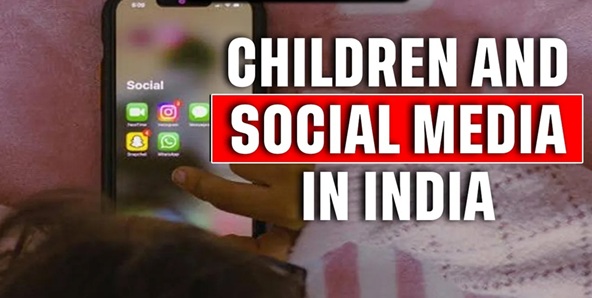
India’s approach to protecting children on social media is under scrutiny due to rising risks such as harmful content exposure, online grooming, and cybercrime. Despite multiple laws and platform-led safeguards, enforcement gaps and technological loopholes continue to undermine child safety online.
Background and Context
With rapid digitalisation, children in India are increasingly accessing :
- Social media platforms
- Online gaming ecosystems
- Video streaming services
This has created a dual challenge :
- Enabling digital inclusion and learning
- Ensuring online safety and protection
Current Legal Framework
India relies on a multi-layered regulatory system, including :
- Digital Personal Data Protection Act, 2023
- Information Technology Act, 2000
- Protection of Children from Sexual Offences Act, 2012
Key Provision :
- Mandatory parental consent before processing children’s personal data
Risks for Children in the Online Space
1. Exposure to Harmful Content
- Increased screen time exposes children to :
- Violent or inappropriate content
- Addictive digital environments
- Impacts :
- Anxiety and stress
- Social isolation
- Behavioral changes
2. Threat of Online Grooming
- Predators exploit children through :
- Social media
- Messaging platforms
- Leads to :
- Emotional manipulation
- Sexual exploitation risks
3. Rising Cybercrime Against Children
- NCRB data shows :
- 32% increase in cybercrimes against children (2021–2022)
- Includes :
- Identity theft
- Blackmail
- Online harassment
Increasing Internet Usage Among Children
According to a report by NITI Aayog (2023) :
- Up to 5 years: ~1.5 hours/day
- 6–10 years: ~2.5 hours/day
- 11–15 years: ~4 hours/day
- 16–18 years: ~6 hours/day
Insight :
- Screen time increases with age
- Higher exposure leads to :
- Greater vulnerability
- Increased risk of harmful interactions
Platform-Level Safeguards
Digital platforms have introduced safety mechanisms :
1. Age-Gating Systems
- Restrict access based on age
- Often bypassed through false information
2. Parental Controls
- Allow monitoring of :
- Limited effectiveness in practice
3. Child-Focused Platforms
- Platforms like YouTube Kids :
- Provide curated content
- Enable parental customisation
- Attempts at dedicated child platforms (e.g., Instagram Kids) have faced concerns and delays
Policy Developments
- Government is considering a graded regulatory framework :
- Age-based restrictions
- Differential access to features
- Emphasis on :
- Safer default settings
- Increased platform accountability
Key Challenges
1. Enforcement Gaps
- Laws exist but implementation is inconsistent
2. Technological Loopholes
- Easy age misrepresentation
- Difficulty in verifying user identity
3. Platform Limitations
- Safety tools :
- Can be bypassed
- May not be uniformly effective
4. Low Digital Literacy
- Parents and children often unaware of :
Significance of the Issue
1. Protection of Vulnerable Population
- Children are highly susceptible to online harm
2. Mental Health Concerns
- Digital exposure affects emotional and psychological well-being
3. National Cybersecurity
- Rising cybercrime impacts broader digital ecosystem
4. Need for Regulatory Evolution
- Traditional laws struggle to keep pace with digital innovation
5. Balancing Access and Safety
- Ensuring safe digital participation without restricting opportunities
Way Forward
- Strengthen age verification mechanisms
- Enhance platform accountability and compliance
- Promote digital literacy among parents and children
- Develop child-centric cyber safety policies
- Encourage global cooperation on child online protection standards
FAQs
1. What laws protect children online in India ?
Key laws include the Digital Personal Data Protection Act, IT Act, and POCSO Act.
2. What is online grooming ?
It is when predators build trust with children online to exploit them.
3. Why are current safeguards insufficient ?
Due to weak enforcement, technological loopholes, and easy bypass of safety features.
4. What is age-gating ?
It is a system used by platforms to restrict access based on age.
5. What is the main policy challenge ?
Balancing children’s digital access with effective safety and protection mechanisms.
|






 Contact Us
  New Batch : 9555124124/ 7428085757
  Tech Support : 9555124124/ 7428085757