|
Prelims: (Science & Technology + Environment + CA)
Mains: (GS 3 – Science & Technology, Infrastructure, Disaster Management)
|
Why in News?
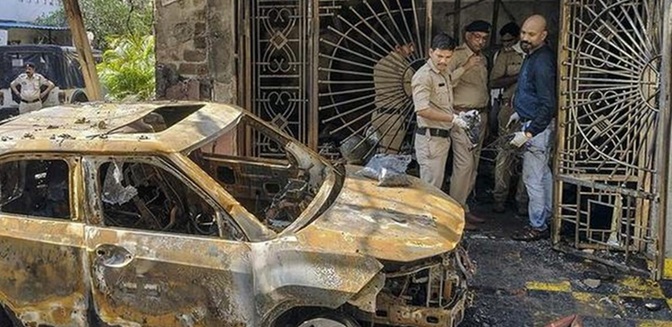
Concerns over electric vehicle (EV) safety have intensified due to incidents of battery fires, particularly following flooding and improper charging practices. This has prompted regulatory authorities and industry stakeholders to strengthen safety standards and promote safer battery technologies.
Background and Context
Electric Vehicles (EVs) are a key component of India’s transition towards :
- Clean energy mobility
- Reduced carbon emissions
- Sustainable urban transport
However, the increasing adoption of EVs has also brought attention to battery-related safety risks, particularly :
- Fire hazards
- Thermal runaway incidents
- Post-flood electrical failures
Nature of EV Batteries
- EVs primarily use lithium-ion batteries
- These batteries store high energy in compact spaces
- Under certain conditions, they can undergo thermal runaway (uncontrolled heat generation)
Risk from Flooding
Flooding poses a significant risk to EV safety :
- Water can enter battery packs
- Causes short circuits and internal damage
- Fires may occur :
- Immediately
- Or even days after submersion
Key Concern:
Delayed ignition makes detection and prevention difficult.
EV vs Petrol Vehicle Fires
Comparative Risk
- Petrol/diesel vehicles catch fire more frequently
- EVs are not inherently more dangerous
However, EV Battery Fires:
- Burn hotter and faster
- Are difficult to extinguish
- Release oxygen internally, sustaining combustion
Firefighting Challenge:
- Requires :
- Large quantities of water
- Specialized fire suppression systems
Role of Surrounding Factors
Fire risks are often aggravated by external conditions :
- Storage of LPG cylinders nearby
- Presence of multiple vehicles in confined spaces
- Power outages affecting :
- Electronic locks
- Safety mechanisms
These factors can escalate damage during fire incidents.
Industry Measures to Improve EV Battery Safety
1. Advanced Cooling Technologies
- Use of coolant channels to regulate battery temperature
- New innovations :
- Evaporative cooling systems
- Faster heat dissipation during thermal spikes
2. Safer Battery Design Innovations
- Development of solid-state batteries :
- Use solid electrolytes instead of liquid
- Lower risk of leakage and fire
- Improved internal design :
- Firewalls between battery cells
- Prevents chain reaction during failure
User-Level Safety Precautions
Consumers play a crucial role in ensuring EV safety :
- Use only manufacturer-approved chargers
- Avoid :
- Overcharging
- Unsafe overnight charging setups
- Ensure home electrical systems :
- Get batteries inspected after :
- Allow battery cooling before charging after long drives
- Maintain clear and ventilated charging areas
Strengthened Safety Standards in India
Role of the Bureau of Indian Standards
- Updated EV battery safety norms in 2023
AIS-156 Standards (Automotive Industry Standard)
Key requirements :
- Testing for thermal propagation
- Ensuring :
- Minimum 5-minute window for passenger evacuation during fire
- Enhanced safety compliance for manufacturers
Key Issues and Challenges
- Lack of widespread consumer awareness
- Limited availability of specialised firefighting infrastructure
- Need for rapid adoption of advanced battery technologies
- Managing risks in :
- Balancing cost vs safety innovation
Significance of Strengthened EV Safety Measures
1. Promoting Sustainable Mobility
- Builds public confidence in EV adoption
2. Enhancing Public Safety
- Reduces risk of fire-related accidents
3. Supporting Climate Goals
- Ensures safe transition to low-carbon transport
4. Strengthening Regulatory Framework
- Aligns India with global safety standards
5. Encouraging Technological Innovation
- Pushes industry towards safer battery solutions
Way Forward
- Promote awareness campaigns on EV safety practices
- Invest in firefighting infrastructure for EV-specific risks
- Encourage R&D in :
- Solid-state batteries
- Safer chemistries
- Strengthen urban planning norms for EV charging stations
- Ensure strict enforcement of safety standards
FAQs
1. Why are EV battery fires a concern ?
Because lithium-ion batteries can undergo thermal runaway, leading to intense and difficult-to-control fires.
2. Are EVs more dangerous than petrol vehicles ?
No, petrol vehicles catch fire more often, but EV fires are more intense and harder to extinguish.
3. How does flooding affect EV batteries ?
Water can cause short circuits inside battery packs, leading to delayed or immediate fires.
4. What are solid-state batteries ?
They are advanced batteries using solid electrolytes, which reduce fire risks compared to liquid-based lithium-ion batteries.
5. What are AIS-156 standards?
They are Indian safety standards requiring EV batteries to pass thermal tests and allow time for passenger evacuation during fire incidents.
|






 Contact Us
  New Batch : 9555124124/ 7428085757
  Tech Support : 9555124124/ 7428085757