New
Hindi Medium: (Delhi) - GS Foundation (P+M) : 8th June 2026, 6:30 PM Hindi Medium: (Prayagraj) - GS Foundation (P+M) : 1st June 2026, 5:30 PM English Medium: (Prayagraj) - GS Foundation (P+M) : 7th June 2026, 8:00 AM Hindi Medium: (Delhi) - GS Foundation (P+M) : 8th June 2026, 6:30 PM Hindi Medium: (Prayagraj) - GS Foundation (P+M) : 1st June 2026, 5:30 PM English Medium: (Prayagraj) - GS Foundation (P+M) : 7th June 2026, 8:00 AM

Current Affairs for 23 May 2026

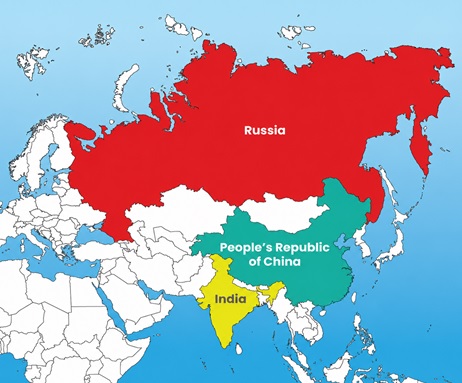
Deepening Russia-China Partnership and Its Impact on India

Why in the News?

  • Vladimir Putin's recent visit to China has once again brought the growing closeness of Russia-China relations to the center of global discussion. During this visit, the two countries signed more than 40 agreements and reiterated their support for a "multipolar world order" against Western dominance.
  • This development is not only affecting the global balance of power but could also have a major impact on India's foreign policy, security, and strategic interests.

Key Reasons for the Deepening of Russia-China Relations

  1. Shared Geopolitical Rivalry
    • Both Russia and China view the US-led global order as a challenge to their strategic interests. Both countries support shifting the global balance of power away from Western dominance and toward a multipolar system.
  2. Economic Complementarity and Growing Dependence
    • Russia's economic dependence on China has increased following economic sanctions imposed by Western countries. China has emerged as a major trading partner, investment source, and energy buyer for Russia.
  3. De-dollarization Policy
    • Both countries are working to reduce their dependence on the US dollar.
    • The use of the yuan and ruble in trade has increased.
    • Alternative financial arrangements are being promoted.
    • Efforts are being made to strengthen non-Western institutional structures.
  4. Use of Multilateral Forums
    • Through forums such as BRICS and the Shanghai Cooperation Organization, Russia and China are striving to strengthen the Eurasian security and economic system.

Impact on India

  1. Weakening of Russia's role as a strategic balancer
    • Russia has long played a balancing role in the context of border disputes and strategic competition between India and China. However, Russia's increasing dependence on China could impact its neutrality.
  2. Challenges in the Defense Sector
    • India remains heavily dependent on Russian defense systems, such as the S-400 Triumph air defense system, stealth frigates, fighter aircraft, and other military platforms.
    • The Russia-Ukraine conflict and Russia's growing priorities toward China have increased the risk of delays and technical disruptions in defense supplies.
    • Furthermore, Russia's provision of advanced military systems to China could increase India's security concerns.
  3. The Emergence of the Russia-China-Pakistan Equation
    • Relations between Russia and Pakistan have seen improvement in recent years, notably through increased defense cooperation, partnership in the energy sector, and concessional oil supplies.
    • This changing equation could pose new strategic challenges for India.
  4. Growing Complexities in Multilateral Forums
    • The growing cooperation between Russia and China in forums like the Shanghai Cooperation Organization could make balancing India's diplomatic priorities more challenging.
  5. Pressures on India's Strategic Autonomy
    • India has long pursued a policy of strategic autonomy. However, the Russia-China rapprochement, changing US policies, and global polarization could complicate India's multi-alignment strategy.

The Way Forward for India

  • In the changing global landscape, India must focus on diversifying defense import sources, promoting indigenous defense production, strengthening Indo-Pacific partnerships, adopting a balanced and proactive policy in multilateral forums, and clearly raising strategic concerns regarding China while maintaining traditional ties with Russia.

Conclusion

  • The growing ties between Russia and China signal a significant shift in the global balance of power. This situation presents both opportunities and challenges for India. In such a situation, India must further strengthen its strategic autonomy, multi-alignment policy, and defense self-reliance.
Sample Registration System (SRS) Statistical Report 2024 Released

  • The Sample Registration System (SRS) Statistical Report 2024 has been released by the Office of the Registrar General of India (ORGI), functioning under the Ministry of Home Affairs.
  • The report is one of the world’s largest demographic surveys and provides annual estimates of India’s vital statistics, including fertility, mortality and demographic indicators.

Fertility Trends

  • India’s Total Fertility Rate (TFR) remained unchanged at 1.9 in 2024, staying below the replacement level fertility for the fifth consecutive year. Replacement level fertility refers to the level at which a population exactly replaces itself from one generation to the next and is generally considered to be 2.1 births per woman.
  • The report showed that the TFR remained 2.1 in rural areas and 1.5 in urban areas. Urban India has remained below replacement level fertility continuously since 2005.
  • India’s Crude Birth Rate (CBR), which measures the number of births per thousand population, declined marginally from 18.4 in 2023 to 18.3 in 2024. In rural areas, the birth rate declined from 20.3 to 20.2, while in urban areas it fell from 14.9 to 14.7.

Mortality Trends

  • India’s Crude Death Rate (CDR) remained unchanged at 6.4 deaths per thousand population in 2024. However, the overall death rate continues to remain above pre-pandemic levels. The CDR stood at 6.0 in 2019 and 2020, but increased sharply to 7.5 in 2021, the deadliest year of the COVID-19 pandemic.
  • In rural areas, the CDR remained unchanged at 6.8, while in urban areas it declined slightly from 5.7 in 2023 to 5.6 in 2024.
  • The Infant Mortality Rate (IMR) declined from 25 in 2023 to 24 in 2024, registering a decline of six points over the last five years. Kerala recorded the lowest IMR in the country at 8 deaths per 1,000 live births.
  • The IMR refers to the probability of a child dying before completing one year of age and is expressed as deaths per 1,000 live births.
  • Similarly, the Under-Five Mortality Rate (U5MR) stood at 28 per 1,000 live births in 2024. It indicates the probability of a child dying before reaching five years of age.

Improvement in Sex Ratio at Birth

  • The report recorded a marginal improvement in the Sex Ratio at Birth (SRB). During 2022–2024, the SRB increased to 918 females per 1,000 males, compared with the previous three-year period.

Emerging Concerns Regarding Causes of Death

  • The proportion of deaths caused by motor vehicle accidents increased from 2.9% to 3.2%, while deaths due to suicide rose from 2.5% to 2.8%.
  • The report also highlighted a growing burden of Non-Communicable Diseases (NCDs), whose share in total deaths increased from 56.7% to 60.1%. Among these, cardiovascular diseases remained the leading cause of death, with their share increasing from 31% to 32.1%.
  • Although deaths due to respiratory infections declined to 5.7% during 2022–24, the level still remains above pre-pandemic levels. The share was 3.6% during 2017–19.

Conclusion

  • The SRS Statistical Report 2024 reflects India’s ongoing demographic transition, marked by declining fertility levels and slowing population growth. 
  • At the same time, the persistence of higher death rates compared to pre-pandemic levels and the rising burden of non-communicable diseases, road accidents and suicides indicate emerging public health challenges for the country.

Thousands in Black Robes Under Doubt: Supreme Court Raises Concerns Over Fake Law Degrees and Online Conduct of Lawyers

The Supreme Court recently expressed serious concern over the increasing number of alleged fake law degree holders practising as advocates in courts. The issue came up during the hearing of a plea related to the designation of senior advocates in the Delhi High Court.
Supreme Court’s Concern Over Fake Law Degrees

A bench comprising Surya Kant and Joymalya Bagchi observed that there were “thousands of fraudulent people wearing black robes” whose law degrees were under serious doubt.

The CJI remarked:

“I have serious doubts about the genuineness of their law degrees.”

He further stated that he was awaiting an appropriate case to possibly order a probe by the Central Bureau of Investigation (CBI) into the issue, particularly involving several Delhi-based advocates.

Criticism of Lawyers’ Social Media Conduct

  • The Supreme Court also raised concerns over the conduct of certain lawyers on social media platforms such as Facebook and YouTube.
  • The CJI stated :-“The things they are posting on Facebook, YouTube, etc., do they think we are not watching?”
  • The Court specifically objected to the language allegedly used online by advocate Sanjay Dubey, who appeared for the petitioner.

Addressing the advocate, the CJI reportedly said:-

“Let people understand the kind of language you are using on Facebook. I will show you what discipline in the profession means.”

Remarks on Activism and Institutional Criticism

  • The CJI also criticised what he described as a growing trend among unemployed youths engaging in activism and online criticism instead of pursuing professional careers.
  • According to him, some individuals become “media”, “social media”, “RTI activists”, or other forms of activists and begin targeting institutions and individuals.

He remarked:-“There are already parasites of society who attack the system, and you want to join hands with them?”

Later clarification indicated that these remarks were directed at individuals allegedly entering professions through fake credentials.

Senior Advocate Designation Debate

  • Justice Bagchi questioned whether the designation of Senior Advocate was increasingly becoming a status symbol rather than an opportunity to strengthen the justice delivery system.
  • The petition before the Court alleged that the Delhi High Court had not fully implemented Supreme Court guidelines regarding the designation of Senior Advocates.
  • However, after the Court declined to entertain the plea and made strong observations, the petitioner withdrew the case.
  • The petitioner had earlier challenged the Delhi High Court’s refusal to consider him for Senior Advocate designation and had also filed a contempt petition, which the Supreme Court dismissed in December last year.

Bar Council of India Chairperson’s Statement: “35–40% Advocates May Be Fake”

  • The Chairperson of the Bar Council of India, Manan Kumar Mishra, made a significant claim that approximately 35–40% of advocates may possess fake degrees.

According to him :

  • Many allegedly obtained fabricated degrees or purchased certificates. 
  • Such individuals are practising law on the basis of these documents. 
  • During degree verification exercises initiated by the BCI, around 40% of advocates reportedly did not submit verification forms, raising suspicions regarding authenticity. 

Mishra said that the issue had already been brought to the attention of the Chief Justice of India.
Clarification on CJI’s “Cockroach” Remark

  • The BCI Chairperson clarified that the CJI’s controversial reference to unemployed youths as “cockroaches” was specifically aimed at individuals using fake degrees to enter the legal profession.
  • He stated that the remarks were made in the context of persons obtaining fake credentials, wearing black coats and bands, and practising in courts.

Key Issues Emerging from the Debate

  1. Authenticity of Law Degrees Concerns over fake legal qualifications and their impact on judicial credibility. 
  2. Need for Verification MechanismsCalls for stricter degree verification and possible investigative action. 
  3. Professional Ethics Questions regarding lawyers’ conduct on social media and standards of professional discipline. 
  4. Senior Advocate DesignationDebate on whether the designation is becoming status-oriented rather than service-oriented. 
  5. Institutional Integrity – Broader concerns regarding preserving trust in the justice delivery system.

India successfully test-fires Agni-1 short-range ballistic missile

Why in the News ?

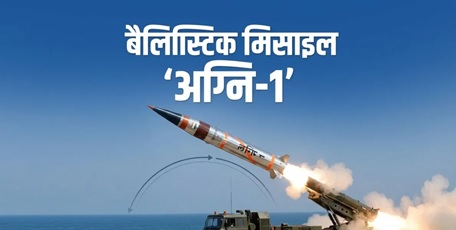
  • India recently successfully test-fired the Agni-1 short-range ballistic missile (SRBM) from the Integrated Test Range (ITR) in Chandipur, Odisha, further strengthening its strategic nuclear capabilities. This test was conducted under the aegis of the Strategic Forces Command, which is responsible for the operation and management of India's strategic nuclear arsenal.
  • This test is considered a significant milestone in strengthening India's deterrence capabilities and indigenous defense technology.

What is the Agni missile series ?

  • The Agni missile series is a key component of India's strategic ballistic missile system, developed by the Defence Research and Development Organisation (DRDO).
  • This series includes missiles with varying ranges and payload capacities.
  • The Agni series strengthens India's land-based strategic deterrence capabilities and is capable of carrying both conventional and nuclear weapons.

Key Technical Features of the Agni-1 Missile

  • Agni-1 is a single-stage, solid-fuel-powered, road-borne short-range ballistic missile.
  • Its key features are :
    • Range : Approximately 700–900 kilometers
    • Payload Capacity : Approximately 1,000 kilograms
    • Fuel Type : Solid Fuel
    • Launch System : Road-borne Mobile Launcher
    • Type : Short-Range Ballistic Missile (SRBM)
    • Combat Capability : Capable of carrying both conventional and nuclear warheads
  • Agni-1 has been developed specifically keeping in mind India's strategic requirements and rapid response capability.

Integrated Test Range (ITR) at Chandipur

  • The Integrated Test Range (ITR) at Chandipur, Odisha, is India's premier missile testing facility.
  • A variety of surface-to-surface, surface-to-air, and other advanced missile systems are tested here.
  • This center plays a vital role in India's defense research activities.

Strategic Forces Command

  • The Strategic Forces Command (SFC) is a tri-service command of the Indian Armed Forces, established to operate and control India's strategic nuclear weapons.
  • Its primary function is to manage strategic weapons within India's nuclear command and control system.

Recent Defense Achievements

  • Earlier in May 2026, India successfully test-fired the advanced Agni missile equipped with a MIRV (Multiple Independently Targetable Re-entry Vehicle) system from Dr. APJ Abdul Kalam Island in Odisha.
  • This system provides the capability to strike multiple targets with a single missile.

Conclusion:

  • The successful test of Agni-1 is a significant step towards India's strategic deterrence and defense self-reliance. This test not only validates the missile's operational capability but also further strengthens India's security architecture.

Section 124A of the Indian Penal Code (IPC)

Context

  • Recently, the Supreme Court issued a very important clarification regarding sedition cases that have been pending in courts across the country for the past four years. The apex court stated that if the accused has no objection, courts can proceed with hearings, trials, and appeals in sedition cases filed under Section 124A of the Indian Penal Code (IPC).
What is the whole matter ?

  • This clarification came during the hearing of a petition filed by a petitioner who has been in jail for the past 17 years on sedition and other serious charges. In 2017, a lower court convicted him under Section 124A of the IPC (sedition), promoting enmity, the Unlawful Activities (Prevention) Act (UAPA) 1967, and the Arms Act 1959. He has been lodged in Bhopal Central Jail since then.
  • The petitioner had expressed his desire before the court that he had no objection if his criminal appeal was heard on the entire matter, including Section 124A.

Key Observations of the Supreme Court

  • Accepting the petitioner's argument, the bench clarified that where the accused has no objection to the continuation of the trial, appeal, or any other proceedings in which a charge sheet has been filed under Section 124A of the IPC, there would be no impediment to the courts in deciding such cases on their merits and in accordance with the law.
  • The apex court also directed the Madhya Pradesh High Court to immediately consider the petitioner's appeal and related matters and pronounce its judgment on the merits.

Section 124A of the Indian Penal Code (IPC)

  • The Indian Penal Code (IPC), 1860, considers sedition as a serious offense. This provision was not included in the original Code; It was later added as Section 124A through an amendment introduced by James Stephen in 1870.

Statutory Definition of Sedition

  • According to Section 124A of the IPC, a person can be held guilty of sedition if he is found to be involved in the following acts:
  • Hatred or contempt : Creating or attempting to bring into hatred or contempt the Government established by law in the country.
  • Inciting disaffection : Creating or attempting to bring into hatred or contempt the Government by words, either spoken or written, signs, visual representations or any other means.

Essential Elements of Section 124A

  • Means of Expression: Various means can be used to carry out seditious activities, such as spoken or written words, physical gestures, photographs/videos (visual representations), or any other similar means.
  • Malicious Intention : These means must be used with the direct purpose of inciting feelings of hatred, disaffection, or contempt towards the government in society.
  • Scope of Disaffection : The term disaffection under this section includes disloyalty and all forms of hostile feelings towards the government.

Why was the hearing stalled for four years ?

  • Earlier, on May 11, 2022, a bench headed by then Chief Justice N.V. Ramana issued an interim order. That order stayed the trial of sedition cases pending in courts across the country until the central government completed the process of re-examining and reconsidering this colonial-era law.
  • At that time, the court also expected the central and states to refrain from filing new FIRs or taking punitive action under this law, in order to maintain a balance between the security interests of the state and the civil liberties of citizens.

The Debate on the Indian Penal Code (IPC) and Sedition

  • In February this year, Chief Justice Surya Kant orally remarked that the executive's decision to review the sedition law under the old IPC cannot prevent Parliament from introducing a similar provision in the Indian Penal Code (IPC), as the legislature is completely independent.
  • The Supreme Court is currently hearing several public interest litigations filed against the IPC. These primarily challenge Section 152, which criminalizes acts that threaten the sovereignty, unity, and integrity of the country.

Petitioners' Arguments :

  • The petitioners argue that Section 152 of the CrPC is essentially a modified version of the old sedition law.
  • The petitioners state that while the language of the law has been changed, its core content, such as "subversive activity," "promoting separatist sentiments," and "threatening the integrity of India," remains extremely vague and broad, potentially impacting freedom of expression.

Conclusion

  • This latest Supreme Court decision is a practical step toward streamlining the legal process. It is a relief for prisoners who have been languishing in jails for years without trial. However, the long-term challenge remains: how to safeguard citizens' right to dissent and expression while protecting the sovereignty and integrity of the state in a democratic nation?

Environmental Control and Life Support System (ECLSS)

Context

  • The Environmental Control and Life Support System (ECLSS) is a technology that maintains Earth-like habitable conditions within a spacecraft. This system controls air, water, temperature, humidity, and waste management so that astronauts can safely survive in space for extended periods.
  • Essential supplies like food, water, and oxygen are transported from Earth during short-duration missions, and waste is safely stored. In longer missions, waste is recycled and converted into useful resources like clean water and breathable air.

About the Air Regeneration System

  • On Earth, plants and oceans naturally absorb carbon dioxide from the atmosphere. However, this is not possible in a spacecraft. In the Indian Space Research Organization's Gaganyaan mission, carbon dioxide will continuously build up within the cabin due to astronauts' breathing, so artificial removal will be necessary.
  • If carbon dioxide levels become too high, a condition called hypercapnia can occur, which can cause headaches, dizziness, and impaired thinking. Normally, a healthy person exhales about 1 kilogram of carbon dioxide per day, while this amount can increase with increased physical activity.
  • The air resuscitation system provides fresh air, removes excess carbon dioxide, and filters out odors and fine pollutants that build up in the cabin. On short space missions, oxygen is supplied from high-pressure cylinders. On average, an astronaut requires about 0.84 kilograms of oxygen per day.
  • Lithium hydroxide-based canisters are used to remove carbon dioxide. They also contain activated charcoal, which absorbs odors. These canisters are typically replaced every 20 to 24 hours.
  • There is no natural air circulation in microgravity, so small fans maintain air circulation within the cabin. This prevents the formation of dangerous clumps of carbon dioxide or oxygen.

Temperature, Pressure, and Humidity Control

  • Gaganyaan's crew module is designed to maintain a temperature of approximately 20 to 26 degrees Celsius and a relative humidity of 30% to 70%. This provides a comfortable environment for the crew and protects electronic equipment.
  • Moisture in the cabin is primarily generated by astronauts' breath and perspiration. If the humidity drops too low, it can dry out the skin, irritate the eyes, and increase the risk of static electricity. Excessive humidity can lead to the growth of microorganisms, and condensation can cause corrosion or short circuits in equipment.
  • Heat within the spacecraft is primarily generated by the human body and electronic systems. Active cooling systems are used to control this. Excess heat is removed through heat exchangers.
  • The pressure is maintained at approximately 101.3 kilopascals, close to Earth's sea level. Sensors and safety valves regulate the balance of oxygen and air.

How is water handled in space ?

  • Water doesn't flow normally in space, but instead floats as tiny droplets. These droplets can be hazardous to electronic devices and pose a risk if inhaled.
  • For this reason, water is stored in special pressurized bags on spacecraft. In the Gaganyaan mission, astronauts will be able to drink water from these special bags, which will be pressurized to deliver water directly to their mouths.

How is waste managed ?

  • Liquid and solid waste don't fall to the floor in microgravity, so suction-based airflow systems are used to control them. These systems draw waste away from the body and prevent it from floating in the cabin.
  • Gaganyaan will have special bags for collecting feces and a funnel-based system for collecting urine. Waste materials will be chemically treated to prevent odor and bacterial growth. They will then be stored in sealed containers for disposal upon return to Earth.

What happens if a fire breaks out on a spacecraft ?

  • In the absence of gravity, a fire can spread in a circular fashion instead of the usual flames, making it more difficult to control. Smoke sensors on Gaganyaan will immediately alert the crew.
  • Special fire extinguishers will be used to extinguish fires, which emit a fine spray of water. This spray helps cool the fire and reduce toxic smoke particles. Some spacecraft, such as Soyuz, also have the option to depressurize the cabin in case of an emergency, although this is used as a last resort.
« »
  • SUN
  • MON
  • TUE
  • WED
  • THU
  • FRI
  • SAT
Have any Query?

Our support team will be happy to assist you!

OR