- UPSC Exam
- State PCS
- One Day Exam
- Current Affairs
- PT Quiz
- Downlaods
- About Coaching
- Blog
- Videos

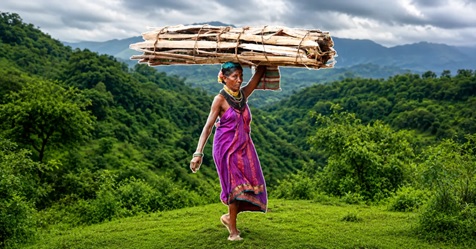
The Mahadev Koli community comprises 24 exogamous clans, or gotras. Members of each clan adopt their clan name as their surname. Socially and culturally, their lifestyle bears strong resemblance to the Kunbi and Maratha communities of Maharashtra. Most families live in a nuclear family system.
The Mahadev Koli community primarily follows Folk Hinduism. Each clan or tribe has its own clan deity, whose worship is an important part of the community's religious and cultural life.
The Mahadev Koli tribe is not just a tribal community, but a living example of living in harmony with nature. Their traditional knowledge systems, environmental conservation practices, and cultural heritage offer important lessons for sustainable development and climate adaptation in today's times.

UN Women warns that climate change, natural disasters, and conflict are putting additional strain on care systems. These crises have the greatest impact on women and girls, who spend nearly four times more time than men engaged in unpaid care work in such circumstances.
UN Women's "Transform Care Initiative" is striving to strengthen health and care systems in more than 50 countries. The initiative aims to reach approximately 2.9 million women and girls, create 260 million decent jobs for women, and save 10 trillion hours of women's and girls' time by 2035.
UN Women believes that investing in equitable and inclusive care systems is one of the most effective ways to advance gender equality, economic prosperity, and social resilience. Amid growing care needs, governments and the private sector must increase investment in this sector to promote women's economic empowerment and sustainable development.
Recently, the Supreme Court reiterated that the doctrine of Constructive Res Judicata aims to prevent parties from engaging in repetitive or piecemeal litigation on issues arising from the same dispute and to ensure finality in judicial proceedings.
"Any matter which might and ought to have been made a ground of defence or attack in the former suit shall be deemed to have been a matter directly and substantially in issue in such suit."
For the doctrine of Constructive Res Judicata to apply :
The Supreme Court held that finality of judicial decisions is an essential component of the Constitution and the rule of law.
The Court observed that if a party fails to raise an important ground in the earlier proceeding, it cannot subsequently raise the same issue in a fresh proceeding.
The Supreme Court clarified that the doctrine may also apply to writ petitions.
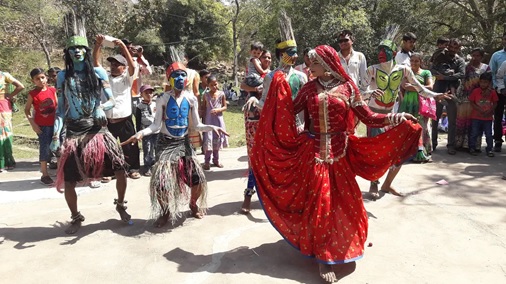
Recently, the President of India, Droupadi Murmu, interacted with members of the Sahariya tribe at Kuno National Park.

Our support team will be happy to assist you!

 Contact Us
  New Batch : 9555124124/ 7428085757
  Tech Support : 9555124124/ 7428085757