- UPSC Exam
- State PCS
- One Day Exam
- Current Affairs
- PT Quiz
- Downlaods
- About Coaching
- Blog
- Videos

| Prelims : (Polity & Constitution + Judiciary + CA) Mains : (GS 2 – Judiciary, Governance, Judicial Ethics) |
The Supreme Court of India has witnessed successive recusals by Chief Justices in a case challenging the Chief Election Commissioner and Other Election Commissioners Act, 2023, reigniting debate on judicial ethics, recusal standards, and the need for codification.
Recusal refers to a judge withdrawing from a case due to :
FAQs1. What is judicial recusal ?It is the withdrawal of a judge from a case due to potential bias or conflict of interest. 2. Who decides recusal in India ?The judge concerned decides based on personal conscience. 3. Is there a law governing recusal in India ?No, there is no codified legal framework. 4. Why is the current case significant ?It involves successive recusals in a major constitutional matter, exposing institutional gaps. 5. What reform is suggested ?Codifying recusal standards to ensure transparency, consistency, and accountability. |
| Prelims : (Polity & Constitution + Defence + CA) Mains : (GS 2 – Governance, Equality, Women Empowerment; GS 3 – Security, Armed Forces) |
The Supreme Court of India has upheld the grant of Permanent Commission (PC) and pensionary benefits for women officers in the Armed Forces, emphasising the need to eliminate systemic gender bias and ensure substantive equality.
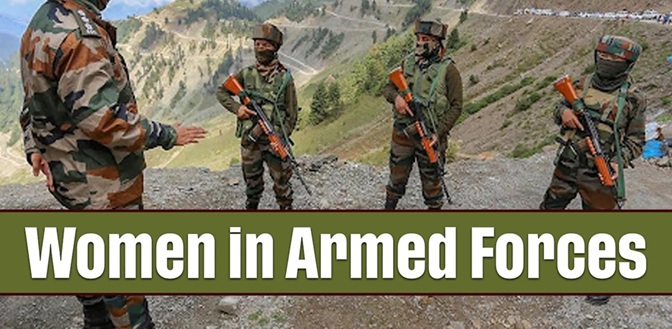
Women have historically been inducted into the Indian Armed Forces mainly through :
FAQs1. What is Permanent Commission (PC) ?It allows officers to serve a full career in the Armed Forces with pension benefits. 2. What was the issue with women officers ?They were largely restricted to Short Service Commission, limiting career growth and benefits. 3. What did the Supreme Court rule ?Women officers must be considered for PC and given pension benefits if eligible. 4. Which constitutional provisions are involved ?Articles 14 and 16 ensuring equality and equal opportunity. 5. What is the significance of the judgment ?It promotes gender equality, institutional reform, and strengthens the Armed Forces. |
| Prelims: (Security + CAPFs + History + CA) Mains: (GS 3 – Internal Security, Border Management; GS 1 – Post-Independence Developments) |
The Union Home Minister recently extended greetings to personnel of the Assam Rifles on its Raising Day, highlighting its critical role in maintaining security and stability in the Northeast.
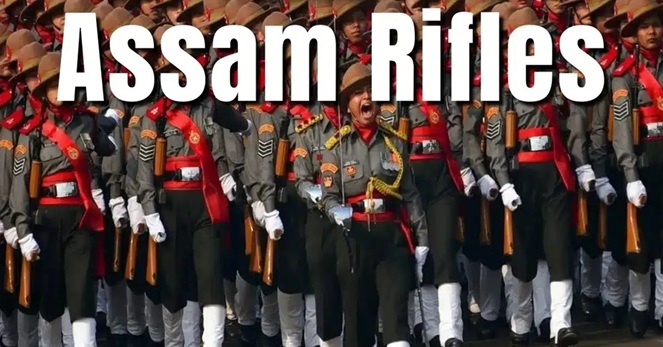
India’s internal security architecture relies significantly on Central Armed Police Forces (CAPFs), which function under the Ministry of Home Affairs (MHA).
Among these, Assam Rifles holds a unique position due to :
FAQs1. What is the Assam Rifles ?It is India’s oldest paramilitary force responsible for security in the Northeast. 2. Under which ministry does it function ?The Ministry of Home Affairs. 3. What is its primary role ?Counterinsurgency and border guarding along the India-Myanmar border. 4. When was it established ?It originated in 1835 as the Cachar Levy. 5. Why is it significant ?It plays a crucial role in internal security, border management, and regional development. |
| Prelims: (Environment & Ecology + Institutions + CA) Mains: (GS 3 – Environment, Biodiversity, Conservation; GS 2 – Governance) |
The National Biodiversity Authority has launched a short-term internship programme (up to 3 months) for undergraduate and postgraduate students, aimed at promoting research and awareness in biodiversity conservation.

India is one of the mega-biodiverse countries, hosting :
However, biodiversity faces threats from :
To ensure :
India enacted the Biological Diversity Act, 2002.
FAQs1. What is the National Biodiversity Authority ?It is a statutory body responsible for biodiversity conservation and regulation in India. 2. Under which law was it established ?The Biological Diversity Act, 2002. 3. What is the role of BMCs?They manage biodiversity at the local level and document resources. 4. What is the purpose of the internship programme ?To promote research, awareness, and capacity building in biodiversity conservation. 5. Why is biodiversity conservation important ?It ensures ecological balance, supports livelihoods, and sustains natural resources. |
| Prelims : (Polity & Constitution + Fundamental Rights + CA) Mains : (GS 2 – Governance, Social Justice, Constitutional Provisions) |
The Supreme Court of India has ruled that a person who converts to Christianity cannot continue to claim Scheduled Caste (SC) status, upholding a decision of the Andhra Pradesh High Court.
The issue lies at the intersection of :
The Court ruled that :
FAQs1. Can a person retain SC status after converting to Christianity ?No, as per the Supreme Court ruling, SC status is lost upon conversion. 2. What law governs SC status ?The Constitution (Scheduled Castes) Order, 1950. 3. Why is SC status linked to religion ?Because the legal framework historically associates caste discrimination with certain religious contexts. 4. Is ST status affected by conversion ?No, ST status depends on tribal identity, not religion. 5. What is the main debate arising from this ruling ?Whether legal definitions adequately address ongoing caste discrimination after conversion. |

Our support team will be happy to assist you!

 Contact Us
  New Batch : 9555124124/ 7428085757
  Tech Support : 9555124124/ 7428085757