
- UPSC Exam
- State PCS
- One Day Exam
- Current Affairs
- PT Quiz
- Downlaods
- About Coaching
- Blog
- Videos


Q1. What is BioE3?Answer:- BioE3 stands for Biotechnology for Economy, Environment & Employment. It aims to promote biotechnology-led innovation, sustainable manufacturing, employment generation, and economic growth. Q2. What is PLA?Answer:- PLA stands for Polylactic Acid. It is a bio-based polymer that can be produced from renewable biological resources such as sugars. Q3. What is the significance of PLA-based biodegradable plastic?Answer:- PLA-based biodegradable plastic provides a bio-based alternative to conventional fossil-based plastic and supports sustainable manufacturing. Q4. Which company is implementing the PLA project?Answer:- The project is being advanced by Balrampur Chini Mills Limited (BCML). Q5. How much grant has been provided for the project?Answer:- The Biotechnology Industry Research Assistance Council (BIRAC) has provided a ₹75 crore grant for the project. |
| Prelims: - DRDO, Technology Development Fund (TDF), Zero mK India, Dilution Refrigerator, Cryogenic Technology, Quantum Computing, Quantum Technology, National Quantum Mission, Millikelvin, Deep-Tech, Advanced Cryogenics. Mains: GS Paper III -Science & Technology Keywords: - DRDO Dilution Refrigerator, DRDO Zero mK India, Indigenous Dilution Refrigerator, Quantum Technology India, Quantum Computing, Deep-Tech India, Technology Development Fund, National Quantum Mission, Cryogenic Technology, DRDO Start-up Partnership. |
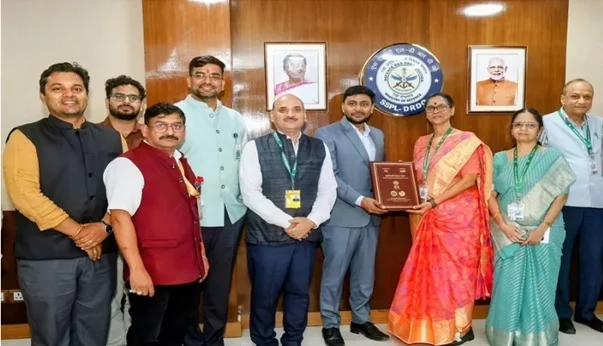
The project will help develop indigenous expertise in advanced cryogenics and quantum technology.
The project will support India's efforts to develop indigenous capabilities in quantum computing and related technologies.
Developing the system domestically can reduce India's dependence on imported cryogenic infrastructure and equipment.
The project will strengthen India's capabilities in specialised cryogenic technologies required for quantum research.
The agreement creates an opportunity for Indian start-ups to work with DRDO on cutting-edge strategic technologies.
Quantum technologies have potential applications in areas such as defence, communication, sensing, computing and cybersecurity.
The DRDO–Zero mK India partnership marks an important step towards developing indigenous cryogenic infrastructure for quantum technologies. It can strengthen India's technological capabilities, reduce import dependence and encourage greater industry participation in deep-tech innovation.
Prelims Practice QuestionWith reference to the DRDO’s indigenous dilution refrigerator project, consider the following statements:
Which of the statements given above is/are correct? A. 1 only Mains Practice QuestionQ. India’s development of indigenous deep-tech capabilities is essential for technological self-reliance in strategic sectors. Discuss in the context of the DRDO–Zero mK India partnership. |
1. What is a dilution refrigerator?A dilution refrigerator is a specialised cryogenic cooling system capable of achieving extremely low temperatures in the millikelvin range. 2. Why is a dilution refrigerator important for quantum technology?Many quantum computing platforms and related technologies require ultra-low temperatures for their operation and testing. 3. What is the temperature target of the DRDO project?The project aims to develop a 20 millikelvin (mK)-class dilution refrigerator. 4. Who is DRDO partnering with?DRDO is collaborating with Zero mK India Private Limited, a deep-tech start-up based in Alwar, Rajasthan. 5. What is the significance of the project?The project aims to strengthen India's capabilities in quantum technology and advanced cryogenics and reduce dependence on imported cryogenic infrastructure. |
| Prelims: Kalpasar Project and its location, Sabarmati, Mahi, Dhadhar and Narmada Rivers, India-Netherlands water cooperation, Central Water Commission (CWC) Mains: Integrated water resource management, Water security in Gujarat, International technical cooperation, Coastal infrastructure and climate resilience Keywords: Kalpasar Project, Gujarat water security, India-Netherlands cooperation, Central Water Commission, Deltares, TU Delft, Gulf of Khambhat, Sabarmati River, Mahi River, Dhadhar River, Narmada River, hydraulic modelling. |
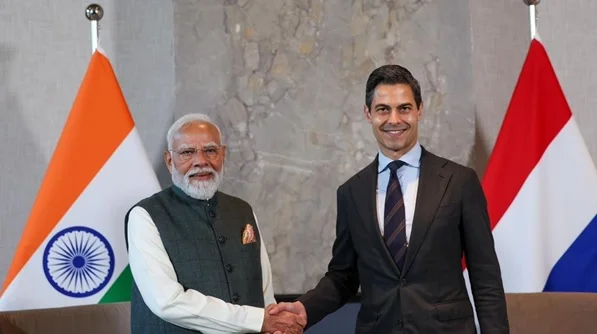
The latest MoUs aim to bring Dutch technical expertise into the planning, design and implementation of the Kalpasar Project.
The cooperation with Deltares will cover:
TU Delft will contribute to technical knowledge and capacity-building activities.
The Gulf of Khambhat has strong tidal currents and complex coastal processes. Any major intervention requires detailed modelling of tidal behaviour, sediment movement and hydrological changes.
Large coastal infrastructure may affect marine ecosystems, fisheries, estuarine habitats and local livelihoods. Comprehensive environmental assessment is therefore essential.
The rivers feeding the proposed system carry sediments that could affect reservoir capacity and the long-term functioning of associated infrastructure.
Changes in precipitation, extreme rainfall, sea-level rise and coastal hazards may influence the project's long-term performance.
A project of this scale requires advanced engineering, substantial investment, long-term maintenance and continuous monitoring.
The Kalpasar Project should be supported by evidence-based planning, advanced modelling and comprehensive environmental assessment.
Priority areas should include:
The India-Netherlands partnership can strengthen the project's technical foundation while ensuring that water-security objectives remain aligned with environmental sustainability and climate resilience.
The India-Netherlands cooperation on the Kalpasar Project combines India's water-security requirements with Dutch expertise in coastal and water engineering. Its long-term relevance will depend on scientific assessment, environmental safeguards, climate resilience and technically sound implementation.
UPSC Prelims MCQQ. With reference to the Kalpasar Project, consider the following statements:
Which of the statements given above are correct? A. 1 and 2 only UPSC Mains QuestionQ. The Kalpasar Project highlights the importance of international technical cooperation in developing climate-resilient water infrastructure. Discuss its potential significance and the major environmental challenges associated with such large-scale coastal water projects. |
1. What is the Kalpasar Project?The Kalpasar Project is a proposed major water-resource and coastal infrastructure project in Gujarat aimed at creating a freshwater reservoir using river runoff and additional water from the Narmada. 2. Which rivers are associated with the Kalpasar Project?The project envisages utilising runoff from the Sabarmati, Mahi and Dhadhar rivers, supplemented by water conveyed from the Narmada River. 3. Which Dutch institutions are involved in the project?The MoUs involve Deltares and TU Delft, along with the Central Water Commission and the Kalpasar Department of the Gujarat Government. 4. What areas are covered under India-Netherlands cooperation?The cooperation includes hydraulic and hydrological modelling, coastal and structural engineering, climate resilience, technical review, capacity building, knowledge transfer and digital applications. 5. Why is the Netherlands relevant to the Kalpasar Project?The Netherlands has extensive experience in flood protection, coastal engineering and integrated water management. Its experience with large-scale infrastructure such as the Afsluitdijk provides relevant technical knowledge for complex water-management projects. |
| Prelims: Make in India, Make in India 2.0, Manufacturing GVA, IIP, PLI Scheme, FDI, PM GatiShakti, NSWS, Startup India, Semiconductors, Rare-Earth Magnets, Capital Goods, Electronics Manufacturing, Defence Manufacturing, Specialty Steel, BHAVYA, Semicon 2.0, Critical Minerals, Domestic Value Addition, Global Value Chains. Mains: GS Paper III - Indian Economy Keywords: Make in India 2026, Make in India 12 Years, India Manufacturing, Manufacturing Growth, Make in India 2.0, Manufacturing GVA, PLI Scheme, Electronics Manufacturing, Defence Manufacturing, Pharmaceutical Manufacturing, Semiconductor Manufacturing, Capital Goods, FDI, PM GatiShakti, Semicon 2.0, BHAVYA, Global Manufacturing Hub. |
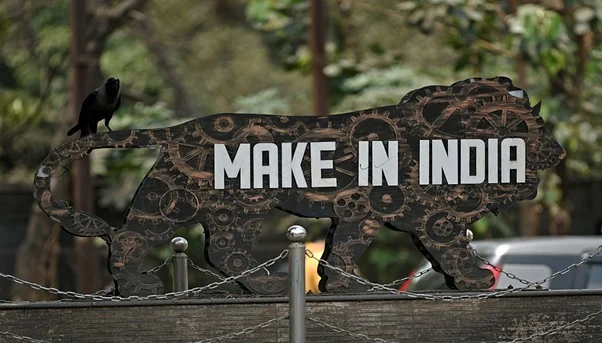
Make in India has been supported by reforms aimed at improving the investment environment and simplifying business processes.
The Production Linked Incentive (PLI) Scheme is one of the major policy instruments used to strengthen domestic manufacturing.
PLI schemes currently cover 14 sectors, including:
As of June 2026, PLI schemes had:
India has introduced several new measures to deepen manufacturing capabilities in strategic and emerging sectors.
The third round of the Production Linked Incentive Scheme for Specialty Steel, launched in November 2025, covers advanced categories such as:
Despite significant progress, India needs to address several issues to further strengthen its manufacturing sector.
After 12 years, Make in India has expanded beyond increasing production to strengthening domestic value addition, technology, skills and industrial capabilities. The next focus should be on innovation, competitiveness and deeper integration with global value chains.
Prelims Practice QuestionWith reference to the Make in India initiative, consider the following statements:
Which of the statements given above is/are correct? A. 1 and 2 only Mains Practice QuestionQ. “Make in India has evolved from a manufacturing promotion initiative into a broader strategy for strengthening domestic value addition and technological capabilities.” Discuss. |
1. What is Make in India?Make in India is an initiative launched on September 25, 2014, to promote manufacturing, investment, innovation and infrastructure development in India. 2. What is Make in India 2.0?Make in India 2.0 is the expanded version of the initiative covering 27 sectors, including 15 manufacturing and 12 services sectors. 3. What is the main objective of Make in India?Its key objectives include increasing domestic manufacturing, attracting investment, creating employment, encouraging innovation and integrating India with global manufacturing value chains. 4. How has Make in India strengthened electronics manufacturing?Electronics production increased significantly between 2014-15 and 2025-26, while mobile phone production expanded substantially, making electronics one of India's major manufacturing growth areas. 5. What is the role of the PLI Scheme?The Production Linked Incentive (PLI) Scheme provides sector-specific incentives linked to production or sales and aims to increase domestic manufacturing, investment and competitiveness. |

Our support team will be happy to assist you!

 Contact Us
  New Batch : 9555124124/ 7428085757
  Tech Support : 9555124124/ 7428085757

