New
GS Foundation (P+M) - Delhi : 05th Jan., 2026 Winter Sale offer UPTO 75% + 10% Off, Valid Till : 5th Dec., 2025 GS Foundation (P+M) - Prayagraj : 15th Dec., 11:00 AM Winter Sale offer UPTO 75% + 10% Off, Valid Till : 5th Dec., 2025 GS Foundation (P+M) - Delhi : 05th Jan., 2026 GS Foundation (P+M) - Prayagraj : 15th Dec., 11:00 AM

Current Affairs for 28 November 2025

Cyclone Ditwah – Impact, Alerts & Preparedness in India and Sri Lanka

Prelims: (Geography + CA)
Mains: (GS 1 – Geography, GS 3 – Disaster Management)

Why in the News ?

Cyclone Ditwah, currently moving over the southwest Bay of Bengal near the Sri Lanka coast, has caused at least 56 deaths in Sri Lanka. The system is now advancing towards Tamil Nadu and Andhra Pradesh, prompting heavy rainfall alerts across southern India.

A remnant depression of cyclone ‘Senyar’ over the Strait of Malacca is also contributing to enhanced rainfall activity.
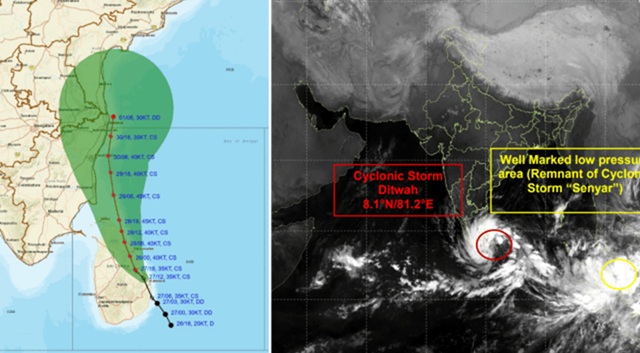
About Cyclone Ditwah

  • Originated from a deep depression near Sri Lanka’s coastline.
  • Classified as a cyclonic storm by IMD, with no forecast upgrade to severe cyclone so far.
  • Expected to track towards north Tamil Nadu, Puducherry, and south Andhra Pradesh.
  • Causing widespread rainfall and strong winds across Sri Lanka, Tamil Nadu, Andhra Pradesh, and coastal regions of the Bay of Bengal.

Cyclone Name Origin

  • The name “Ditwah” was suggested by Yemen.
  • Likely inspired by Detwah Lagoon on Yemen’s Socotra Island.

IMD Weather Forecast & Alerts

Rainfall Forecast (Nov 29 – Dec 1)

  • Rayalaseema & South Coastal Andhra Pradesh: Very heavy to extremely heavy rainfall.
  • Tamil Nadu (North Coastal districts): Widespread moderate to heavy rainfall, isolated extremely heavy falls.
  • Puducherry & Karaikal: Heavy rainfall with orange alert.

Wind Speeds

  • Near core: 60–80 kmph, gusting to 90 kmph
  • Outer bands: 35–45 kmph, gusting to 55 kmph
  • Similar wind conditions expected near Kerala, Lakshadweep & Maldives on the Arabian Sea side.

Fishermen Advisory

  • Fishermen warned against venturing into large parts of the Bay of Bengal for the next 5 days.

State-wise Impact & Preparedness

Tamil Nadu

  • Red Alert for:
    • Thanjavur
    • Tiruvarur
    • Nagapattinam
    • Mayiladuthurai
  • Possible rainfall exceeding 20 cm in 24 hours.

Orange Alert for Chennai, Tiruvallur, Chengalpattu, Kancheepuram, Ranipet.

  • CM M.K. Stalin chaired a high-level meeting with the Disaster Management Authority.
  • Departments instructed to coordinate rescue, relief and emergency response.

Rainfall Status

  • Scattered rainfall in the last 24 hours.
  • Northeast monsoon so far: ~35 cm, slightly above normal.
  • Chennai remains 31% below normal for the season.

Andhra Pradesh

  • System expected to approach North Tamil Nadu–Puducherry–South Andhra between Nov 29 evening and Nov 30 morning.
  • Heavy rain and strong winds forecast for:
    • Chittoor
    • Tirupati
    • Nellore
    • Prakasam
    • YSR Kadapa
    • Annamayya
    • Sri Sathya Sai district

The State Disaster Management Authority confirms strengthening of the depression into a cyclone moving north-northwest.

Impact in Sri Lanka

  • At least 56 persons reported dead due to flooding, landslides, and storm-related incidents.
  • Emergency measures underway with evacuation of vulnerable communities.

Puducherry Alerts

  • Orange alert from Nov 28 to Dec 1.
  • Administration advises residents to stay indoors, avoid trees, lamp posts, and old structures.
  • Preparedness measures include relief camps, drainage clearance, and coastal surveillance.

Geographical & Climatic Context

  • Ditwah formed during the Northeast Monsoon, which drives rainfall across Tamil Nadu and coastal Andhra Pradesh.
  • Warm sea surface temperatures in the Bay of Bengal accelerate cyclogenesis.
  • Interaction with remnants of Cyclone Senyar added moisture and instability.

Expected Outcomes & Concerns

  • Potential for urban flooding, waterlogging, landslides (in hilly regions).
  • Disruptions in power supply, transportation, and fishing activities.
  • Possible damage to coastal infrastructure and crops.
  • Need for continuous monitoring as landfall trajectory can shift.

FAQs

1. What is the intensity of Cyclone Ditwah ?

It is classified as a cyclonic storm, with no prediction of escalation to a severe cyclone.

2. Which states are on high alert ?

Tamil Nadu, Andhra Pradesh, and Puducherry.

3. Why is Sri Lanka heavily affected ?

The system developed very close to the Sri Lankan coast, bringing torrential rain and triggering floods/landslides.

4. What are the expected wind speeds ?

Core winds: 60–80 kmph, gusting to 90 kmph.

5. Why are fishermen warned ?

High waves, rough seas, and strong winds in the Bay of Bengal make conditions unsafe.

Tex-Ramps Scheme – Advancing Research & Innovation in India’s Textile Industry

Prelims: (Textile Sector + CA)
Mains: (GS 3 – Economy) 

Why in the News ?

The Union Government has approved the Textiles Focused Research, Assessment, Monitoring, Planning and Start-up (Tex-RAMPS) Scheme aimed at modernising India’s textile sector through innovation, data systems, and start-up support.
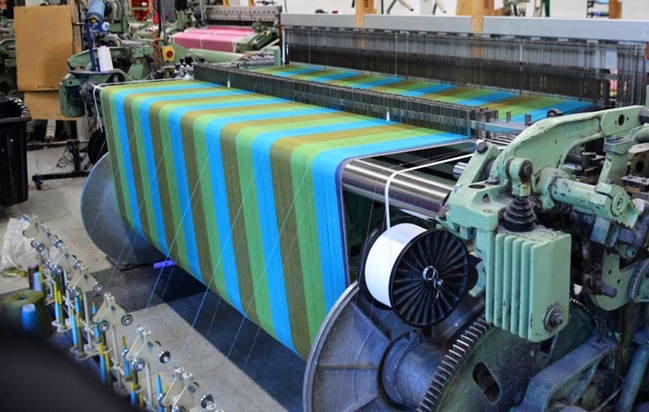
Textile Sector: A Key Driver of India’s Economy

  • One of India’s oldest and most influential industries with deep cultural roots.
  • Contributes over 2% to GDP, 11% to industrial output, and 13% of export earnings.
  • Provides employment to more than 45 million people—India’s second-largest employer after agriculture.
  • The sector benefits from a fully integrated value chain from fibre to finished product.
  • India is a global leader in cotton, jute, silk, polyester, technical textiles, home furnishings, and garments.

Challenges Facing the Textile Sector

  • Slow adoption of advanced technologies
  • Weak R&D infrastructure
  • Lack of an integrated data and analytics system
  • Fragmented supply chains
  • Competition from China, Vietnam, and Bangladesh, which employ high-tech solutions

News Summary

The government has cleared the Tex-RAMPS Scheme with a total outlay of ₹305 crore, to be implemented from 2025-26 to 2030-31.

The initiative seeks to:

  • Boost textile research & innovation,
  • Strengthen data-driven governance,
  • Enhance global competitiveness,
  • Improve quality and productivity across the textile value chain.

Aims and Vision of Tex-RAMPS

Tex-RAMPS is designed to correct long-standing structural gaps and prepare India’s textile industry for the future global market.

The scheme intends to:

  • Build a national ecosystem for textile innovation
  • Promote evidence-based policymaking through strong data systems
  • Support sustainability and circular economy strategies
  • Encourage high-value start-ups
  • Strengthen collaboration between States, academia, industry, and government

Key Components of the Tex-RAMPS Scheme

1. Research & Innovation Development

Focus areas include:

  • Smart textiles
  • Sustainability & circularity
  • Process optimisation
  • Frontier technologies

These efforts will deepen India’s integration into high-value global textile chains.

2. Data, Analytics & Diagnostic Systems

  • Creation of a real-time nationwide data ecosystem
  • Mapping of employment, supply chains, and productivity
  • Providing standardised analytics for national and State-level planning
  • Enabling evidence-based decision-making

3. Integrated Textiles Statistical System (ITSS)

A key component of the scheme, ITSS will offer:

  • Continuous monitoring
  • Centralised diagnostics
  • Strategic planning capabilities

It will assist State governments and industry associations in aligning with national goals.

4. Capacity Development & Knowledge Ecosystem

Initiatives include:

  • Strengthening State planning units
  • Sharing best practices across clusters
  • Conducting workshops, training, and skill-building sessions
  • Creating a strong quality and compliance culture

5. Start-up & Innovation Support

Tex-RAMPS promotes entrepreneurship via:

  • Incubators and innovation hubs
  • Hackathons and industry–academia collaborations
  • Support for early-stage funding
  • Development of start-ups in technical textiles, smart fabrics, and sustainable materials

Expected Outcomes of the Tex-RAMPS Scheme

The scheme is projected to deliver:

  • Greater global competitiveness of India’s textile and apparel industries
  • A robust innovation and research ecosystem
  • Improved quality, productivity, and supply chain resilience
  • Better, data-driven policy frameworks
  • Higher employment and skill development
  • Stronger collaboration across States, industry, and academia

Industry leaders believe Tex-RAMPS will “reinforce India’s innovation base, nurture high-potential start-ups, and elevate quality standards across the textile value chain.”

FAQs

1. What is the total outlay of the Tex-RAMPS Scheme ?

₹305 crore for the period 2025–26 to 2030–31.

2. What are the key focus areas of Tex-RAMPS ?

Research, innovation, data systems, capacity development, and start-up promotion.

3. What is ITSS under Tex-RAMPS ?

The Integrated Textiles Statistical System, a realtime monitoring and analytics platform.

4. Does the scheme support start-ups ?

Yes, through incubators, hackathons, and academia–industry collaboration.

5. What outcomes are expected ?

Improved competitiveness, better policymaking, stronger innovation ecosystems, and enhanced industry collaboration.

Ricin Toxin: The Challenge of Chemical Terrorism

(Preliminary Examination: Current Affairs)
(Main Examination, General Studies Paper 3: The Role of Anti-State Elements in Pose a Threat to Internal Security)

Context

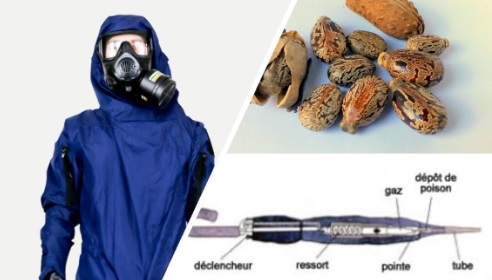
  • Recently, the Gujarat ATS busted a major terrorist network, with some suspects accused of preparing and using Ricin Poison to carry out terrorist attacks.
  • This indicates that digital literature, secret conversations on social media, arms sharing, and the use of chemical poisons are becoming new methods of terrorist activities in India.

Ricin-Toxin

What is Ricin?

  • It is a highly lethal toxin that, upon entering the human body, stops protein synthesis in cells, potentially leading to death within hours.
  • This toxin is considered to be the most toxic of any naturally occurring plant toxin. Scientifically, it is derived from the Ricinus communis plant.

Structure

  • Ricin is a protein-based toxin. It is found in the residue of oil extracted from castor beans.
  • Castor bean mash contains high levels of ricin.

Properties

  • Highly lethal: even a few milligrams can cause death.
  • Colorless, tasteless, and odorless: difficult to identify
  • Dose-dependent effects: effects vary by inhalation, ingestion, or injection
  • Inactive when burned but highly stable at room temperature.
  • There is no known antidote.
  • Technically, it is not very difficult to manufacture because the source is readily available.

Use in Terrorism

Ricin is seen as a chemical weapon worldwide because:

  • It can cause massive damage in very small quantities.
  • It does not require large laboratory equipment for preparation.
  • It can be easily concealed (powder/solution/capsule).
  • Terrorist groups use it for targeted killings or to spread mass hysteria.

International Examples

  • ISIS, ISKP, and some lone attackers have attempted to produce it.
  • In 2013, letters addressed to US President Obama were also laced with risin.

Recent Incident in India

Recent operations by the Gujarat ATS have indicated that the suspected perpetrators were connected to an ISKP-linked handler and were in the process of preparing risin, posing a new threat of chemical terrorism in India.

Challenges

  • Difficult detection
    • Ricin cannot be identified by standard security systems
  • Dark web and digital literature
    • Proliferation of materials like 'How to Make Ricin' on the internet
  • Easy availability of raw materials
    • Extensive castor seed and castor oil industry in India
  • Security agencies require scientific expertise
  • Treatment difficult without an antidote
  • Secret communication and encryption on social media
  • Collaboration with international networks
    • Sometimes, foreign organizations provide instructions to the permanent module.

Way Forward

  • Development of advanced laboratories and kits for chemical-biological weapons detection
  • Regular training for national security agencies on toxins and biological-chemical terrorism
  • Stricter regulations on the sale, storage, and purchase of toxins
  • Online hazardous material monitoring and blocking
  • Surveillance and reporting system at castor oil processing units
  • Inter-agency coordination between the ATS, NIA, IB, DRDO, and the Ministry of Health
  • Public awareness about the misuse of hazardous chemicals 
  • Sharing chemical threat intelligence with Interpol, Europol, and the World Health Organization

REPM Manufacturing Promotion Scheme

(Prelims: Important Schemes and Programs)
(Mains, General Studies Papers 2 and 3: Government policies and interventions for development in various sectors and issues arising from their design and implementation, Science and Technology – Developments and Applications and their Impact on Everyday Life)

Context

The Union Cabinet recently approved a new scheme with a financial outlay of ₹7,280 crore aimed at promoting the domestic manufacturing of sintered rare earth permanent magnets (REPM) in India.

REPM-Manufacturing

About Sintered Rare Earth Permanent Magnets

  • Sintered rare earth permanent magnets are the most powerful permanent magnets made from alloys of rare-earth elements such as neodymium and samarium. Sintering is a manufacturing process in which powder is heated and compressed to form a solid magnet.
  • This includes the conversion of rare earth oxides into metals, metals into alloys, and alloys into REPM. This scheme, approved by the Cabinet, will facilitate the establishment of integrated REPM manufacturing units.
  • The key features of REPM include high magnetic strength, high heat resistance, compact size with superior performance, and the absence of viable alternatives for high-performance applications.

What is the REPM Ecosystem?

  • The REPM ecosystem refers to the entire industrial infrastructure that includes the conversion of rare earth oxides into metals, the preparation of alloys from metals, and the production of high-quality permanent magnets from those alloys. This is the first national initiative of its kind, in which a complete domestic supply chain will be developed.
  • This initiative aims to create a domestic supply chain to convert NdPr (neodymium-praseodymium) oxide into high-performance sintered NdFeB (neodymium-iron-boron) magnets. These are widely used in electric vehicles (EVs), wind turbines, aerospace and defense applications, consumer electronics, and medical imaging equipment, as REPMs are considered the world's most powerful and efficient magnets.
  • NdFeB magnets, in particular, are the most powerful commercial magnets available globally, made by sintering rare-earth-based alloys such as neodymium-iron-boron.
  • A typical mid-size electric car requires 1-2 kg of NdFeB magnets, while a 3-MW offshore wind turbine requires approximately 600 kg.

About the REPM Scheme

  • This Cabinet-approved scheme aims to establish integrated REPM manufacturing plants with a capacity of 6,000 MTPA (metric tons per annum) in India.
  • The scheme has a total financial outlay of ₹7,280 crore, which includes a sales-based incentive of ₹6,450 crore on REPM sales over five years and a capital subsidy of ₹750 crore to establish integrated rare earth permanent magnet (REPM) manufacturing units in India producing 6,000 metric tons per annum.
  • Its implementation will be overseen by the Ministry of Heavy Industries in collaboration with the Department of Atomic Energy, Ministry of Mines, and NITI Aayog.

Key Points

  • Under this scheme, for the first time, a complete integrated REPM production chain will be established in India, from oxide to finished magnets.
  • A total of 5 beneficiaries will be selected through Global Competitive Bidding.
  • Each beneficiary will be allocated a maximum capacity of 1,200 MTPA. The total duration of the scheme will be 7 years, including a 2-year setup period and a 5-year incentive period.

Current Situation in India

  • India has 6.9 million tonnes of REE reserves, the fifth largest globally. Despite this, its contribution to global production is approximately 1%. Currently, almost all of India's REPM demand is dependent on imports.
  • China controls approximately 90% of global REPM supply.
  • With India's target of 30% electric vehicle penetration by 2030 and rapid growth in renewable energy capacity, REPM demand is expected to double by 2030.
  • The most viable sources of rare earth minerals are mostly in South India. Kerala has the largest monazite belt. These are particularly concentrated in the Kollam-Alappuzha-Kanyakumari region, where Indian Rare Earths Limited operates large plants in Chavara and Manavalakurichi.
  • Odisha's Ganjam, Balasore, and Mayurbhanj districts, especially the Chhatrapur Mineral Sand Belt, are estimated to have over three million tonnes of heavy mineral resources. Andhra Pradesh's coastal zones, including Srikakulam, Visakhapatnam, and the Krishna-Godavari belt, as well as Tamil Nadu's Tuticorin, Tirunelveli, and Kanyakumari districts, are also sources.

Key Features

  • For the first time, a fully integrated manufacturing infrastructure for REPM will be established in the country.
  • The scheme will strengthen the Atmanirbhar Bharat Abhiyan and support the goal of a developed India @ 2047.
  • The project will strengthen the supply chain of high-tech industries such as electric vehicles, renewable energy, electronics, defense, and aerospace.
  • Incentives will be directly linked to the sales of manufactured magnets, encouraging industries to increase production.
  • REPM manufacturing will promote new technology, research, skills, and employment generation.
  • India will be established as an emerging force in the global REPM market.

Did you know?

  • Monazite is a reddish-brown phosphate mineral rich in rare earth elements (such as cerium, lanthanum, and neodymium) and thorium, often found in beach and river sand.
  • Separating the 17 different rare earth elements requires hundreds of stages of solvent extraction, which uses excessive acid and produces highly toxic and radioactive waste. Producing one ton of rare earth oxides can produce 70–100 tons of hazardous tailings.

Tribute on the death anniversary of Mahatma Jyotiba Phule

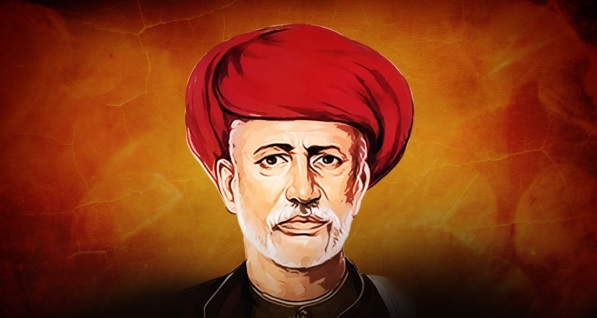
Mahatma Jyotiba Rao Phule 

Jyotiba-Phule

  • Introduction: He was a pioneering social reformer who strongly opposed social evils like untouchability and the caste system. He is remembered for his significant contributions to social equality and education in India.
  • Lifespan: 11 April 1827 – 28 November 1890
  • Mother’s Name: Chandrabhaga Phule
  • Father’s Name: Govind Rao Phule
  • Wife’s Name: Savitribai Phule (married in 1840)
  • Title: On 11 May 1888, social activist Vitthalrao Krishnaji Vandekar conferred him the title of ‘Mahatma’.

Social Contributions

  • Along with his wife Savitribai, he played a key role in widow remarriage, prevention of child marriage, and promotion of girls’ education.
  • He raised his voice against caste discrimination, oppression of women, and social inequality.
  • With Savitribai’s help, in 1848, he started the first girls’ school in Pune at the house of Tatya Saheb Bhide.
  • Satyashodhak Samaj: In 1873, Jyotiba Phule founded the Satyashodhak Samaj (Society of Seekers of Truth) to create awareness against social evils, superstitions, and caste discrimination.

Major Books:

  • Gulamgiri (Slavery)
  • Tritiya Ratna (The Third Jewel)
  • Kisan Ka Dharma (The Duty of a Farmer)
  • Articles on the foundation of Satyashodhak Samaj
  • Shudron Ke Liye Sandesh (Message for the Shudras)

Role & Powers of the National Human Rights Commission – How NHRC Acts During Rights Violations

Prelims: (Polity + CA)
Mains: (GS 2 – Governance, Constitution, Social Justice)

Why in the News?

Following the suicide of a Class 10 student in Delhi, the National Human Rights Commission (NHRC) issued notices to the District Magistrate and Deputy Commissioner of Police (Central Delhi). This incident has brought renewed attention to how NHRC functions, the scope of its powers, and frequent criticism that the body lacks enforcement strength.

NHRC Chairperson Justice V. Ramasubramanian responded to media commentary by clarifying that the Commission holds civil court–like powers, including summoning witnesses and enforcing attendance, and that its recommendations are indeed implemented.

Recent Instances Where NHRC Intervened

  • March 3: Ordered an on-spot inquiry into the alleged suicide of a Nepalese engineering student at KIIT, Bhubaneswar.
  • November 6: Issued notices to the Railway Board and RPF DG regarding the alleged murder of an army jawan inside a train passing through Rajasthan.
  • October 15: Took suo motu cognisance of media reports on the alleged custodial torture of a teenager in Rajkot, Gujarat.
  • September 13: Sent notice to Assam Police over the assault of a journalist near Lumding Railway Institute.
  • December 26, 2024: Sought a response from Kerala on the high suicide rate among tribal communities in Peringammala Panchayat.

These interventions highlight NHRC’s role in stepping in when state mechanisms fail or when human rights concerns escalate.

Statutory Basis of NHRC

The NHRC was established under the Protection of Human Rights Act, 1993, as amended. Its mandate covers monitoring, protecting, promoting, and enforcing human rights across India.

Functions of the NHRC (Section 12)

1. Inquiry Into Human Rights Violations

NHRC may conduct investigations:

  • Suo motu
  • On a petition by a victim or any concerned person
  • For negligence by public servants in preventing violations
  • For abetment of violations

2. Intervention in Court Proceedings

With court approval, NHRC may intervene in cases involving human rights breaches.

3. Jail & Institution Visits

  • Can inspect prisons, detention centres, juvenile homes, protection homes, etc.
  • Reviews living conditions and issues recommendations.

4. Review of Constitutional & Legal Safeguards

  • Examines how effectively rights are protected under laws and the Constitution.
  • Suggests improvements for enforcement.

5. Assessing Factors Inhibiting Rights

  • Reviews issues such as terrorism, discrimination, and systemic failures.

6. Examination of Treaties & International Instruments

  • Advises government on aligning domestic policies with global human rights standards.

7. Human Rights Awareness

  • Conducts workshops, publications, campaigns, seminars.
  • Promotes human rights literacy.

8. Supporting NGOs & Civil Society

  • Encourages non-governmental organisations working in the human rights field.

NHRC’s Powers Related to Inquiries (Section 13)

When conducting an inquiry, NHRC has powers equivalent to a civil court under the Code of Civil Procedure, 1908:

  • Summon and enforce the attendance of witnesses
  • Require discovery and production of documents
  • Receive evidence through affidavits
  • Requisition public records from courts/government offices
  • Issue commissions for examination of witnesses or documents
  • Transfer complaints to State Human Rights Commissions for disposal

These powers counter the perception that NHRC is "toothless".

Investigative Powers (Section 14)

NHRC may:

  • Call for information or reports from central/state governments or authorities
  • Proceed with inquiry if no report is received within the given timeline
  • Use officers or investigation agencies of the Central or State Governments
  • Require reports from such agencies within a specified period

Recommendation Powers (Section 18)

If NHRC finds a violation occurred, it may recommend:

  • Compensation/damages to the victim or family
  • Prosecution or disciplinary action against responsible officials
  • Immediate interim relief to the victim
  • Steps for improved safeguards

Government agencies are expected to respond within the timelines prescribed by the Act.

Inquiry Procedures (Section 17)

  • NHRC may call for statements, conduct hearings, examine witnesses, and access relevant records.
  • Inquiry reports are shared with the concerned government for action taken responses.
  • Findings may be publicised to ensure transparency.

Why NHRC Faces Criticism

Despite wide powers, NHRC is often called a "toothless tiger" because:

  • Its recommendations are not binding
  • Relies heavily on government agencies for investigation
  • Delays in report submissions reduce effectiveness
  • Jurisdictional limitations (e.g., cannot act against armed forces beyond certain inquiries)

However, the Commission argues that a majority of its recommendations are implemented, though with time delays.

Significance of NHRC

  • Acts as a watchdog against state excesses and institutional failures
  • Provides an accessible platform for victims
  • Strengthens India’s democratic accountability
  • Ensures compliance with international human rights norms

FAQs

1. What powers does NHRC have during an inquiry ?

It has civil court powers under the CPC, including summoning witnesses, collecting documents, and issuing commissions.

2. Can NHRC intervene in court cases ?

Yes, with the approval of the concerned court.

3. Can NHRC inspect prisons or detention centres ?

Yes, it can visit jails and institutions to evaluate living conditions.

4. Are NHRC’s recommendations binding ?

No, but governments must respond with action taken reports, making the process accountable.

5. What triggers NHRC to take suo motu action ?

Media reports, complaints, or any evident human rights violation.

India’s First Private Orbital Rocket – Vikram-I Unveiled

Prelims: (Space Technology + CA)
Mains: (GS 3 – Science & Technology)

hy in the News ?

The Prime Minister of India recently unveiled Skyroot Aerospace’s first orbital-class launch vehicle, the Vikram-I Rocket, marking a major milestone in India’s emerging private space sector.This rocket is named after Dr. Vikram Sarabhai, the father of India’s space programme.
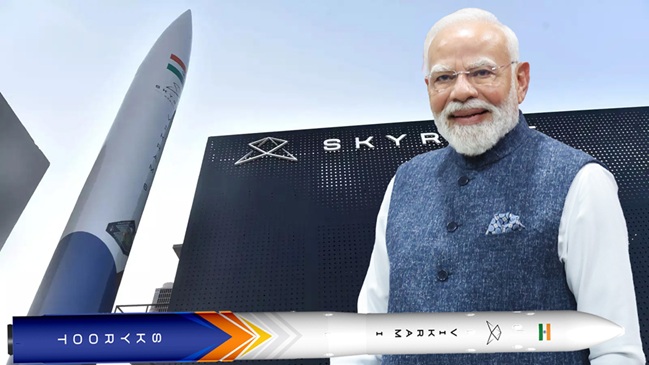
About Vikram-I Rocket

  • Developed by Skyroot Aerospace, a Hyderabad-based private space start-up.
  • It is India’s first privately-built orbital-class rocket capable of launching satellites into Earth orbit.
  • Designed to serve the growing small-satellite launch market with rapid, flexible launch capabilities.

Key Features of Vikram-I Rocket

1. High Thrust Performance

  • Generates 1,200 kN of thrust.
  • Built using an all-carbon composite structure making it lightweight, strong, and fuel-efficient.

2. Rapid Launch Capability

  • Designed for 24-hour launch readiness from multiple launch locations.
  • Built for quick assembly, simplified operations, and reliability.

3. Four-Stage Configuration

  • Four stages total.
  • Stages 1–3: Solid-fuelled stages providing the major lift for orbital insertion.
  • Stage 4: A hypergolic liquid stage designed for precision manoeuvring and fine orbital adjustments.

Raman Engine Cluster (Stage 4)

  • Uses a cluster of four Raman engines.
  • Hypergolic in nature: the fuel (MMH) and oxidiser (NTO) ignite instantly on contact, ensuring dependable performance.

4. Payload Capability

  • Can deploy:
    • 350 kg into Low Earth Orbit (LEO)
    • 260 kg into Sun-Synchronous Orbit (SSO)
  • Optimised for multiple satellite deployment in a single mission.

5. Key Technological Innovations

  • 3D-printed engines for cost-effective, lighter, and precision-engineered components.
  • Ultra-low shock separation systems for smoother satellite deployment.
  • Advanced avionics ensuring real-time navigation, guidance, and control.
  • Modular and scalable architecture for different mission profiles.

Significance of Vikram-I

  • A major leap for India’s private space sector, complementing ISRO.
  • Strengthens India’s position in the global small-satellite launch market.
  • Encourages innovation, start-up growth, and cost-effective space access.
  • Supports India’s broader goal of becoming a commercial space hub.

FAQs

1. Why is Vikram-I significant ?

It is India’s first private orbital-class rocket, marking a major shift toward private participation in space launches.

2. Who developed Vikram-I ?

It was developed by Skyroot Aerospace.

3. What is the thrust capability of Vikram-I ?

It generates 1,200 kN of thrust using an all-carbon composite structure.

4. What is its payload capacity ?

  • 350 kg to LEO
  • 260 kg to SSO

5. What engines power the upper stage ?

A cluster of four Raman hypergolic engines using MMH and NTO.

Nepal’s New Npr 100 Note with Disputed Map – Implications for India–nepal Ties

Prelims: (Geography + CA)
Mains: (GS 2 – International Relations)

Why in the News ?

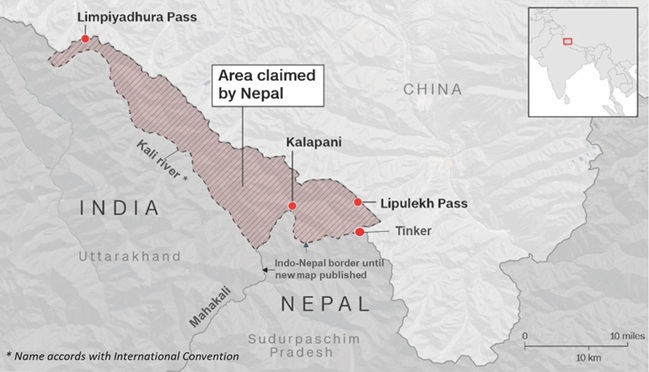
Nepal has issued a new NPR 100 banknote featuring its amended national map, which includes the disputed territories of Kalapani, Lipulekh, and Limpiyadhura. The redesigned note has already entered circulation. This move is seen as a symbolic assertion of Nepal’s territorial claim and has drawn strong objections from India.
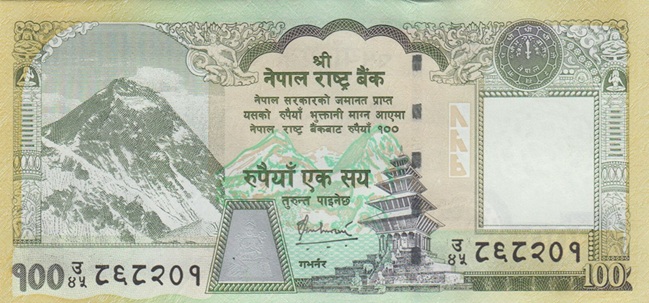
About the New NPR 100 Banknote

  • Displays the updated political map of Nepal (amended constitutionally in May 2020).
  • Map includes Kalapani, Lipulekh, and Limpiyadhura, currently disputed between India and Nepal.
  • The note maintains its earlier size and colour.
  • Design features:
    • Mount Everest on the left
    • Rhododendron watermark on the right
    • Updated map at the centre
    • Braille dot for visually impaired users
    • Enhanced security details such as a colour-shifting security thread

Which Cities/Areas Are Marked on the New Map ?

  • Following the 2020 constitutional amendment, Nepal incorporated:
    • Kalapani
    • Lipulekh
    • Limpiyadhura

Nepal’s claim is based on the interpretation that the Kali River’s origin lies at Limpiyadhura, making these regions part of Nepalese sovereign territory.

India disputes this, citing historical records and treaty-based agreements, especially those dating back to the 1816 Treaty of Sugauli.

India’s Response

  • India has rejected Nepal’s depiction of disputed areas on the note.
  • New Delhi described the map as a unilateral, artificial expansion of claims.
  • India reiterated that such moves do not alter existing territorial realities.
  • India considers these territories integral parts of the Indian state of Uttarakhand.

Additional Features on the New NPR 100 Note

Along with the revised map, the note features:
  • Maya Devi in silver ink within an oval frame
  • Signature of former Nepal Rastra Bank governor Maha Prasad Adhikari
  • Series number “2081” (in Nepali numerals)
  • A one-horned rhinoceros with its calf
  • New tactile marks for visually impaired individuals

Implications for India–Nepal Relations

  • The map on a circulating currency note serves as a symbolic assertion of sovereignty by Nepal.
  • This move may further strain bilateral relations, which were already under tension since the 2020 map revision.
  • Diplomatic negotiations over border demarcation may become more complex.
  • Public sentiment in both countries—especially around nationalism—may intensify.
  • Residents living in border districts may face difficulties in transactions if Indian traders refuse to accept the new note.

Impact on Trade & Everyday Life

  • Cross-border trade may be affected, especially in areas close to the disputed territory.
  • Traders along the India–Nepal border have expressed reluctance to accept the new currency, citing political sensitivities.
  • Could impact day-to-day transactions, remittances, and informal trade flows.
  • Symbolic actions like this could escalate demands for political engagement and boundary settlement discussions.

Nepal–India Border Dispute: Context

  • The dispute centres on the origin of the Kali River, which determines ownership of the Kalapani region.
  • Nepal claims the river begins at Limpiyadhura, while India places the origin further south.
  • The contested territories lie strategically near the tri-junction of India–Nepal–China.

FAQs

1. Why did Nepal redesign the NPR 100 note ?

To incorporate its updated political map, including the disputed territories of Kalapani, Lipulekh, and Limpiyadhura.

2. How has India responded ?

India has rejected the map as unilateral and stated that it does not alter existing territorial realities.

3. What new features appear on the note ?

Maya Devi artwork, Braille markings, colour-shifting thread, new serial number, and enhanced security features.

4. Why are these areas disputed ?

Both countries differ on the origin point of the Kali River, which determines the boundary under the Treaty of Sugauli (1816).

5. Will the new note affect trade ?

Yes, especially in border regions where traders may refuse to accept the currency due to the political controversy.

« »
  • SUN
  • MON
  • TUE
  • WED
  • THU
  • FRI
  • SAT
Have any Query?

Our support team will be happy to assist you!

OR