New
Civil Services Day Offer - Valid Till : 28th April GS Foundation (P+M) - Delhi : 4th May 2026, 6:30 AM GS Foundation (P+M) - Prayagraj : 1st May 2026, 8:30PM Civil Services Day Offer - Valid Till : 28th April GS Foundation (P+M) - Delhi : 4th May 2026, 6:30 AM GS Foundation (P+M) - Prayagraj : 1st May 2026, 8:30PM

Current Affairs for 30 April 2026

Could damming the Bering River save the global climate system?

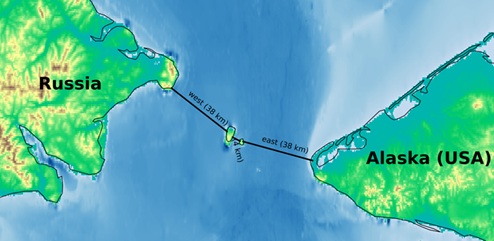
Amid the growing threat of climate change, scientists are now exploring large-scale geoengineering solutions. In this context, new research from Utrecht University offers an intriguing possibility: could damming the Bering Strait stabilize the Atlantic Meridional Overturning Circulation (AMOC) ?
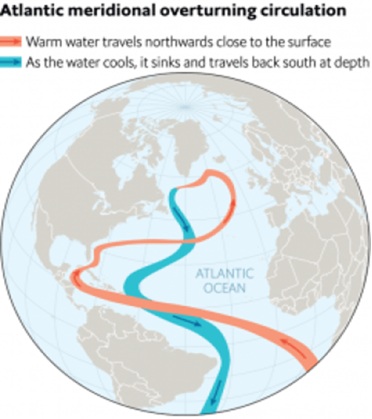
What is the Atlantic Meridional Overturning Circulation (AMOC) and why is it important ?

  • The Atlantic Meridional Overturning Circulation (AMOC) is a vast system of ocean currents that circulates water in the Atlantic Ocean. Warm water flows northward and cold water southward.

Working Process

  • The AMOC process works like a "conveyor belt" :
    • Warm surface water (such as the Gulf Stream) moves toward the poles.
    • It cools there and begins to form ice.
    • Salt remains in the water as ice forms – making it saltier and denser.
    • This heavier water sinks and flows southward through the depths.
    • Eventually, this water rises to the surface, warms, and completes the cycle.

Importance of the AMOC

  • Maintains the global heat balance (Heat Budget).
  • Makes Western Europe's winters less harsh.
  • Acts as a carbon sink by absorbing atmospheric CO.

Weakening of the AMOC

  • It can take about 1,000 years for a water molecule to complete a full cycle.
  • Climate models suggest that increased greenhouse gases may weaken the AMOC in the 21st century.

Causes:

  • Warming of the ocean surface
  • Water becomes less salty (fresh) due to melting ice and increased rainfall
  • Water becomes lighter sinking process decreases
  • This slows down the “conveyor belt.”

Consequences of a Weak AMOC

  • Effects on the Ocean :
    • Decreased Marine Productivity in the North Atlantic
  • Effects on Climate :
    • More Storms in Northern Europe
    • Less Rainfall in the Sahel Region
    • Weakening of the Monsoon in South Asia
  • Other Effects :
    • Reduced Number of Tropical Cyclones in the Atlantic
    • Sea Level Rise off the Coast of Northeastern North America

What does the research say ?

  • PhD researcher Jelle Sunes used climate models to study how the AMOC would be affected if the Bering Strait were closed.

Key findings:

  • Under some conditions, the AMOC remains more stable.
  • Under other conditions, it may weaken.
  • Results depend heavily on initial conditions and timing.
  • The research is currently only a "proof of concept," not a practical solution.

Historical Background: Soviet Plan

  • In the 1960s, Soviet engineer Petr Mikhailovich Borisov proposed an ambitious plan to melt Arctic sea ice.
  • He believed this would allow large parts of the Soviet Union to be used for agriculture and settlement.
  • Additionally, it could reclaim the Sahara Desert and moderate the global climate.

Proposed Plan

  • Suggested building a dam across the Bering Strait
  • Its purpose was to regulate the exchange between cold Arctic water and warm Pacific water.
  • The potential result would be warm water flowing into the Arctic and melting most of the sea ice.

Is this really possible ?

  • Technical challenges :
    • The strait is approximately 80 km wide
    • The area is extremely remote and underdeveloped
    • Construction costs and logistics are extremely complex

Environmental impacts:

  • Marine life migration routes will be affected
  • Major changes to the ecosystem could occur.

The geoengineering debate

  • This project is an example of geoengineering, which attempts to artificially control the climate.
  • But questions arise: Who will make such a decision?
  • Who will bear the risks?
  • Will it undermine efforts to reduce emissions?

Conclusion:

This study shows that large-scale technological interventions may be potential solutions, but they are fraught with risks and uncertainties; therefore, geoengineering should be viewed as a last resort rather than the primary solution to climate change.

1 in 8 people in India is ill: Illness rate doubles in 30 years

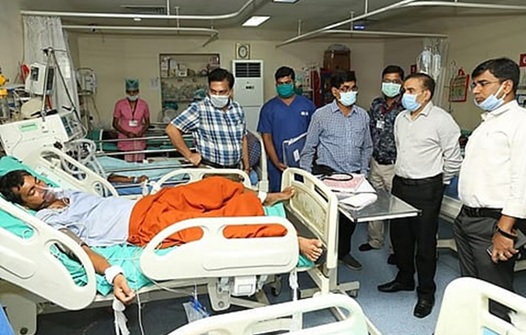
The 'Household Social Consumption: Health' report, recently released by the National Statistical Office (NSO), presents a worrying picture of health in India. According to the report, one in every eight people in India (about 13.1%) is ill, which represents a more than doubling of the morbidity rate over the past 30 years.
Basis of the Report

  • This report is based on the 80th round (January–December 2025) of the National Sample Survey (NSS).
  • The survey asked people about illnesses they had experienced in the past 15 days.
  • It provides a comprehensive assessment of illness, treatment, and health expenditure in the country.

Key Points

  • The overall morbidity rate in India is 13.1%, meaning 1 in every 8 people is ill.
  • The rate in urban areas is 14.9%, higher than in rural areas (12.2%). While, by gender, women (14.4%) have a higher rate of disease than men (11.8%).

Age-based Analysis

Age Group

Disease Status

0-4 years

9-10% (infections predominant)

15-29 years

4-5% (lowest)

45-59 years

20-25%

60+ years

42-45% (highest)

  • Infections (fever, cough, sore throat) and respiratory diseases are more common among children and young people, while mental and digestive problems are also increasing among young people.
  • Lifestyle-related diseases such as heart disease, diabetes, and hypertension are on the rise in the 30-59 age group.
  • Cardiovascular and metabolic diseases, as well as bone and joint problems, are more common among the elderly.

30-Year Trend

Year

Rural (%)

Urban (%)

1995-96

5.5

5.4

2004

8.8

9.9

2014

8.9

11.8

2017-18

6.8

9.1

2025

12.2

14.9

Causes

  • The burden of disease is steadily increasing due to increasing urbanization and pollution, unhealthy lifestyles (eating habits and physical inactivity), population aging, improved reporting and awareness, and rising incidences of mental health problems.

Impact

  • This problem is becoming more severe due to increasing pressure on the health system, rising health expenditure on families, loss of productivity, and the growing risk of non-communicable diseases.

Way Forward

  • To address this situation, it is necessary to strengthen primary health services, adopt prevention-based health policies, launch health awareness campaigns, improve nutrition and lifestyle, and expand digital health infrastructure.

Conclusion

The increasing disease burden in India is not only a health challenge but also an economic and social challenge. This NSO report clearly indicates that if prevention, awareness, and health infrastructure are not improved in time, this problem could worsen in the coming years.

« »
  • SUN
  • MON
  • TUE
  • WED
  • THU
  • FRI
  • SAT
Have any Query?

Our support team will be happy to assist you!

OR