

| GS Paper II: Social Justice, Poverty and Hunger, Welfare Schemes GS Paper III: Indian Economy, Inclusive Growth, Employment and Development Keywords: World Bank Poverty and Equity Brief 2026, Extreme Poverty in India, Purchasing Power Parity (PPP), Multidimensional Poverty Index (MPI), Poverty Reduction, Female Employment, Inclusive Growth |
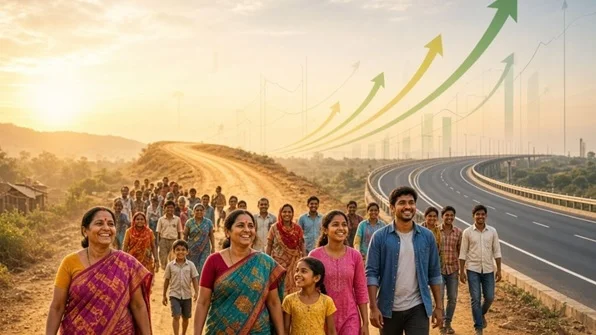
The World Bank publishes Poverty and Equity Briefs to assess poverty, inequality, living standards and economic opportunities across developing countries.
|
Particulars |
Details |
|
Report |
Poverty and Equity Brief |
|
Organisation |
World Bank |
|
Edition |
October 2026 |
|
Country |
India |
|
Assessment period |
2011–2023 |
|
Extreme poverty line |
USD 3.00 per person per day |
|
Lower-middle-income poverty line |
USD 4.20 per person per day |
|
Measurement basis |
2021 Purchasing Power Parity (PPP) |
|
Main focus |
Poverty reduction, employment, inequality and inclusive development |
India experienced a substantial reduction in both extreme poverty and poverty measured at the lower-middle-income threshold.
|
Poverty indicator |
2011–12 |
2023–24 |
Reduction |
|
Extreme poverty (USD 3/day) |
27.1% |
2.6% |
24.5 percentage points |
|
Lower-middle-income poverty (USD 4.20/day) |
57.7% |
16.1% |
41.6 percentage points |
|
People moving above USD 4.20/day poverty line |
— |
496 million |
— |
According to the World Bank's April 2026 India Development Update, poverty reduction was observed in both rural and urban India.
|
Poverty indicator |
Rural 2011–12 |
Rural 2023–24 |
Urban 2011–12 |
Urban 2023–24 |
|
Extreme poverty (USD 3/day) |
31.0% |
3.1% |
17.4% |
1.4% |
|
Poverty (USD 4.20/day) |
64.9% |
19.3% |
39.7% |
8.6% |
Multidimensional poverty measures deprivation beyond income or consumption, including inadequate education, health and living standards.
|
Indicator |
Earlier estimate |
Latest reported estimate |
|
Oxford Poverty and Human Development Initiative MPI |
53.8% (2005–06) |
16.4% (2019–21) |
|
World Bank multidimensional poverty measure |
— |
15.5% (2022–23) |
Employment expansion, particularly among rural women, contributed to improved household economic conditions.
|
Indicator |
Findings |
|
Increase in employment |
Approximately 134 million people |
|
Assessment period |
2017–2023 |
|
Employment growth relative to working-age population growth |
Nearly twice as large |
|
Major contributor |
Increased participation of rural women in paid employment |
|
Real earnings |
Broadly unchanged |
|
Nature of employment growth |
Concentrated in relatively low-productivity activities |
Despite overall employment gains, unemployment among young people increased.
|
Indicator |
Q1 FY2025–26 |
Q1 FY2026–27 |
|
Youth unemployment rate |
14.6% |
15.9% |
|
Change |
— |
Increase of 1.3 percentage points |
|
Factor |
Contribution to poverty reduction |
|
Consumption growth |
Improved household purchasing power and consumption levels |
|
Employment expansion |
Increased opportunities to earn income |
|
Women's employment |
Greater participation of women in paid economic activities |
|
Social transfers |
Additional support for economically vulnerable households |
|
Food subsidies |
Reduced the financial burden of essential food consumption |
|
Concept |
Explanation |
|
Extreme poverty |
Living below USD 3 per person per day at 2021 PPP |
|
Lower-middle-income poverty |
Living below USD 4.20 per person per day at 2021 PPP |
|
Purchasing Power Parity (PPP) |
A method used to compare the purchasing power of currencies by accounting for differences in price levels |
|
Monetary poverty |
Poverty measured through income or consumption against a defined threshold |
|
Multidimensional Poverty Index (MPI) |
Measures overlapping deprivations in health, education and living standards |
|
Poverty headcount ratio |
Percentage of the population living below a specified poverty line |
|
Microsimulation |
A statistical technique used to estimate how economic or policy changes may affect households |
India's decline in extreme poverty from 27.1% to 2.6% represents a major development achievement. However, persistent regional disparities, youth unemployment and stagnant real earnings show that poverty reduction must be accompanied by improvements in the quality and productivity of employment. Sustained, inclusive and employment-oriented growth will be essential to further reduce poverty and strengthen long-term economic security.
Prelims Practice QuestionsQ. Which of the following dimensions are included in the global Multidimensional Poverty Index?
Select the correct answer using the code below. (A) 1 and 2 only (B) 2, 3 and 4 only (C) 1, 2 and 3 only (D) 1, 2, 3 and 4 Mains Practice QuestionExamine the factors behind India's poverty reduction and the challenges to achieving sustainable and inclusive growth. |
Q1. What is India's extreme poverty rate according to the World Bank's October 2026 report?India's extreme poverty rate declined to 2.6%, compared with 27.1% approximately twelve years earlier. Q2. How many people were lifted out of poverty in India?Approximately 496 million people (49.6 crore) moved above the lower-middle-income poverty line of USD 4.20 per day between 2011 and 2023. Q3. What is the World Bank's extreme poverty line?The international extreme poverty threshold is USD 3 per person per day, measured at 2021 purchasing power parity. Q4. What are the major challenges to further poverty reduction in India?Regional inequality, youth unemployment, low-productivity employment, stagnant real wages and uneven access to productive economic opportunities remain key challenges. Q5. What is India's projected poverty rate by 2028?The World Bank projects that poverty measured at USD 4.20 per day could decline to 12.1% by 2028. |
| GS Paper II: Governance, Judiciary and Regulatory Institutions GS Paper III: Cybersecurity, Banking and Internal Security Keywords: Digital Arrest, Cyber Fraud, Reserve Bank of India (RBI), Supreme Court, Know Your Customer (KYC), Mule Accounts, Cybersecurity, Financial Fraud, Indian Cyber Crime Coordination Centre (I4C). |

Scale of Digital Arrest Scams in India: According to data submitted by the Indian Cybercrime Coordination Centre (I4C) before the Supreme Court, digital arrest scams have resulted in substantial financial losses.
|
Period |
Reported complaints |
Reported financial losses |
|
2022 |
39,925 |
Not specified |
|
2024 |
1,23,672 |
₹1,935 crore |
|
2025 |
58,239 |
₹1,211 crore |
|
Jan–Aug 2026 |
21,928 |
Over ₹647 crore |
|
Measure |
Purpose |
|
KYC Verification |
Verify customer identities and identify suspicious bank accounts |
|
Transaction Monitoring |
Detect unusual financial transactions and potential fraud |
|
Temporary Debit Holds |
Restrict suspicious funds without necessarily freezing the entire account |
|
AI-Based Fraud Detection |
Identify abnormal transaction patterns and potential mule account networks |
|
Proposed Kill Switch |
Allow customers to immediately disable banking transactions during suspected fraud |
|
Suspicious Activity Reporting |
Facilitate timely intervention and investigation |
UPSC Prelims Practice QuestionQ. Consider the following statements regarding digital arrest scams in India:
Which of the statements given above are correct? (A) 1 and 2 only (B) 2 and 3 only (C) 1 and 3 only (D) 1, 2 and 3 UPSC Mains Practice QuestionQ. Examine the growing threat of digital arrest scams in India and discuss the role of banking regulations and institutional accountability in preventing cyber fraud. (150 words) |
Q1. What is digital arrest?Digital arrest is a cyber fraud technique in which criminals impersonate law enforcement officials and threaten victims with arrest to extort money. Q2. Is digital arrest legal in India?No. Indian law does not recognise arrest through a telephone or video call. Q3. What did the Supreme Court say about banks' responsibility?The Court emphasised that banks should compensate victims when financial losses result from the institution's failure to exercise due diligence. Q4. What is a kill switch in digital banking?It is an emergency mechanism designed to immediately block financial transactions when fraudulent activity is suspected. A dedicated anti-fraud banking kill switch remains under consideration. Q5. How can victims report digital arrest scams?Victims should immediately notify their bank, call the national cybercrime helpline 1930, and report the incident through the National Cyber Crime Reporting Portal. |
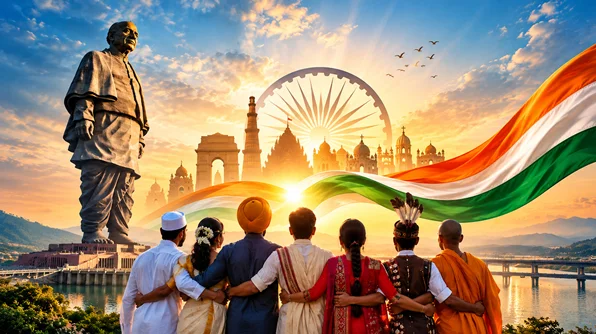
India will observe National Unity Day (Rashtriya Ekta Diwas) on 31 October 2026, marking the 151st birth anniversary of Sardar Vallabhbhai Patel, popularly known as the Iron Man of India.
|
Particular |
Information |
|
National Unity Day |
31 October |
|
Also known as |
Rashtriya Ekta Diwas |
|
First observed |
2014 |
|
Commemorates |
Birth anniversary of Sardar Vallabhbhai Patel |
|
Birth year |
1875 |
|
Birthplace |
Nadiad, Gujarat |
|
Popular title |
Iron Man of India |
|
First Deputy Prime Minister |
Sardar Vallabhbhai Patel |
|
First Home Minister |
Sardar Vallabhbhai Patel |
|
States integrated |
More than 560 princely states |
|
Statue of Unity height |
182 metres |
|
Statue inaugurated |
31 October 2018 |
|
Statue location |
Ekta Nagar, Gujarat |
|
Associated initiative |
Run for Unity |
|
Ek Bharat Shreshtha Bharat |
Announced in 2015 |
|
Movement/Event |
Contribution |
|
Kheda Satyagraha (1918) |
Led the peasants' struggle against revenue collection during crop failure. |
|
Bardoli Satyagraha (1928) |
Led the farmers' movement against increased land revenue; earned the title 'Sardar'. |
|
Civil Disobedience Movement (1930) |
Participated in the national struggle against British rule. |
|
Quit India Movement (1942) |
Played an important role in mobilising support for the movement. |
At the time of independence, British India consisted of two broad categories:
Patel, as India's first Deputy Prime Minister and Home Minister, worked with V.P. Menon, Secretary of the States Department, to bring the princely states into the Indian Union.
|
Strategy |
Explanation |
|
Instrument of Accession |
Provided the legal mechanism for princely states to accede to India. |
|
Diplomatic negotiations |
Persuaded rulers to join the Indian Union through dialogue and negotiations. |
|
Standstill Agreements |
Helped maintain existing administrative arrangements during the transition. |
|
Administrative measures |
Facilitated the merger and reorganisation of princely states. |
|
Firm action where necessary |
Used appropriate measures in complex cases such as Hyderabad. |
|
Princely State |
Nature of integration |
|
Junagadh |
Integrated following a popular referendum in February 1948. |
|
Hyderabad |
Integrated through Operation Polo in September 1948. |
|
Jammu and Kashmir |
Acceded to India through the Instrument of Accession signed by Maharaja Hari Singh in October 1947. |
|
Travancore |
Joined the Indian Union through negotiations. |
Prelims MCQQ. National Unity Day is observed every year on which date? A. 2 October Mains Practice QuestionsQ. Discuss Sardar Vallabhbhai Patel's contribution to the political integration of India after independence. |
When is National Unity Day celebrated?Every year on 31 October. Why is Rashtriya Ekta Diwas celebrated?To commemorate Sardar Vallabhbhai Patel's birth anniversary and his contribution to national integration. When National Unity Day was first observed?2014. Where is the Statue of Unity located?Ekta Nagar, Gujarat. What is the height of the Statue of Unity?182 metres. |
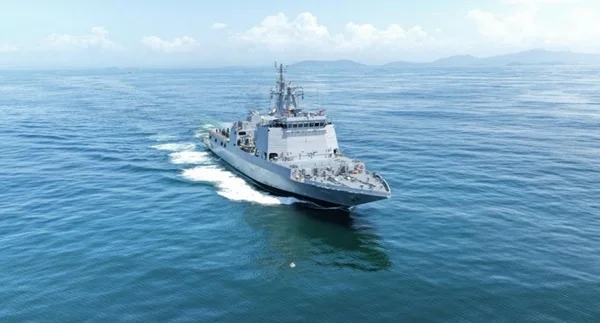
The project will be jointly undertaken by two major public sector shipbuilding companies:
The project will strengthen India's domestic shipbuilding industry and create opportunities for Indian defence manufacturers.
The approval of eight Next-Generation Corvettes marks an important step towards strengthening India's naval capabilities and maritime security. The project will also boost domestic shipbuilding, support defence industries and contribute to India's goal of becoming self-reliant in defence manufacturing.
Prelims Practice QuestionQ. With reference to the Next-Generation Corvettes approved for the Indian Navy, consider the following statements:
Which of the statements given above are correct? (a) 1 and 2 only Mains Practice QuestionDiscuss the significance of indigenous warship construction in strengthening India's maritime security and achieving self-reliance in defence manufacturing. |
Q1. What is the Next-Generation Corvettes project?It is a defence project to build eight advanced warships for the Indian Navy. Q2. What is the total cost of the project?The project is worth more than ₹40,000 crore. Q3. Which shipyards will build these warships?Garden Reach Shipbuilders & Engineers (GRSE), Kolkata, and Goa Shipyard Limited (GSL), Goa. Q4. What will be the displacement and maximum speed of these corvettes?Each corvette will have a displacement of approximately 2,000 tonnes and a maximum speed of around 30 knots. Q5. What is the main objective of this project?To strengthen India's naval capabilities, maritime security and operational presence in the Indian Ocean Region. |




