
- UPSC Exam
- State PCS
- One Day Exam
- Current Affairs
- PT Quiz
- Downlaods
- About Coaching
- Blog
- Videos


The Collegium System is the mechanism currently used for appointments and transfers of judges of the higher judiciary in India.
|
Case |
Year |
Significance |
|
First Judges Case |
1981 |
Gave greater weight to the Executive in judicial appointments |
|
Second Judges Case |
1993 |
Established judicial primacy and strengthened the Collegium |
|
Third Judges Case |
1998 |
Clarified the composition and functioning of the Collegium |
The process generally begins with the High Court Collegium, which recommends candidates. The recommendations are subsequently considered at the Supreme Court Collegium level and then processed by the Union Government and the President under the constitutional framework.
An Acting Chief Justice is appointed when the office of the Chief Justice of a High Court is vacant, or when the Chief Justice is unable to perform the functions of the office.
Constitutional Provision
Article 223 of the Constitution provides for the appointment of an Acting Chief Justice of a High Court.
There is no clear constitutional prohibition preventing an Acting Chief Justice from making recommendations for the appointment of High Court judges. However, by convention, Acting Chief Justices generally do not make such recommendations, particularly when their tenure is expected to be short.
Judicial appointments require:
However, past practice shows that exceptional cases have been handled differently by the Collegium.
Justice Sanjeev Prakash Sharma has served as Acting Chief Justice of the Rajasthan High Court since September 2025.
The Supreme Court Collegium must consider at least four recommendations made by him.
The Bombay High Court case of 2020 provides an important precedent.Justice Dharmadhikari served as Acting Chief Justice of the Bombay High Court from February 20 to March 19, 2020, and subsequently became Chief Justice until his retirement on April 27, 2020.
During this period, he prepared a list of 22 candidates for appointment as High Court judges. Two consultee judges objected to the recommendations. Their concerns
They argued that:
However, a third consultee judge disagreed, pointing out that Justice Dharmadhikari had served in the Bombay High Court since 2004 and was familiar with the Bar.
In another case, the Centre raised objections to at least 12 names recommended by the then Chief Justice of the Rajasthan High Court, Justice Akil Kureshi, because the recommendations had been made towards the end of his tenure.
The Supreme Court Collegium sought information on whether there were specific objections against individual candidates, including those based on intelligence inputs.
Subsequently:
Past practice suggests that judicial recommendations have generally been considered case by case, rather than rejected solely because of the timing or status of the recommending Chief Justice.
The present issue has emerged against the backdrop of a separate controversy concerning the functioning of the Rajasthan High Court's Acting Chief Justice.
Supreme Court judge Justice Sandeep Mehta, who had earlier served in the Rajasthan High Court, wrote three letters to CJI Surya Kant seeking the replacement of the Acting Chief Justice with a Chief Justice from outside the state.
The letters reportedly contained allegations concerning:
CJI Surya Kant responded that allegations concerning a sitting judge should not be adjudicated through the media and should instead be dealt with through appropriate institutional mechanisms.
|
Provision |
Relevance |
|
Article 217 |
Appointment and conditions of service of High Court judges |
|
Article 223 |
Appointment of an Acting Chief Justice of a High Court |
|
Article 124 |
Appointment of Supreme Court judges |
|
Article 50 |
Separation of judiciary from executive |
|
Articles 32 & 226 |
Constitutional remedies through Supreme Court and High Courts |
1. What is an Acting Chief Justice of a High Court?An Acting Chief Justice is a judge appointed to perform the functions of the Chief Justice when the office is vacant or the Chief Justice is unable to perform the duties. Article 223 of the Constitution deals with this provision. 2. Can an Acting Chief Justice recommend names for appointment as High Court judges?There is no explicit constitutional prohibition against an Acting Chief Justice making such recommendations. However, by convention, Acting Chief Justices generally avoid making recommendations, particularly when their tenure is short. 3. Why do Acting Chief Justices generally avoid judicial recommendations?Judicial appointments require detailed scrutiny, consultation with other judges and the Bar, and assessment of a candidate's professional reputation and integrity. A short tenure may not provide sufficient time for such extensive evaluation. 4. What is the Collegium System?The Collegium System is the mechanism through which judges of the higher judiciary are recommended. It is not expressly mentioned in the Constitution and evolved through Supreme Court judgments, particularly the Second and Third Judges Cases. |
| Mains: GS Paper III – Science & Technology, Nuclear Energy and Energy Security Keywords: Three-Stage Nuclear Programme, PHWR, Fast Breeder Reactor, PFBR, Thorium-232, Uranium-233, Plutonium-239, Small Modular Reactor, BSMR, Closed Nuclear Fuel Cycle, Vitrification, Baseload Power, Nuclear Energy Mission, IGCAR |
The Press Information Bureau (PIB) recently released a backgrounder on Nuclear Energy Technology in India, highlighting the country’s nuclear technologies, three-stage nuclear power programme and efforts towards achieving long-term energy security.
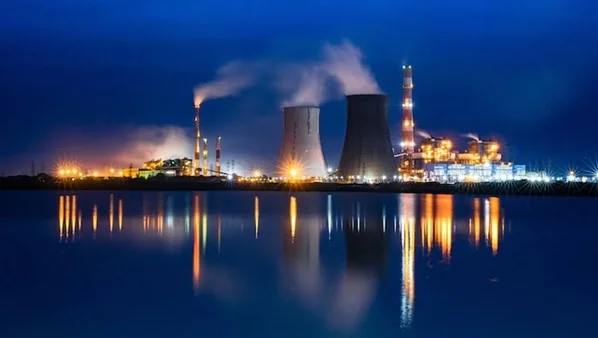
India’s three-stage programme seeks to gradually move from uranium towards thorium-based nuclear energy.
The programme therefore provides a pathway for converting India’s thorium resources into a potential long-term source of nuclear fuel.
Under the Nuclear Energy Mission announced in the Union Budget 2025–26, the government allocated ₹20,000 crore for research, design, development and deployment of indigenous SMRs.
India is developing:
The government aims to operationalise at least five indigenous SMRs by 2033.
Prelims MCQsQ. Consider the following statements regarding Small Modular Reactors (SMRs):
Which of the statements given above are correct? (a) 1 and 2 only Mains QuestionQ. India’s Three-Stage Nuclear Power Programme seeks to convert the country’s resource constraints into a long-term energy advantage. Discuss its significance and examine the challenges in achieving India’s nuclear power capacity target by 2047. |
What is India’s nuclear power capacity target for 2047?India aims to achieve 100 GW of nuclear power capacity by 2047. How many nuclear power reactors are currently operating in India?India currently operates 24 nuclear power reactors with a total installed capacity of 8.78 GW. Who proposed India’s Three-Stage Nuclear Power Programme?Dr Homi J. Bhabha proposed the programme in 1954. Why does India use PHWRs?PHWRs can use natural uranium as fuel without requiring uranium enrichment, making them suitable for India’s nuclear programme. |

Our support team will be happy to assist you!


 Contact Us
  New Batch : 9555124124/ 7428085757
  Tech Support : 9555124124/ 7428085757

