Mains: GS Paper III – Science & Technology, Nuclear Energy and Energy Security
Keywords: Three-Stage Nuclear Programme, PHWR, Fast Breeder Reactor, PFBR, Thorium-232, Uranium-233, Plutonium-239, Small Modular Reactor, BSMR, Closed Nuclear Fuel Cycle, Vitrification, Baseload Power, Nuclear Energy Mission, IGCAR |
Why in News?
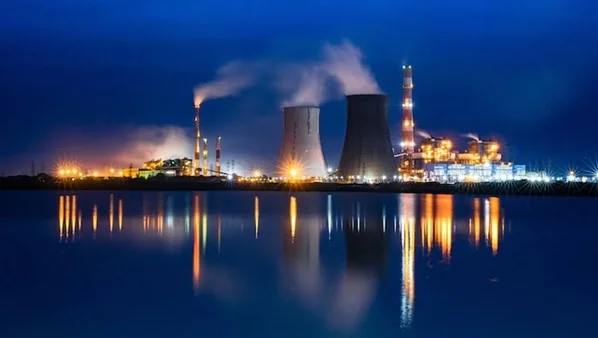
The Press Information Bureau (PIB) recently released a backgrounder on Nuclear Energy Technology in India, highlighting the country’s nuclear technologies, three-stage nuclear power programme and efforts towards achieving long-term energy security.
Important Point
- India currently operates 24 nuclear power reactors with a total installed capacity of 8.78 GW.
- Nine reactor units, with a combined capacity of 7.5 GW, are under construction.
- The government has approved 10 indigenous Pressurised Heavy Water Reactors (PHWRs) in fleet mode.
- Pre-project activities have also been initiated for two 500 MW Fast Breeder Reactors (FBRs).
- India aims to achieve 100 GW of nuclear power capacity by 2047.
- The Nuclear Energy Mission, announced in the Union Budget 2025–26, is supporting the development of indigenous nuclear technologies, including Small Modular Reactors (SMRs).
How Does Nuclear Energy Work?
- Nuclear power plants generate electricity through nuclear fission.
- During nuclear fission, a neutron strikes the nucleus of a uranium or plutonium atom, causing it to split into smaller atoms. The process releases a large amount of heat and additional neutrons, which sustain a controlled chain reaction.
- The heat generated converts water into high-pressure steam. The steam drives a turbine connected to a generator, thereby producing electricity.
- Nuclear fuels may be either fissile or fertile. Fissile materials can directly sustain a chain reaction, while fertile materials must first be converted into fissile materials inside a reactor.
- Important nuclear fuels include Natural Uranium, Uranium-235, Low-Enriched Uranium (LEU), Plutonium-239 and Mixed Oxide (MOX) fuel.
Major Nuclear Reactors in India
- Pressurised Heavy Water Reactors (PHWRs): These form the backbone of India’s nuclear power programme. They operate mainly on natural uranium and therefore do not require uranium enrichment.
- Boiling Water Reactors (BWRs): India also operates BWRs, which use water as both coolant and moderator and generate steam inside the reactor vessel.
- Pressurised Water Reactors (PWRs): These reactors keep water under high pressure and use it to transfer heat for steam generation.
- Fast Breeder Reactors (FBRs): These reactors use plutonium and are designed to produce more fissile material while generating electricity. They are critical to the second stage of India’s nuclear programme.
- Small Modular Reactors (SMRs): These are compact next-generation reactors, generally generating up to 300 MWe. Their modular design can allow factory-based manufacturing, phased deployment and application in industrial and remote locations.
India’s Three-Stage Nuclear Power Programme
India’s three-stage programme seeks to gradually move from uranium towards thorium-based nuclear energy.
- Stage 1 – PHWRs: Pressurised Heavy Water Reactors use natural uranium to generate electricity. The spent fuel is reprocessed to recover plutonium.
- Stage 2 – FBRs: Fast Breeder Reactors use the plutonium recovered from Stage 1. They generate electricity while breeding additional fissile material and can also produce Uranium-233 from thorium.
- Stage 3 – Thorium-Based Reactors: Uranium-233 produced from thorium is used to harness India’s abundant thorium reserves for long-term energy generation.
The programme therefore provides a pathway for converting India’s thorium resources into a potential long-term source of nuclear fuel.
Prototype Fast Breeder Reactor
- The Prototype Fast Breeder Reactor (PFBR) at Kalpakkam is an important component of Stage 2.
- The Indira Gandhi Centre for Atomic Research (IGCAR) led its design, development, testing, safety assessment, commissioning and indigenisation.
- Nearly 90% of the reactor’s equipment and systems have been domestically manufactured, demonstrating India’s growing capabilities in advanced nuclear technology.
Small Modular Reactor Programme
Under the Nuclear Energy Mission announced in the Union Budget 2025–26, the government allocated ₹20,000 crore for research, design, development and deployment of indigenous SMRs.
India is developing:
- 220 MWe Bharat Small Modular Reactor
- 55 MWe SMR-55
- High-Temperature Gas-Cooled Reactor for hydrogen production
The government aims to operationalise at least five indigenous SMRs by 2033.
Nuclear Waste Management
- India follows a closed nuclear fuel cycle, under which spent nuclear fuel is reprocessed to recover valuable nuclear materials for reuse in future reactors.
- The remaining high-level radioactive waste is immobilised and safely stored.
- India also possesses vitrification technology, which converts high-level radioactive waste into a stable glass form, making it safer for long-term storage, transportation and eventual disposal.
Significance
- Energy Security: Nuclear power provides reliable domestic electricity and can help reduce India’s dependence on imported fossil fuels and exposure to fluctuations in global energy markets.
- Reliable Base load Power: Nuclear energy can provide continuous electricity irrespective of weather conditions. It can therefore complement variable renewable sources such as solar and wind and contribute to grid stability.
- Clean Energy Transition: Nuclear power is a low-carbon source of electricity. Its expansion can support India’s efforts to meet growing electricity demand while limiting carbon emissions.
- Technological Self-Reliance: India has developed indigenous capabilities across several parts of the nuclear fuel cycle, including reactor design, fuel fabrication, reprocessing, waste management and advanced reactor technologies.
- Utilisation of Thorium: India’s abundant thorium resources provide a potential long-term nuclear fuel advantage. Successful implementation of the three-stage programme can help convert this resource into usable nuclear energy.
- Industrial Development: Expansion of nuclear power can strengthen domestic capabilities in heavy engineering, specialised materials, precision manufacturing, electronics and nuclear-grade equipment.
India Relevance
- India’s electricity demand is expected to increase considerably with economic growth, urbanisation, industrialisation and the expansion of digital infrastructure.
- Renewable sources such as solar and wind will remain important for the energy transition, but their variable nature creates a need for reliable sources of electricity.
- Nuclear energy can complement renewables by providing stable baseload power while reducing dependence on fossil fuels.
- The development of indigenous PHWRs, Fast Breeder Reactors and SMRs can also create a larger domestic nuclear manufacturing ecosystem and strengthen the objectives of Aatmanirbhar Bharat.
- The successful utilisation of thorium would be particularly important for India because it could reduce long-term dependence on imported nuclear fuel and strengthen strategic energy autonomy.
Challenges
- Limited Uranium Resources: India’s uranium reserves are relatively low-grade and need to be supplemented through imports, creating a degree of external dependence.
- High Capital Requirement: Nuclear power projects require substantial upfront investment and long construction periods.
- Project Implementation: The technological complexity of nuclear projects can make timely construction and commissioning challenging.
- Nuclear Safety: Expansion of nuclear capacity must be accompanied by stringent reactor safety, radiation monitoring and emergency preparedness.
- Radioactive Waste Management: High-level radioactive waste requires secure management, storage and eventual disposal over very long periods.
- Scaling Advanced Technologies: The success of India’s long-term nuclear strategy depends on scaling Fast Breeder Reactors and eventually thorium-based technologies.
- Public Acceptance: Concerns related to radiation, safety, environmental impact, land acquisition and livelihoods can create resistance to new nuclear projects.
Way Forward
- India should accelerate the construction of standardised indigenous PHWRs while ensuring timely completion of reactors already under construction.
- The Fast Breeder Reactor programme needs to be progressively scaled to strengthen the second stage of India’s nuclear strategy and create the necessary foundation for greater thorium utilisation.
- Research and development of indigenous Small Modular Reactors should be encouraged, particularly for industrial applications, replacement of retiring fossil-fuel capacity and other specialised energy requirements.
- India should also continue strengthening domestic manufacturing capabilities across the nuclear supply chain through cooperation between research institutions, public-sector enterprises and Indian industry.
- At the same time, expansion of nuclear capacity must be supported by strong safety regulation, effective radioactive waste management, emergency preparedness and transparent engagement with local communities.
Prelims MCQs
Q. Consider the following statements regarding Small Modular Reactors (SMRs):
- They generally generate up to 300 MWe.
- India is developing indigenous SMRs under the Nuclear Energy Mission.
- The government aims to operationalise at least five indigenous SMRs by 2033.
Which of the statements given above are correct?
(a) 1 and 2 only
(b) 2 and 3 only
(c) 1 and 3 only
(d) 1, 2 and 3
Mains Question
Q. India’s Three-Stage Nuclear Power Programme seeks to convert the country’s resource constraints into a long-term energy advantage. Discuss its significance and examine the challenges in achieving India’s nuclear power capacity target by 2047.
|
FAQs
What is India’s nuclear power capacity target for 2047?
India aims to achieve 100 GW of nuclear power capacity by 2047.
How many nuclear power reactors are currently operating in India?
India currently operates 24 nuclear power reactors with a total installed capacity of 8.78 GW.
Who proposed India’s Three-Stage Nuclear Power Programme?
Dr Homi J. Bhabha proposed the programme in 1954.
Why does India use PHWRs?
PHWRs can use natural uranium as fuel without requiring uranium enrichment, making them suitable for India’s nuclear programme.
|






 Contact Us
  New Batch : 9555124124/ 7428085757
  Tech Support : 9555124124/ 7428085757