(Preliminary Examination: Current Events of National and International Importance)
(Mains Examination, General Studies Paper 1: Key Aspects of Art Forms, Literature, and Architecture in Indian Culture from Ancient to Modern Times) |
Context
India is hosting the 20th Session of the UNESCO Intergovernmental Committee for the Safeguarding of the Intangible Cultural Heritage in New Delhi from December 8 to 13, 2025.
Key Points
- At this session held at the Red Fort, UNESCO included Diwali, among others, on the Representative List of the Intangible Cultural Heritage of Humanity. This also includes cultural symbols from several countries, including Ghana, Georgia, Congo, Ethiopia, and Egypt.
- India has 15 Intangible World Heritage sites on its list. These include Durga Puja, Kumbh Mela, Vedic Chanting, Ramlila, and Chhau Dance.
Deepawali
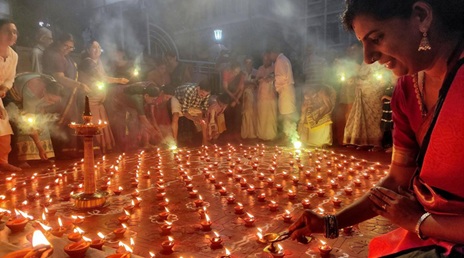
- Deepawali, also known as Diwali, is celebrated annually by various people and communities in India. It marks the end of the year's harvest and the beginning of a new year and a new season. According to the lunar calendar, it falls on the new moon day in October or November and lasts for several days. This joyous occasion symbolizes the victory of light over darkness and good over evil. During this time, people clean and decorate their homes and public places, light lamps and candles, set off fireworks, and pray for prosperity and a new beginning.
- In India, Diwali is celebrated as the return of Lord Rama to Ayodhya, where he killed Ravana and restored righteousness and justice. This makes the festival a symbol of celebration, light, and new beginnings. Diwali is also deeply connected to the worship of Lakshmi, the goddess of wealth and prosperity. People buy new goods on this day, and business is also considered auspicious.
|
About the Intergovernmental Committee for the Safeguarding of Intangible Cultural Heritage
- According to UNESCO, intangible cultural heritage (ICH) includes those practices, knowledge, expressions, objects, and places that communities view as part of their cultural identity.
- UNESCO adopted the 2003 Convention for the Safeguarding of ICH during its 32nd General Conference in Paris on 17 October 2003.
- This Convention formally established mechanisms for international cooperation, support, and recognition and laid the foundation for UNESCO's ICH lists and the subsequent work of the Intergovernmental Committee.
- The objectives of the Convention are-
- Safeguarding ICH
- Ensuring respect for ICH by the communities, groups, and individuals concerned
- Ensuring respect for ICH To raise awareness and ensure mutual appreciation for the importance of ICH at the local, national, and international levels.
- To provide global cooperation and support.
- The Intergovernmental Committee for the Safeguarding of ICH advances the objectives of the 2003 Convention and ensures their effective implementation in Member States.
- In fulfilling this mandate, the Committee:
- Promotes and monitors the objectives and implementation of the 2003 Convention.
- Provides guidance on best practices and recommends measures for the safeguarding of ICH.
- Prepares and submits a draft plan for the use of the Intangible Cultural Heritage Fund to the General Assembly.
- Mobilizes additional resources for the Fund in accordance with the provisions of the Convention.
- Drafts and proposes operational instructions for the implementation of the Convention.
- Examines periodic reports submitted by Member States and compiles a summary for the General Assembly.
- Evaluates requests from Member States and makes decisions regarding:
- Inscription of elements on UNESCO's ICH Lists (in accordance with Articles 16, 17, and 18)
- Providing international assistance
Committee Membership
It consists of 24 members, elected for four-year terms. New members are elected every two years during the ordinary session of the General Assembly of Member States. India is currently a member of the Committee (2022-2026).
India now has 16 Intangible World Heritage Sites
|
No.
|
Intangible World Heritage of India
|
Year of Inscription
|
|
1
|
Veda Recitation
|
2008
|
|
2
|
Kutiyattam (Kerala)
|
2008
|
|
3
|
Ramlila
|
2008
|
|
4
|
Ramman (Uttarakhand)
|
2009
|
|
5
|
Mudiyettu (Kerala)
|
2010
|
|
6
|
Kalbelia Folk Song and Dance (Rajasthan)
|
2010
|
|
7
|
Chhau Dance (Eastern India)
|
2010
|
|
8
|
Buddhist Recitation in Ladakh
|
2012
|
|
9
|
Sankirtana in Manipur
|
2013
|
|
10
|
Thathera Pottery Making at Jandiala Guru (Punjab)
|
2014
|
|
11
|
Yoga
|
2016
|
|
12
|
Navroz
|
2016
|
|
13
|
Kumbh Mela
|
2017
|
|
14
|
Durga Puja in Kolkata
|
2021
|
|
15
|
Garba in Gujrat
|
2023
|
|
16
|
Diwali
|
2025
|






 Contact Us
  New Batch : 9555124124/ 7428085757
  Tech Support : 9555124124/ 7428085757