
- UPSC Exam
- State PCS
- One Day Exam
- Current Affairs
- PT Quiz
- Downlaods
- About Coaching
- Blog
- Videos

| Prelims: (Geography + CA) Mains: (GS 1 – Geography; GS 3 – Energy, Infrastructure, Water Resources) |
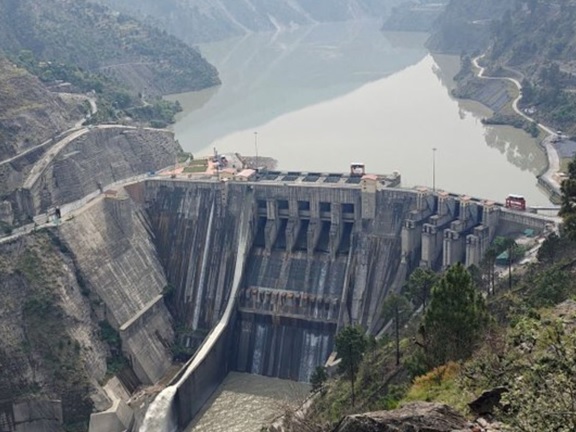
India has recently commenced work on the Sawalkote Hydroelectric Project on the River Chenab in Jammu and Kashmir. This is the first major new hydropower project to receive government approval after changes in India’s approach to the Indus Waters Treaty (IWT).
The Indus Waters Treaty (1960) between India and Pakistan allocates the eastern rivers (Ravi, Beas, Sutlej) to India and the western rivers (Indus, Jhelum, Chenab) primarily to Pakistan, while permitting India limited non-consumptive uses such as hydropower generation on the western rivers.
For decades, India underutilised its permissible share of water from the western rivers due to political sensitivities, regulatory constraints, environmental concerns, and security challenges in Jammu and Kashmir.
In recent years, however, India has sought to fully realise its rights under the treaty by accelerating run-of-the-river hydropower projects, especially on the Chenab and Jhelum, to enhance energy security, economic development, and regional integration.
The Sawalkote project represents a significant step in this strategic recalibration of water and energy policy.
The Sawalkote project is a 1,856 MW run-of-the-river hydropower plant located on the Chenab River in the Ramban District of Jammu and Kashmir.
Key Features
Operational Benefits
Strategic Water Utilisation
The project is a key part of India’s plan to fully utilise its share of water from the western rivers under the Indus Waters Treaty, within the treaty’s provisions.
Energy Security and Regional Development
Sawalkote strengthens India’s energy security by adding substantial renewable capacity in a strategically important border region, supporting industrial growth, infrastructure development, and employment generation.
Optimising Treaty Rights
By developing run-of-the-river projects on the Chenab, India is operationalising its lawful entitlements under the IWT, ensuring that water resources allocated to India are productively and efficiently used.
Climate and Sustainability Goals
Hydropower from Sawalkote supports India’s climate commitments by expanding clean energy capacity and contributing to long-term decarbonisation of the power sector.
Geopolitical and Strategic Signalling
The project signals India’s intent to assert its water and energy rights within international legal frameworks, reinforcing strategic autonomy while remaining compliant with treaty obligations.
Despite its benefits, the project faces several challenges:
Going forward, India must:
FAQs1. What is the Sawalkote Hydroelectric Project? It is a 1,856 MW run-of-the-river hydropower project on the Chenab River in Jammu and Kashmir. 2. Who is implementing the Sawalkote project? The National Hydroelectric Power Corporation (NHPC) is the implementing agency. 3. Why is the Sawalkote project strategically important? It strengthens energy security, supports regional development, and helps India fully utilise its water entitlements under the Indus Waters Treaty. 4. How does the project benefit Jammu and Kashmir? It ensures reliable winter power supply and can turn the region into a power-surplus area capable of exporting electricity. 5. Is the project compliant with the Indus Waters Treaty? Yes, it is a run-of-the-river project and operates within the permissible uses allowed to India under the treaty. |



Our support team will be happy to assist you!

 Contact Us
  New Batch : 9555124124/ 7428085757
  Tech Support : 9555124124/ 7428085757