
- UPSC Exam
- State PCS
- One Day Exam
- Current Affairs
- PT Quiz
- Downlaods
- About Coaching
- Blog
- Videos

| Prelims: (Defence Technology +CA) Mains: (GS 3 – Security) |
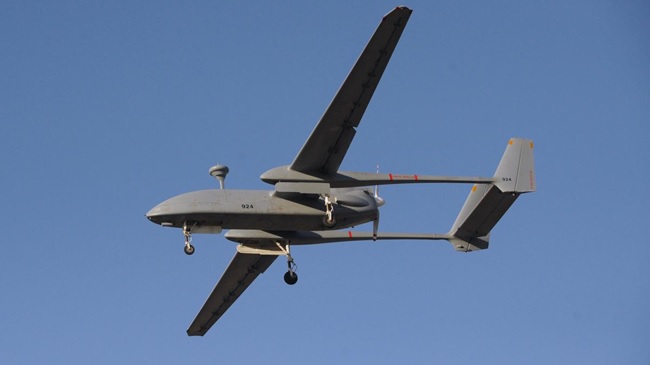
Following the operational insights gained during Operation Sindoor, the Indian Armed Forces have initiated emergency procurement of additional satellite-linked Heron Mk II Unmanned Aerial Vehicles (UAVs). These high-end ISR systems are expected to significantly boost India's real-time intelligence gathering, border surveillance, and electronic intelligence capabilities.
1. What Triggered Operation Sindoor?
Operation Sindoor was launched in 2025 after a series of attempted infiltrations, heightened border tensions, and increased surveillance activity by hostile neighbours along the Northern and Western frontiers. The operation emerged as a proactive readiness exercise to:
2. Nature of the Operation
Operation Sindoor was a multi-domain exercise, integrating:
It revealed that India urgently needed persistent long-endurance UAV coverage across extended borders, without risking the crossing of international lines.
3. Findings Leading to UAV Procurement
Key gaps highlighted:
This led to fast-tracked procurement under emergency powers to induct the Heron Mk II.
The Heron Mk II is a Medium-Altitude Long-Endurance (MALE) Unmanned Aerial Vehicle developed by Israel Aerospace Industries (IAI). It is an upgraded successor to the Heron 1, already in service with India, but significantly more capable in endurance, avionics, ISR payloads, and satellite communication.
1. Performance Parameters
This enables extensive loitering over sensitive sectors, weather-independent monitoring, and deployment from secure bases far from the border.
2. Payload & Sensor Suite
Heron Mk II can carry a multi-mission payload, making it one of the most versatile ISR platforms in India’s fleet.
Electro-Optical / Infra-Red (EO/IR) Sensors
Synthetic Aperture Radar (SAR)
a. Electronic Intelligence (ELINT)
b. Communications Intelligence (COMINT)
Importantly: Heron Mk II can collect intelligence from 20–40 km inside enemy territory without crossing the border, making it ideal for politically sensitive regions.
3. Satellite Connectivity (SATCOM)
The UAV features secure SATCOM links enabling:
This makes Heron Mk II a true strategic ISR asset, not just a tactical drone.
1. Enhanced Border Monitoring
Vital along:
2. Reduces Risk of Surveillance Aircraft Violations
India can monitor enemy activity without risking manned aircraft or entering contested airspace.
3. Strengthens Counter-Terror & Counter-Infiltration Operations
Useful for:
4. Force Multiplier for Tri-Service Operations
The UAV can be deployed jointly by the Army, Air Force, Navy, and intelligence agencies, improving synergy.
Emergency powers allow procurement within 3–6 months without lengthy bureaucratic approvals.
Reasons India invoked them:
FAQs1. Is Heron Mk II armed? It has the capability to be armed but India currently uses it only for surveillance and intelligence roles. 2. How is Heron Mk II different from Heron I? Heron Mk II provides:
3. Will India replace Heron Mk II with indigenous drones? Yes, but gradually. Indigenous platforms like Archer-NG, Tapas-BH 201, and Ghatak UCAV are under development. 4. Why is SATCOM important for UAV missions? It enables the drone to be controlled from anywhere in the country and provides uninterrupted data, crucial for long-endurance missions. 5. Which forces use the Heron Mk II? The Indian Army, Air Force, Navy, and strategic intelligence units. |



Our support team will be happy to assist you!

 Contact Us
  New Batch : 9555124124/ 7428085757
  Tech Support : 9555124124/ 7428085757