Prelims: (Health + CA)
Mains: (GS 3 – science) |
Why in the News ?
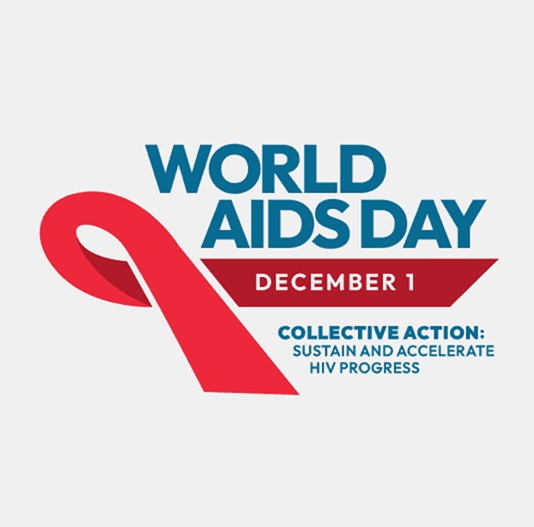
The Ministry of Health and Family Welfare commemorated World AIDS Day 2025 under the theme “Overcoming disruption, transforming the AIDS response,” highlighting India’s progress in HIV prevention, treatment, and epidemic control.
The World Health Organization (WHO) first marked World AIDS Day on 1 December 1998 to recognize the vital role of civil society in shaping a global response to HIV/AIDS.
What is HIV/AIDS ?
About HIV
- Human Immunodeficiency Virus (HIV) attacks and weakens the immune system, particularly the CD4 (T-helper) cells, increasing vulnerability to infections and cancers.
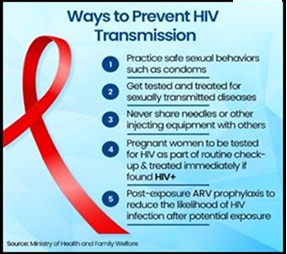
- Transmission occurs through infected bodily fluids—blood, semen, vaginal fluids, breast milk—mainly via unprotected sex, shared needles, or unsterilized equipment.
- HIV does not spread through casual contact (touching, hugging, sharing utensils).
Symptoms
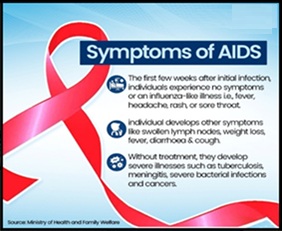
- Early signs: Fever, rash, fatigue.
- Advanced symptoms: Weight loss, chronic diarrhea, swollen lymph nodes.
- Severe HIV leads to opportunistic infections like TB, meningitis, and cancers such as lymphoma.
Treatment
- HIV has no cure, but lifelong Antiretroviral Therapy (ART) can suppress the virus, enabling individuals to lead healthy lives.
Global Response
- UN SDG 3.3 targets ending AIDS as a public health threat by 2030.
India’s National AIDS Control Programme (NACP)
About NACP
The National AIDS Control Programme (NACP) is India’s flagship initiative for HIV prevention, control, and management.
It is implemented by the National AIDS Control Organisation (NACO) under the Ministry of Health and Family Welfare.
AIDS Defined
AIDS (Acquired Immunodeficiency Syndrome) is the advanced stage of HIV infection, characterized by severe immune damage and life-threatening infections.
Evolution of NACP
NACP I (1992–1999)
- Launched India’s first structured national response to reduce HIV transmission.
NACP II (1999–2006)
- Focused on prevention, awareness, and strengthening institutional capacity.
NACP III (2007–2012)
- Aimed to halt and reverse the epidemic.
- Established District AIDS Prevention and Control Units (DAPCUs).
- Expanded prevention and integrated service delivery.
NACP IV (2012–2017, extended to 2021)
- Targeted 50% reduction in new infections (from 2007 baseline).
- Key interventions:
- HIV/AIDS (Prevention and Control) Act, 2017 prohibiting discrimination.
- Mission Sampark to trace PLHIV lost to follow-up.
- ‘Test and Treat’ policy & universal viral load monitoring.
NACP V (2021–2026)
- Central Sector Scheme with an outlay of ₹15,000+ crore.
- Aligned with SDG 3.3 to eliminate AIDS as a public health threat by 2030.
Achievements of NACP
- HIV prevalence decreased from 0.33% (2010) to 0.20% (2024) — well below the global average of 0.70%.
- New infections declined from 1.25 lakh (2010) to 64,500 (2024) → 49% reduction, better than the global 40% decline.
- India now accounts for only 5% of global new HIV infections (1.3 million in 2024).
- Under NACP-V:
- HIV testing expanded from 4.13 crore (2020–21) to 6.62 crore (2024–25).
- People on ART increased from 14.94 lakh to 18.60 lakh.
FAQs
1. Why is World AIDS Day important ?
It raises awareness about HIV, supports affected individuals, and reinforces global commitments to end AIDS.
2. Can HIV be cured ?
No. HIV has no cure. However, ART effectively suppresses the virus and prevents progression to AIDS.
3. How is HIV transmitted ?
Through infected bodily fluids—primarily unprotected sex, sharing needles, mother-to-child transmission, and unsterilized medical or tattooing equipment.
4. What is the role of NACO ?
NACO coordinates India’s HIV/AIDS programme, ensures ART access, conducts surveillance, and leads prevention campaigns.
5. What progress has India made in HIV control ?
India has achieved a 49% reduction in new infections and significantly increased ART coverage, placing it ahead of global averages in epidemic control.
|






 Contact Us
  New Batch : 9555124124/ 7428085757
  Tech Support : 9555124124/ 7428085757