|
Prelims: National Shipping Board (NSB), Sagar Samvad, Maritime India Vision 2030, Maritime Amrit Kaal Vision 2047, Merchant Shipping Act, 2025, Indian Merchant Fleet, Blue Economy
Mains: GS Paper II (Government Policies & Interventions, International Relations) & GS Paper III (Infrastructure, Economy, Security), Maritime Sector, Shipping Industry, Blue Economy, Atmanirbhar Bharat, Employment Generation
Keywords: National Shipping Board, Sagar Samvad, Indian Shipping, Merchant Fleet, Foreign Freight Bill, Maritime India Vision 2030, Maritime Amrit Kaal Vision 2047, Shipbuilding, Seafarers, Blue Economy, Maritime Labour Force, Ease of Doing Business
|
Why in News?
- The National Shipping Board (NSB) organised its first ‘Sagar Samvad’ in New Delhi on 25 August 2026.
- The event focused on strengthening India’s shipping sector and charting a roadmap towards Maritime India Vision 2030 and Maritime Amrit Kaal Vision 2047.
- During the event, a five-pillar roadmap was proposed to improve the competitiveness of Indian-flagged ships and help India add 100 vessels to its merchant fleet over the next five years.
Important Point
- Union Minister for Ports, Shipping & Waterways Sarbananda Sonowal chaired the inaugural Sagar Samvad.
- The event brought together policymakers, shipowners, financiers, maritime experts, officials and young maritime cadets.
- India currently pays nearly $75 billion annually in freight to foreign shipping lines for transporting critical cargo.
- Indian-flagged ships were highlighted as being around 16–20% costlier than foreign-flagged vessels.
- The National Shipping Board proposed a five-pillar roadmap to address the competitiveness gap.
- The proposed measures aim to increase India’s merchant fleet and strengthen Atmanirbhar Bharat in shipping.
- Discussions also focused on India’s maritime workforce, seafarer skills, employment opportunities and gender disparity.
About ‘Sagar Samvad’
- Sagar Samvad, meaning “ocean dialogue,” is an institutional platform of the National Shipping Board for bringing together stakeholders of India’s maritime sector.
- The inaugural edition was organised around the theme:“Charting the Roadmap Towards Maritime India Vision 2030 and Maritime Amrit Kaal Vision 2047.”
- Its broader objective is to facilitate dialogue between:
- Government and policymakers
- Shipping companies and shipowners
- Maritime experts
- Financial institutions
- Seafarers and training institutions
- Industry associations
- Young maritime professionals
National Shipping Board (NSB)
- The National Shipping Board is a statutory advisory body dealing with India’s shipping sector.
- It was constituted in 1958.
- It advises the government on matters related to shipping policy, merchant shipping, tonnage and seafarer welfare.
- The Board was reconstituted in May 2025.
- Its functioning is now governed by the Merchant Shipping Act, 2025 and the associated rules.
Major Areas of NSB’s Role
- Advising on shipping policy
- Development of Indian merchant shipping
- Expansion of Indian tonnage
- Maritime sector development
- Policy consultation with industry
- Strengthening India’s shipping competitiveness
India’s Foreign Freight Bill
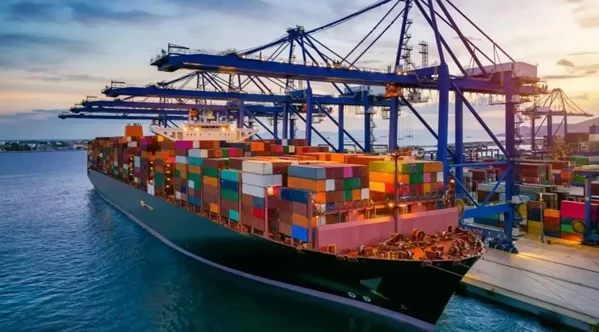
- India is heavily dependent on foreign shipping lines for transporting its international trade.
- According to discussions at Sagar Samvad:
- India spends approximately $75 billion annually on freight paid to foreign shipping lines.
- Critical commodities such as crude oil, gas, coal and urea are among the cargo transported through maritime routes.
- Dependence on foreign shipping companies results in a significant outflow of foreign exchange.
- Strengthening India's own merchant fleet can help retain a greater share of shipping-related economic value within the country.
Why is this important?
A stronger Indian merchant fleet can:
- Reduce dependence on foreign shipping companies.
- Improve national economic resilience.
- Strengthen supply-chain security.
- Support energy and food security.
- Generate employment.
- Increase India’s strategic maritime capability.
Five-Pillar Roadmap for Indian Shipping
The National Shipping Board’s discussions proposed five major areas for strengthening India's merchant fleet:
1. Fiscal Reform
- Rationalisation of taxes affecting shipping.
- Reduction of cost disadvantages faced by Indian operators.
- Creation of a more competitive taxation framework.
2. Assured Cargo Support
- Greater participation of Indian shipping companies in transporting national cargo.
- Policy mechanisms to provide predictable cargo opportunities.
3. Competitive Financing
- Easier and cheaper access to capital.
- Development of appropriate financial instruments for ship acquisition and expansion.
- Greater participation of domestic and international financial institutions.
4. Regulatory Streamlining
- Simplification of regulatory procedures.
- Reduction of unnecessary compliance burdens.
- Faster decision-making for maritime businesses.
5. Ease of Doing Business
- Creating a more business-friendly maritime ecosystem.
- Improving operational efficiency.
- Reducing procedural delays and transaction costs.
Indian Merchant Fleet and Maritime Self-Reliance
A large merchant fleet is important not only from an economic perspective but also from a strategic perspective.
India’s dependence on foreign shipping can create vulnerabilities during:
- Geopolitical tensions
- International conflicts
- Disruptions in shipping routes
- Global supply-chain crises
- Sudden increases in freight rates
- Maritime emergencies.
Therefore, increasing Indian-owned and Indian-flagged tonnage can contribute to strategic autonomy and economic security. The proposed addition of 100 ships over five years is intended to contribute to India’s long-term ambition of becoming one of the world’s leading ship-owning nations.
Maritime Labour Force: Opportunities and Challenges
- A major session at Sagar Samvad focused on “Maritime Labour Force: Opportunities & Challenges.”
- India possesses one of the world’s large pools of trained seafarers.
Maritime India Vision 2030
- Maritime India Vision 2030 provides a long-term framework for transforming India's maritime sector.
- Its broad focus includes:
- Port infrastructure development
- Shipping sector competitiveness
- Maritime logistics
- Shipbuilding and ship repair
- Green shipping
- Maritime employment
- Coastal development
- Technology and innovation
The objective is to strengthen India’s position as a major global maritime power.
Maritime Amrit Kaal Vision 2047
- Maritime Amrit Kaal Vision 2047 (MAKV 2047) represents India’s long-term maritime development roadmap.
- It seeks to develop a globally competitive and technologically advanced maritime ecosystem by 2047.
- Major Objectives:-
- Strengthening India's port capacity
- Expanding merchant shipping
- Developing shipbuilding capabilities
- Promoting green shipping
- Increasing maritime employment
- Improving logistics efficiency
- Enhancing India's global maritime competitiveness
- Supporting the Blue Economy
Significance for India
- Economic Security:-Reducing dependence on foreign shipping can help retain freight expenditure within the domestic economy.
- Strategic Autonomy :-A stronger merchant fleet provides greater resilience during international crises and disruptions in global shipping.
- Foreign Exchange Savings :-Reducing payments to foreign shipping lines can potentially reduce foreign exchange outflow.
- Employment Generation :-Expansion of shipping, shipbuilding and maritime logistics can create large-scale skilled employment.
- Shipbuilding Ecosystem :-Growth in merchant shipping can stimulate domestic shipbuilding, ship repair and maritime manufacturing.
- Blue Economy :-A stronger maritime sector can contribute significantly to India’s Blue Economy and coastal development.
- Atmanirbhar Bharat :-Building domestic shipping capacity supports the broader objective of reducing strategic dependence on foreign entities.
Challenges
Despite significant potential, India’s shipping sector faces several challenges:
- Higher operating costs for Indian-flagged vessels.
- Higher cost of domestic capital.
- Tax-related competitiveness issues.
- Dependence on foreign shipping lines.
- Limited scale of Indian merchant tonnage compared with leading maritime nations.
- Need for greater shipbuilding capacity.
- Regulatory and procedural complexities.
- Skill and training gaps in emerging maritime sectors.
- Gender disparity in maritime employment.
- Global competition in shipping and shipbuilding.
- Volatility in international freight rates.
Way Forward
- Implement the five-pillar roadmap proposed by the National Shipping Board.
- Rationalise taxation affecting Indian shipping companies.
- Provide access to competitive and long-term financing.
- Develop assured cargo mechanisms for Indian-flagged vessels.
- Simplify maritime regulations and improve Ease of Doing Business.
- Increase investment in domestic shipbuilding and ship repair.
- Expand high-quality maritime training and skill development.
- Create more employment opportunities for women in the maritime sector.
- Develop specialised skills for cruise shipping and advanced shipbuilding.
- Promote green and sustainable shipping technologies.
- Strengthen India's maritime logistics ecosystem.
- Increase the share of Indian-owned and Indian-flagged vessels in India's international trade.
UPSC Prelims MCQ
Q. Consider the following statements regarding the National Shipping Board (NSB):
- It is a statutory advisory body associated with India’s shipping sector.
- It was constituted in 1958.
- It advises the government on matters related to shipping policy and merchant shipping.
- Sagar Samvad is an international maritime exercise conducted by the Indian Navy.
Which of the statements given above are correct?
(a) 1, 2 and 3 only
(b) 1 and 4 only
(c) 2 and 3 only
(d) 1, 2, 3 and 4
Mains Question
Q.1 India’s dependence on foreign shipping lines has significant economic and strategic implications. Discuss the measures required to strengthen India’s merchant shipping sector and achieve maritime self-reliance by 2047.
|
FAQs
Q.1 What is Sagar Samvad?
Answer :-Sagar Samvad is a maritime dialogue platform organised by the National Shipping Board to bring together policymakers, industry stakeholders, experts and maritime professionals.
Q.2 Where was the first Sagar Samvad held?
Answer :-The inaugural Sagar Samvad was held in New Delhi.
Q.3 What is the five-pillar roadmap proposed for Indian shipping?
Answer :-It focuses on fiscal reform, assured cargo support, competitive financing, regulatory streamlining and Ease of Doing Business.
Q.4 Why are Indian-flagged ships considered less competitive?
Answer :-They were highlighted as being around 16–20% costlier due to factors such as taxation, maintenance costs, freight-related costs and higher domestic capital costs.
Q.5 What is Maritime India Vision 2030?
Answer :-It is India’s roadmap for transforming and modernising the maritime sector by improving ports, shipping, logistics, shipbuilding, employment and sustainability.
Q.6 What is Maritime Amrit Kaal Vision 2047?
Answer :-It is India’s long-term maritime development vision aimed at building a globally competitive, sustainable and self-reliant maritime sector by 2047.
Q.7 Why is a strong merchant fleet important for India?
Answer :-A strong merchant fleet can reduce dependence on foreign shipping lines, strengthen supply-chain resilience, support economic security, save foreign exchange and enhance India’s strategic autonomy.
|






 Contact Us
  New Batch : 9555124124/ 7428085757
  Tech Support : 9555124124/ 7428085757