
New
GS Foundation (P+M) - Delhi : 05th Jan., 2026 Winter Sale offer UPTO 75% + 10% Off, Valid Till : 5th Dec., 2025 GS Foundation (P+M) - Prayagraj : 15th Dec., 11:00 AM Winter Sale offer UPTO 75% + 10% Off, Valid Till : 5th Dec., 2025 GS Foundation (P+M) - Delhi : 05th Jan., 2026 GS Foundation (P+M) - Prayagraj : 15th Dec., 11:00 AM

Judiciary Highlights Severe Gaps in Critical Care for Acid Attack Survivors

Prelims:  (Polity + CA)
Mains: (GS 1 – Society: GS 2 – Governance & Social Justice)     

Why in News ?

The Supreme Court has sharply criticised the persistent delays in compensating acid attack survivors and the widespread non-compliance of private hospitals in providing free emergency treatment—mandatory under earlier Court orders.
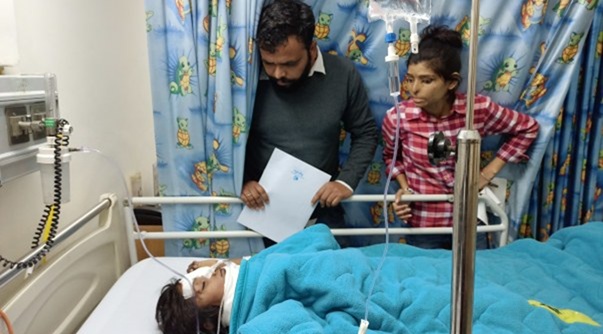
Judicial Intervention in Acid Attack Matters

Acid attacks—primarily targeting women—have long been treated as a severe gender-based crime. The Supreme Court’s involvement began intensively after the Laxmi vs. Union of India case (2006), which led to structural directions such as:

  • Minimum compensation of ₹3 lakh, with ₹1 lakh payable within 15 days of the incident.
  • Free and immediate medical care in all private hospitals, including surgeries, medicines, food, and rehabilitation support.
  • Ban on unregulated over-the-counter sale of acid.
  • Designation of DLSAs as Compensation Boards for timely disbursement of claims.

Yet, despite clear directives, systemic obstacles persist—survivors still struggle to access critical surgeries, emergency care, and financial support.

Current Proceedings Before the Supreme Court

A petition by the Acid Survivors Saahas Foundation highlighted massive inconsistencies across States.

Key Findings Presented to the Court

  • Many survivors received only partial compensation, commonly the initial ₹1 lakh.
  • Several private hospitals demanded upfront payment, in violation of Court orders.
  • Incomplete and inaccurate compliance reports were submitted by States.
  • 8 States and 5 UTs had not filed mandatory affidavits explaining delays.
  • Survivors in states like Maharashtra and UP had no access to advanced reconstructive procedures due to non-payment of funds.

The Bench expressed strong dissatisfaction with “years of non-compliance despite unambiguous directions.”

Fresh Directions Issued by the Supreme Court

1. Strengthening Financial Accountability

  • Chief Secretaries of States must personally ensure seamless fund transfer—State → SLSA → DLSA → Survivors.
  • The Court questioned whether the ₹3 lakh compensation cap should be revised, noting rising medical costs and multiple-surgery requirements.

2. Free Treatment in Private Hospitals

Principal Health Secretaries of each State/UT must enforce compliance:

  • Private hospitals cannot refuse or delay free medical care for acid attack victims.
  • Any refusal amounts to willful disobedience of Supreme Court orders and may attract criminal proceedings.

3. Detailed Data Disclosure by NALSA

The Court demanded victim-wise data, including:

  • Name of survivor
  • Compensation claimed & paid
  • Date of application
  • Date of disbursement
  • Pending amounts with reasons

NALSA stated that ₹484 crore was disbursed between March 2024 – April 2025, but promised detailed break-ups.

Implications for Governance and Victim Rights

  • The ruling strengthens the framework of rights-based entitlements, not discretionary welfare.
  • Reinforces institutional accountability in cases involving gender-based violence.
  • Ensures access to timely healthcare—critical because acid burns require:
    • multiple reconstructive surgeries
    • lifelong rehabilitation
    • mental health support
  • Encourages improved coordination among State governments, hospitals, DLSAs, and NALSA.

FAQs

1. What compensation is an acid attack survivor legally entitled to ?

As per Supreme Court directions, a minimum of ₹3 lakh, including ₹1 lakh in the first 15 days. Some States offer higher amounts under their victim compensation schemes.

2. Are private hospitals legally bound to treat survivors for free ?

Yes. Private hospitals must provide free emergency and critical care, including surgeries, medicines, and diagnostics.

3. Who disburses compensation to survivors ?

The District Legal Services Authority (DLSA) manages disbursement, under supervision of SLSA and NALSA.

4. Why is compensation delayed despite clear orders ?

Common reasons include:

  • bureaucratic delays
  • poor fund allocation
  • lack of monitoring
  • inadequate reporting by States

5. Can survivors take legal action if hospitals deny treatment ?

Yes. Denial of treatment violates Supreme Court rulings and can result in legal and criminal consequences for the institution.

Have any Query?

Our support team will be happy to assist you!

OR


