
- UPSC Exam
- State PCS
- One Day Exam
- Current Affairs
- PT Quiz
- Downlaods
- About Coaching
- Blog
- Videos

| Prelims: (Environment + CA) Mains: (GS 3 – Environment Conservation, Infrastructure Development; GS 2 – Governance & Environmental Regulation) |
The Standing Committee of the National Board for Wildlife (NBWL) has approved the diversion of 4.68 hectares of forest land from the Kapilash Wildlife Sanctuary for the construction of the 111 km six-lane Capital Region Ring Road (CRRR) project.
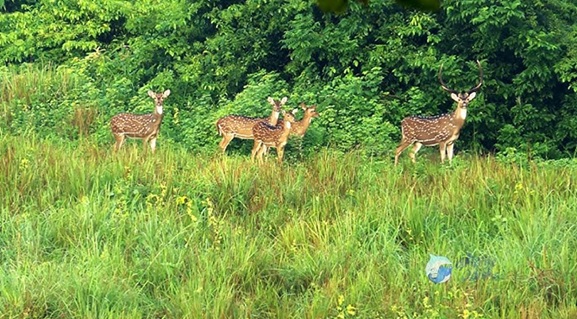
The decision has triggered discussions on balancing infrastructure development with wildlife conservation.
India’s rapid urbanisation and economic growth have increased the demand for:
At the same time, infrastructure expansion often intersects with protected forest areas and wildlife habitats, raising concerns over:
Under the Wildlife (Protection) Act, 1972, diversion of land within protected areas requires approval from the NBWL’s Standing Committee. The recent clearance for land diversion in Kapilash Wildlife Sanctuary highlights the delicate balance between development and ecological preservation.
The sanctuary forms part of the Eastern Ghats landscape and plays an important ecological role in central Odisha.
The sanctuary is dominated by:
The moist deciduous ecosystem supports rich undergrowth and seasonal diversity, contributing to:
Kapilash Wildlife Sanctuary supports diverse wildlife, including:
The sanctuary contributes to maintaining ecological connectivity in Odisha’s forest landscape.
The proposed Capital Region Ring Road (CRRR):
Although the diverted area is relatively small, concerns include:
Mitigation measures such as wildlife crossings, underpasses, and compensatory afforestation are expected to be part of project conditions.
The clearance highlights the ongoing challenge of reconciling:
The NBWL plays a critical regulatory role in evaluating:
Kapilash lies within the Eastern Ghats biodiversity zone, which:
Road expansion may increase:
The case underscores the need for:
FAQs1. Where is Kapilash Wildlife Sanctuary located ? It is located in Dhenkanal district of Odisha. 2. What type of forest is found there ? It is classified as Eastern Highlands moist deciduous forest. 3. Why is it in the news ? The NBWL has approved diversion of 4.68 hectares of forest land for the Capital Region Ring Road project. 4. What wildlife species are found in the sanctuary ? Elephants, sloth bears, jungle cats, pangolins, porcupines, spotted deer, peacocks, and kingfishers, among others. 5. Why is forest diversion controversial ? It may lead to habitat fragmentation, wildlife disturbance, and ecological imbalance, raising concerns about sustainable development. |



Our support team will be happy to assist you!

 Contact Us
  New Batch : 9555124124/ 7428085757
  Tech Support : 9555124124/ 7428085757