| (Prelims: Current Affairs) |
Context
The Thiruvananthapuram-based International Institute of Migration and Development (IIMAD) and the Population Foundation of India (PFI) have released a national report on the population of various states in India. This report provides demographic projections from 2021 to 2051. The data for Kerala is particularly important because the state is becoming India's oldest state.
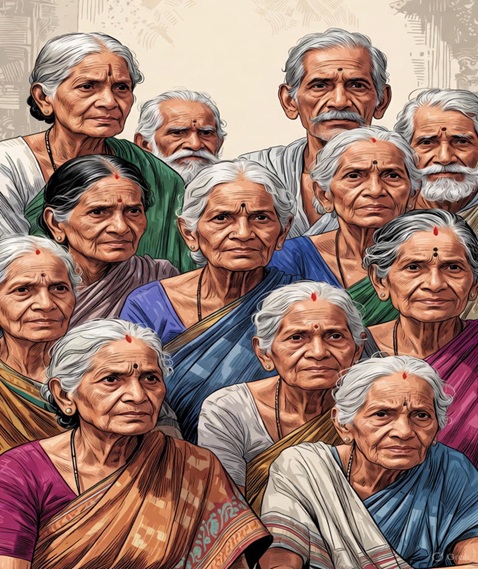
Kerala: India's Oldest State
- According to the report, Kerala will remain the oldest state in 2051, and Bihar the youngest.
- This is due to low birth rates, high life expectancy, and the rapid pace of demographic change.
- The report provides three types of projections to account for future uncertainties:
- Medium Variant: Most realistic projection (35.8 million → 35.5 million)
- Low Variant: Lowest projection (35.7 million → 34.9 million)
- High Variant: Highest projection (35.9 million → 36.1 million)
- All variants confirm that the population will begin to decline after 2041.
Key Findings of the Report
Kerala's Population Changes
- Kerala's population was 33.4 million in 2011.
- It is projected to increase to approximately 35.8 million in 2026.
- The population will reach 36.2 million by 2041.
- After this, a gradual decline will begin, and the population is projected to fall to 35.5 million in 2051.
- All projection variants (low, high, and medium) agree that a decline is inevitable after 2041.
Sharp increase in life expectancy
- Kerala's average life expectancy is projected to be 75.1 years in 2026.
- By 2051, it will reach 82.9 years.
- This clearly indicates that Kerala will remain India's oldest state.
Sharp increase in elderly population
- In 2026, people above 60 years of age constituted 18.6% of Kerala's total population.
- By 2051, this will increase to 30.6%, meaning 1 in 3 people will be elderly.
- The state's median age was 37 years in 2026, which will increase to 47 years by 2051.
- The 80+ age group in Kerala was around 2% in 2021, and is projected to increase to 6.4% in 2051, the highest in India.
Sharp decline in child population in Kerala
- Share of population aged 0–14 years in 2021:
- Bihar: 30.3% (highest)
- Kerala: 19.3% (lowest)
- Projected in 2051:
-
- Bihar: 22.6%
- Kerala: 12.8% (lowest)
- This indicates that the birth rate in Kerala is declining significantly and the state will reach close to the floor TFR (1.4).
Rapidly Growing Urbanization
- In 2011, Kerala's urban-rural ratio was:
- Urban: 47.7%
- Rural: 52.3%
- By 2051, this is projected to increase to:
- This suggests that Kerala could become one of the most urbanized states in the country.
Conclusion
Kerala's demographic picture provides a clear glimpse of the challenges and opportunities facing India in the coming decades. Declining childbearing, a significant increase in the elderly population, and rapid urbanization are trends that will demand major changes in health services, pension systems, care structures, employment, and social security mechanisms.







 Contact Us
  New Batch : 9555124124/ 7428085757
  Tech Support : 9555124124/ 7428085757