Prelims: (Economy + CA)
Mains: (GS 3 – Environment, Internal Security, Disaster Management, Federalism) |
Why in News ?
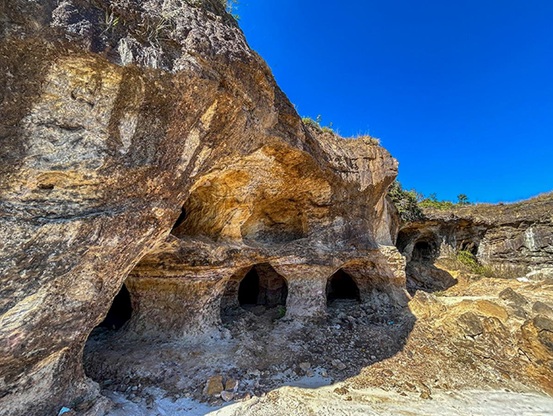
A deadly explosion in an illegally operating rat-hole coal mine in East Jaintia Hills district, Meghalaya, has resulted in the death of 25 miners. The incident has once again highlighted the persistence of illegal mining in the state despite a ban by the National Green Tribunal (NGT) and the Supreme Court. It raises serious concerns about regulatory enforcement, governance failure, labour safety, and disaster management preparedness.
Background and Context
- Rat-hole mining has been practised in Meghalaya for decades due to the state’s unique land ownership system under the Sixth Schedule, where land and mineral rights lie largely with communities or private individuals rather than the state.
- In 2014, the NGT banned rat-hole mining, citing severe environmental damage and unsafe working conditions. The ban was later upheld by the Supreme Court.
- Despite judicial prohibitions, illegal mining has continued at scale, often with tacit local support and weak enforcement.
- Repeated accidents, including the 2018 Ksan tragedy (15 miners drowned) and the Umpleng incident (5 miners killed), indicate systemic failure rather than isolated lapses.
- The latest tragedy underscores the gap between law on paper and governance in practice.
Nature of the Incident
- A dynamite explosion occurred in a rat-hole mine in the Thangkso area, a remote and poorly connected region.
- Rescue teams comprising the NDRF, SDRF, and Special Rescue Teams retrieved multiple bodies from narrow underground tunnels.
- The mine structure included:
- Five vertical shafts, almost 100 feet deep
- Each shaft branching into 2–3 narrow horizontal tunnels
- Tunnels measuring only 2 feet high and 3 feet wide, forcing miners to crawl
- Three bodies were found 350 feet horizontally inside a rat-hole tunnel.
- Rescue operations were severely hampered by:
- Water accumulation
- Mudslides caused by dripping water
- Rockfall hazards
- Extremely confined working spaces
Rat-Hole Mining – Structural and Environmental Concerns
What is Rat-Hole Mining ?
- A primitive and hazardous method of coal extraction involving narrow pits and horizontal tunnels dug manually.
- Widespread in Meghalaya due to fragmented land ownership and informal mining practices.
Why is it Problematic ?
- It violates the Mines and Minerals (Development and Regulation) Act, 1957 (MMDR Act).
- It has been banned by the NGT (2014) and the Supreme Court.
- The practice leads to:
- Severe environmental degradation
- Acid mine drainage
- Water contamination
- Land instability
- Loss of biodiversity
- There is a complete absence of worker safety mechanisms, making it one of the most dangerous forms of mining globally.
Legal and Administrative Dimensions
Criminal Action
- Following the incident, an FIR was registered under:
- Charges of culpable homicide
- Violations of the MMDR Act
- Violations of the Explosive Substances Act
- Two mine owners were arrested.
Judicial Oversight
- The Justice (Retd) BP Katakey Committee, appointed by the Meghalaya High Court in 2022 following a suo-motu PIL, monitors illegal coal mining in the state.
- Its findings flagged widespread illegal mining, especially in East Jaintia Hills.
- The Meghalaya High Court observed: “No one in the state, except the high court, is taking the issue very seriously.”
Scale of the Illegal Mining Problem
- According to the Katakey Committee:
- Over 22,000 illegal mine openings in East Jaintia Hills alone
- Over 25,000 across Meghalaya
- East Jaintia Hills is the worst-affected district.
- Past tragedies:
- 2018 Ksan incident: 15 miners drowned
- Umpleng incident: 5 miners died
- These repeated accidents point to a pattern of systemic regulatory collapse, not isolated mishaps.
Challenges Highlighted
1. Governance Deficit
- Weak enforcement of NGT and Supreme Court orders
- Lack of political and administrative will
- Local complicity and informal protection networks
2. Terrain and Accessibility
- Remote location (25 km takes nearly 3 hours by road)
- Difficult terrain requiring 4WD vehicles
- Slows both regulation and rescue operations
3. Informal Labour Exploitation
- Migrant and economically vulnerable workers
- No formal contracts, safety nets, or social security
- High occupational hazards with no accountability
4. Disaster Management Constraints
- Hazardous confined spaces
- High risk of waterlogging and collapse
- Inadequate early detection and monitoring systems
5. Constitutional and Federal Complexity
- Sixth Schedule governance and Autonomous District Councils create regulatory ambiguity
- This ambiguity is exploited for illegal mining
Broader Issues Involved
- Sustainable development vs livelihood concerns
- Environmental governance and rule of law
- Judicial activism vs executive inaction
- Cooperative federalism in resource regulation
- Disaster risk reduction in informal sectors
- Linkages between illegal mining and criminal economies
Way Forward
1. Strict Enforcement and Monitoring
- Real-time satellite surveillance of illegal mining sites
- Creation of an independent mining regulatory authority
- Strengthened coordination between State Government, Autonomous Councils, and the Centre
2. Institutional Accountability
- Fix responsibility of district and local officials
- Time-bound compliance reporting to the High Court
- Stronger implementation of MMDR Act provisions
3. Formalisation of the Mining Sector
- Introduce regulated, scientific, and environmentally compliant mining models
- Alternative livelihood programmes for affected communities
- Skill development and employment diversification
4. Environmental Restoration
- Mandatory mine closure plans
- Rehabilitation of degraded land and water bodies
- Strict application of the Polluter Pays Principle
5. Worker Safety Framework
- Enforce labour laws strictly
- Mandatory insurance and compensation mechanisms
- Community awareness campaigns on occupational risks
FAQs
1. What is rat-hole mining and why is it banned ?
Rat-hole mining involves manually digging narrow tunnels to extract coal. It is banned due to severe environmental damage and extremely unsafe working conditions.
2. Which authorities banned rat-hole mining in Meghalaya ?
The National Green Tribunal (2014) banned it, and the ban was upheld by the Supreme Court.
3. Why does illegal mining persist despite judicial bans ?
Weak enforcement, local complicity, regulatory ambiguity under the Sixth Schedule, and livelihood dependence contribute to its persistence.
4. What environmental damage does rat-hole mining cause ?
It leads to acid mine drainage, water contamination, land instability, biodiversity loss, and long-term ecological degradation.
5. What reforms are needed to prevent such tragedies ?
Strict enforcement, institutional accountability, formalisation of mining, environmental restoration, and strong worker safety frameworks are essential.
|






 Contact Us
  New Batch : 9555124124/ 7428085757
  Tech Support : 9555124124/ 7428085757