Researchers have recently made significant progress toward developing a vaccine against the Epstein–Barr Virus (EBV). This virus infects nearly 95% of the world’s population at some point in life and has been linked to several serious diseases.
What is Epstein–Barr Virus (EBV) ?
- EBV is a common and highly contagious virus.
- It belongs to the herpesvirus family and is also known as Human Herpesvirus-4 (HHV-4).
- It is widely prevalent in the human population.
- Most infections occur during childhood, adolescence, or early adulthood, but it can infect people at any age.
Transmission
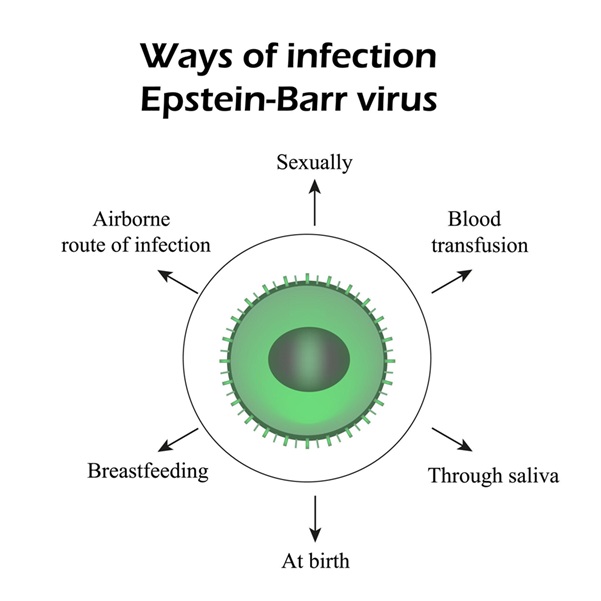
- EBV spreads mainly through bodily fluids, especially saliva.
- Because of this, it is sometimes called the “kissing disease.”
- It can also spread through shared drinks, utensils, or close personal contact.
Nature of the Virus & Reactivation
- In most cases, EBV causes mild or no symptoms.
- After the initial infection, the virus remains in the body in a latent (inactive) state.
- It may reactivate when the immune system becomes weakened or during periods of extreme stress.
Possible Complications
In rare cases, EBV is associated with serious diseases, such as:
- Burkitt lymphoma – A type of blood cancer
- Gastric cancer – Cancer of the stomach
- Multiple sclerosis – A disorder affecting the nervous system
EBV has also been linked to certain other lymphomas and autoimmune conditions.
Symptoms
During EBV infection, the following symptoms may appear:
-
- Sore throat and inflammation
- Fever
- Severe fatigue or weakness
- Swollen lymph nodes
- Skin rashes
- Enlarged spleen and liver
EBV is best known for causing infectious mononucleosis (mono).
Treatment
- There is no specific antiviral treatment available for EBV.
- Treatment focuses on relieving symptoms:
- Drinking plenty of fluids
- Getting adequate rest
- Taking medications for fever and pain (as advised by a doctor)
Most people recover within a few weeks, though fatigue may persist longer.
Vaccine Research
Scientists are actively working on developing an effective EBV vaccine.
A successful vaccine could help prevent:
- EBV-related cancers
- Certain autoimmune diseases
- Infectious mononucleosis
Progress in vaccine research offers hope for reducing the global health burden associated with EBV in the future.






 Contact Us
  New Batch : 9555124124/ 7428085757
  Tech Support : 9555124124/ 7428085757