Air pollution is a serious environmental and public health challenge in India. In many cities, the levels of pollutants such as PM2.5, PM10, NO₂, SO₂, and O₃ are found to be above prescribed standards. To effectively monitor air quality, automated monitoring stations, low-cost sensors, and smart city–based networks are being rapidly deployed.
However, there was a lack of a national-level standard laboratory to ensure the accuracy, standardization, and reliability of these instruments. To address this critical gap, the CSIR–National Physical Laboratory (NPL) has established the National Environmental Standards Laboratory (NESL).
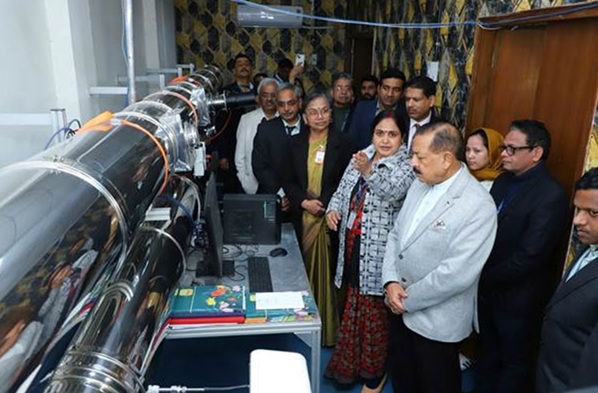
National Environmental Standards Laboratory
The National Environmental Standards Laboratory (NESL) is a national reference laboratory aimed at testing, validating, and recalibrating air pollution monitoring systems and environmental sensors used in India. Its objective is to ensure accurate and comparable data under Indian environmental conditions.
Location: CSIR–National Physical Laboratory (NPL), New Delhi
Objectives of Establishing NESL
- Testing and calibration of air quality monitoring instruments in line with Indian climatic conditions
- Ensuring measurement accuracy and reliability of environmental sensors
- Providing authentic and standardized data for the National Clean Air Programme (NCAP)
- Reducing dependence on imported testing facilities and developing an indigenous standards ecosystem
Key Features
(a) Instrument Testing and Validation
- Ambient air quality monitors
- Low-cost air sensors
- Industrial emission measurement instruments
- Smart city–based monitoring networks
(b) Reference Gas Protocols
- Performance evaluation of sensors using standard gas mixtures
- Ensuring inter-comparability of data across different monitoring systems
(c) Industrial and Urban Applications
- Industrial emission audits
- Technical support to municipal bodies and pollution control boards
- Validation of urban air quality monitoring systems
(d) Domestic Facility
- Eliminates the need to send instruments abroad for testing
- Significant reduction in time and cost
Linkage with the National Clean Air Programme (NCAP)
The National Clean Air Programme (2019) aims to reduce PM2.5 and PM10 concentrations by 20–30% compared to 2017 levels.
Role of NESL:
- Enhancing the reliability of air quality data
- Accurate identification of pollution sources
- Supporting evidence-based policymaking
- Enabling fair assessment of state and city-level performance
Significance
(a) Environmental Governance
- Improved data quality leads to more effective policy decisions
- Greater accountability and transparency of regulatory institutions
(b) Economic and Industrial Importance
- Affordable quality certification for MSMEs, start-ups, and indigenous manufacturers
- Boost to Atmanirbhar Bharat and Make in India initiatives
- Growth of the domestic environmental instrumentation industry
(c) Health and Social Impact
- Better assessment of pollution-related health risks
- Identification of vulnerable regions and population groups
Role of CSIR–National Physical Laboratory (NPL)
CSIR–NPL is India’s National Metrology Institute, which—
- Maintains national standards of SI units
- Provides technical leadership in measurement science (Metrology)
- Offers facilities for testing and calibration of scientific instruments
The National Environmental Standards Laboratory (NESL) is an extension of NPL’s core measurement expertise into the environmental domain.
Council of Scientific & Industrial Research (CSIR)
The Council of Scientific & Industrial Research (CSIR) is India’s largest and most prominent national Research and Development (R&D) organization. It plays a vital role in the country’s industrial, economic, and social development through science, technology, and innovation.
Establishment and Administration
- Established: 26 September 1942
- Headquarters: New Delhi
- Founder: Dr. Shanti Swarup Bhatnagar
- Administrative Ministry: Ministry of Science & Technology, Government of India
- Nature: Autonomous body
Objectives
The primary objective of CSIR is to promote scientific research in the country and link it with industrial and societal applications. Its key objectives include:
- Solving industrial and scientific problems
- Development of indigenous technologies
- Promotion of innovation and patents
- Strengthening the role of science in national development






 Contact Us
  New Batch : 9555124124/ 7428085757
  Tech Support : 9555124124/ 7428085757