Prelims: (Polity + CA)
Mains: (GS 2 – Governance, Constitution) |
Why in the News ?
The Winter Session of Parliament has commenced amid concerns of a potential standoff over the Special Intensive Revision (SIR) of electoral rolls. Persistent issues—ranging from disruptions and reduced legislative scrutiny to growing executive dominance—have reignited debates on the declining deliberative health of the Indian Parliament.
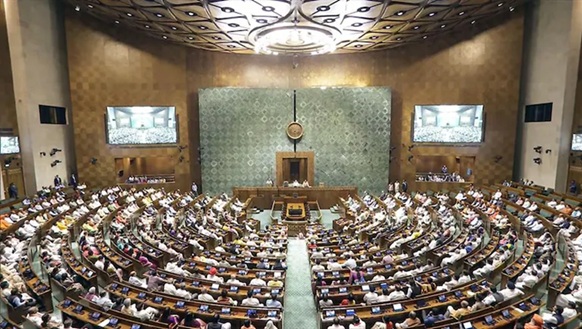
Declining Health of Parliamentary Functioning
Routine Disruptions & Falling Productivity
- Monsoon Session (PRS Data):
- Lok Sabha: Functioned only 29% of scheduled time
- Rajya Sabha: Functioned 34%
- Question Hour impact:
- Lok Sabha: Completed only 23% of Question Hour
- Rajya Sabha: Only 6%
Bills Passed with Minimal Debate
- Regulation of Online Gaming Bill:
- LS: 6 minutes | RS: 23 minutes
- Merchant Shipping Bill, 2024:
- LS: 20 minutes | RS: 10 minutes
- Operation Sindoor debate: Consumed 50% of Lok Sabha’s total time.
Concerns Raised by Experts & Lawmakers
Views from Constitutional Experts
- P.D.T. Achary:
- Passage of Bills without debate undermines the purpose of Parliament.
- Article 107 requires meaningful legislative engagement.
- Calls for structured dialogue between PM and Leader of Opposition.
Opinions from MPs
- Manish Tewari: Parliament has become a “rubber stamp”; Standing Committees losing relevance.
- Syed Naseer Husain: Government’s refusal to allow discussions triggers Opposition protests.
Government’s Position
- Blames Opposition for disruptions, calling them politically motivated.
What the Numbers Reveal
Short-Term Variations
- High productivity during Budget Sessions 2023 & 2024:
- Sharp fall in Winter Session 2024:
Long-Term Structural Decline — 17th Lok Sabha (2019–2024)
- Lok Sabha: Functioned 88% of scheduled time
- Rajya Sabha: 73%
- But had the fewest sittings since 1952:
- Only 33 sitting days in 2020 (COVID-19)
- 11 of 15 sessions adjourned early
- No Deputy Speaker—continued into the 18th Lok Sabha, breaking constitutional convention.
Historical Decline in Sittings
- 1952–1970: ~121 days/year
- Since 2000: ~68 days/year
- 17th Lok Sabha: ~55 days/year
Weakening Committee Scrutiny
- Bills referred to committees:
- 14th & 15th LS: Over 60%
- 16th & 17th LS: About 20%
Cross-Government Trend
- Decline spans governments, not just one era:
- 15th Lok Sabha (UPA-II): Poor productivity (LS 61%, RS 66%)
- 13th & 14th LS: Stronger performance (91%, 87%)
Deeper Structural Causes
1. Anti-Defection Law: From Stability to Control
- Intended to prevent defections, but now binds MPs to party whips, diluting independence.
- Impacts:
- Budget & taxation oversight
- Impeachment proceedings
- Free legislative deliberation
2. Executive Dominance Over Legislature
- Parliament reduced to approval authority rather than deliberative forum.
- Opposition notices often rejected; Question Hour & Zero Hour disrupted.
3. Erosion of Neutrality of Constitutional Offices
- Speakers increasingly viewed as partisan.
- Constitutional conventions diluted, harming institutional balance.
Comparative Lens: Westminster Model vs India
Historical Evolution
- 1258 Oxford Parliament: Established executive accountability to legislature.
- UK and other Westminster democracies retain:
- Weekly PM’s Questions
- Strong committee oversight
- Mandatory ministerial testimony
India’s Divergence
- Decline in executive accountability
- Weakening oversight structures
- Reduced parliamentary questioning and participation
Challenges & Way Forward
1. Restoring Government–Opposition Dialogue
- Institutionalised consultations between PM, LoP, and floor leaders.
2. Ensuring Adequate Sitting Days
- Mandatory minimum of ~120 sittings per year to prevent rushed legislation.
3. Strengthening Standing Committees
- Mandatory referral of major Bills
- Encourage expert involvement and transparency
4. Filling Constitutional Vacancies
- Urgent election of Deputy Speaker (Article 93 requirement)
5. Reforming Anti-Defection Law
- Limit whips to confidence motions and money bills
- Restore MPs’ autonomy
6. Improving Parliamentary Neutrality
- Clear norms for impartiality of Presiding Officers
7. Reviving Question Hour & Zero Hour
- Ensure these accountability mechanisms run uninterrupted.
8. Institutionalising PM’s Question Hour
- Weekly appearance by PM for direct accountability.
FAQs
1. Why is the decline in parliamentary functioning concerning ?
It weakens legislative scrutiny, reduces accountability, and increases executive dominance.
2. What does productivity data show ?
Sharp drops in recent sessions, minimal debates on major Bills, and historically low sitting days.
3. Why is the anti-defection law criticised ?
It undermines MPs’ independence by binding them strictly to party whips.
4. How does India differ from other Westminster democracies ?
Lacks mechanisms like PM’s weekly questioning and mandatory ministerial testimony before committees.
5. What reforms can improve parliamentary functioning ?
More sittings, stronger committees, reduced whip control, impartial presiding officers, and institutionalised PM’s Question Hour.
|






 Contact Us
  New Batch : 9555124124/ 7428085757
  Tech Support : 9555124124/ 7428085757