What is a Postal Ballot?
A Postal Ballot is a method of voting in which an eligible voter casts their vote without visiting the polling booth, by sending the ballot paper through post or through a mechanism notified by the Election Commission of India (ECI). It ensures voting rights for those who cannot physically reach the polling station due to service, age, health, or official duties.
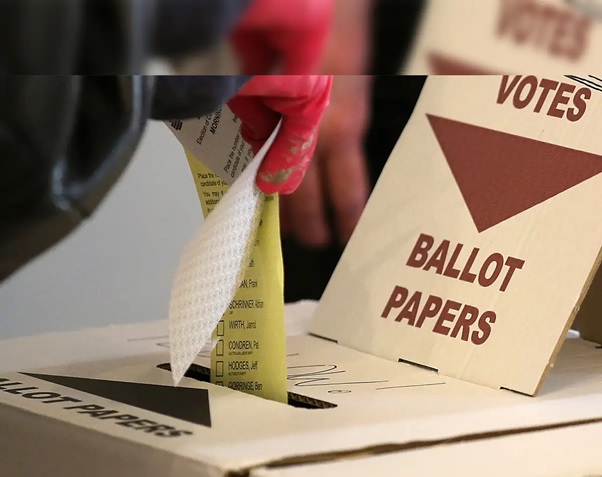
How Postal Ballot Works
- Voter receives the ballot paper.
- Marks their vote.
- Seals it in the prescribed envelopes.
- Sends it back to the Returning Officer (RO).
Legal Basis
The system of Postal Ballot is governed by:
- Representation of the People Act (RPA), 1951
- Conduct of Election Rules, 1961 (Rule 23–27)
- ECI notifications and amendments
Who Can Use Postal Ballot?
1. Service Voters
- Members of the Armed Forces (Army, Navy, Air Force)
- Central Armed Police Forces (CAPF)
- Government officials posted in Indian Missions / Embassies abroad
2. Voters on Election Duty
- Presiding Officers, Polling Officers
- Police and security personnel on duty
- Staff deployed by the Returning Officer
3. ‘Absentee Voters’ Category
Eligible for Vote from Home using Form 12D:
- Senior citizens (80+ years)
- PwD voters (benchmark disabilities)
- Pregnant women
- Voters with serious or chronic illnesses
- Voters under emergency conditions (e.g., during COVID)
4. Undertrial Detainees
- Prisoners who are not convicted, only under trial
5. Voters in Essential Services (as notified by ECI)
- Railways
- Health services
- Fire services
- Postal department
- Telecommunications
- Other essential categories approved by ECI
Procedure: How Postal Ballot Works?
Step 1: Application
- Eligible voter submits Form 12 / Form 12D to request a postal ballot.
Step 2: Verification
- Returning Officer verifies and approves the application.
Step 3: Issue of Ballot Materials
Voter receives:
- Ballot paper
- Inner (secret) envelope
- Declaration form
- Outer envelope (addressed to RO)
Step 4: Casting the Vote
- Voter marks the ballot
- Signs the declaration form
- Seals the envelopes properly
Step 5: Returning the Ballot
- Sends the ballot back via post
OR
- Submits it personally at the RO’s office
Step 6: Counting of Votes
- Postal Ballots are counted first on counting day.
ETPBS – Electronically Transmitted Postal Ballot System
The ECI has introduced ETPBS for service voters to speed up the process.
Features
- Ballot is sent electronically to the voter.
- Voter prints the ballot, marks it, and returns it by post.
- Enhances speed, security, and reduces logistical delays.
- One of India’s most advanced election technologies.
Significance of Postal Ballot
1. Inclusive Democracy
Ensures voting rights of:
- Soldiers
- Senior citizens
- Ill or disabled voters
- Pregnant women
- Officials on election duty
2. Higher Voter Turnout
Enables participation even when physical voting is not possible.
3. Upholds Universal Adult Franchise (Article 326)
Expands accessibility and democratic participation.
4. Useful During Emergencies
Widely used during COVID-19 and natural disasters.
Issues & Challenges
- Postal delays – ballots may arrive late.
- Security concerns – risk of undue influence or improper assistance.
- Possibility of fraud – identity verification challenges.
- Administrative burden – extra staff, verification processes.
- Exclusion of migrant workers and NRI voters – large voting population still left out.
Reforms Needed
1. Remote / Digital Voting
To include migrant workers and NRI voters.
2. Expansion of ETPBS
More categories of voters can be included.
3. Strengthening Postal & Logistics Systems
- Tracking facilities
- Faster dispatch & delivery
4. Better Security Protocols
- Stronger sealing mechanisms
- Signature verification
- CCTV tracking at RO offices
5. Awareness Campaigns
Educating voters about:
- Eligibility
- Forms
- Time limits
- Voting process







 Contact Us
  New Batch : 9555124124/ 7428085757
  Tech Support : 9555124124/ 7428085757