
New
Final Result - UPSC CSE Result, 2025 GS Foundation (P+M) - Delhi : 4th May 2026, 11:30 AM GS Foundation (P+M) - Prayagraj : 4th May 2026, 5:30PM Final Result - UPSC CSE Result, 2025 GS Foundation (P+M) - Delhi : 4th May 2026, 11:30 AM GS Foundation (P+M) - Prayagraj : 4th May 2026, 5:30PM

Prelims: International Relations + CA Mains: GS Paper 2 – International Relations, Global Geopolitics

Prelims : International Relations + CA
Mains : GS Paper 2 – International Relations, Global Geopolitics

Why in News ?

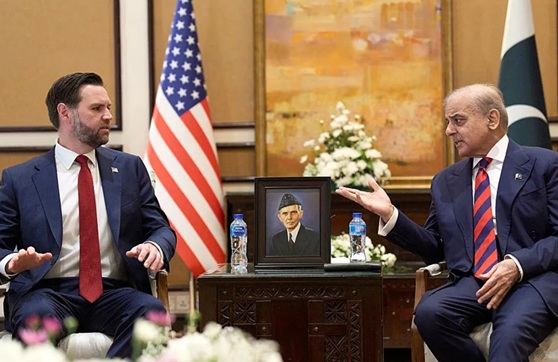
High-level negotiations between the United States and Iran held in Islamabad collapsed after nearly 21 hours of continuous discussions, failing to produce a ceasefire or de-escalation agreement.

The talks were seen as a crucial diplomatic effort amid escalating tensions in West Asia, but ended without any breakthrough.
Background and Context

Relations between the United States and Iran have remained adversarial since the 1979 Iranian Revolution.

Key issues in bilateral tensions include :

  • Iran’s nuclear programme
  • US-led economic sanctions
  • Strategic rivalry in West Asia

The Islamabad talks marked a rare attempt at direct high-level engagement, facilitated in a neutral setting to address immediate conflict escalation.

Key Details of the Islamabad Talks

  • Duration: Approximately 21 hours of negotiations
  • Objective : 
    • Achieve a ceasefire agreement
    • Reduce military escalation
  • Nature : 
    • High-level diplomatic engagement
    • Focus on urgent conflict resolution

Despite being reportedly “close to a deal” at certain stages, negotiations ultimately broke down.

Key Reasons for Failure

1. Deadlock Over Nuclear Programme

The most significant obstacle was disagreement over Iran’s nuclear programme.

  • The United States demanded :
    • Strict limitations on nuclear activities
    • Verifiable assurances against weaponisation
  • Iran maintained :
    • Its programme is for peaceful purposes
    • Sovereignty cannot be compromised

This remained the primary deal-breaker.

2. Persistent Trust Deficit

Negotiations were undermined by deep mistrust :

  • Iran cited lack of trust due to : 
    • Previous US withdrawal from nuclear agreements
  • The US questioned Iran’s compliance and intentions

Iranian negotiators explicitly stated that the US failed to build sufficient trust during the talks.

3. “Maximalist Demands” and Lack of Flexibility

Both sides held rigid positions :

  • Iran accused the US of presenting maximalist and non-negotiable demands
  • The US insisted on comprehensive commitments before concessions

This rigidity prevented compromise even after prolonged discussions.

4. Sanctions Relief vs Security Guarantees

A major disagreement emerged over sequencing :

  • Iran demanded :
    • Immediate lifting of economic sanctions
    • Access to frozen financial assets
  • The United States insisted on :
    • Prior security guarantees
    • Compliance verification

The inability to agree on “who acts first” resulted in a stalemate.

5. Strategic Dispute Over Strait of Hormuz

  • Iran seeks strategic leverage over the strait
  • The US demands : 
    • Free navigation
    • Uninterrupted global oil supply

Given that a large share of global oil trade passes through this route, the disagreement added a critical geopolitical dimension.

6. Parallel Military Pressure

  • Talks occurred alongside ongoing military tensions
  • Threats of retaliation and escalation persisted

This reduced the credibility of negotiations and weakened diplomatic space.

What Does “Islamabad Failure” Indicate ?

The collapse reflects :

  • Inability to reconcile core strategic interests
  • Absence of trust-building mechanisms
  • Preference for strategic leverage over compromise

Even prolonged negotiations could not overcome structural differences.

Implications of the Collapse

1. Increased Risk of Conflict

  • Possibility of renewed military escalation
  • Potential maritime confrontations

2. Global Energy Disruption

  • Threat to oil supply through the Strait of Hormuz
  • Likely increase in global oil prices

3. Regional Instability

  • Heightened tensions across West Asia
  • Potential involvement of regional actors

4. Setback to Diplomacy

  • Weakens confidence in bilateral negotiations
  • Makes future agreements more difficult

Way Forward

  • Resume dialogue through phased negotiations
  • Build trust via incremental confidence-building measures
  • Involve neutral mediators or multilateral platforms
  • Avoid simultaneous military escalation during talks

Practice Questions

Prelims

Q. The Strait of Hormuz connects :
(a) Red Sea and Mediterranean Sea
(b) Persian Gulf and Gulf of Oman
(c) Arabian Sea and Bay of Bengal
(d) Caspian Sea and Black Sea

Mains

“Discuss the reasons behind the failure of Iran–US talks and its implications for global peace and energy security.”

FAQs

Q1. Where were the talks held ?

n Islamabad, Pakistan.

Q2. How long did the talks last ?

Approximately 21 hours.

Q3. What was the main issue ?

Disagreement over Iran’s nuclear programme.

Q4. Why is the Strait of Hormuz important ?

It is a key global oil transit route.

Q5. What is the main takeaway ?

Deep mistrust and rigid positions prevented any agreement.

Have any Query?

Our support team will be happy to assist you!

OR
X


