Prelims: (Polity & Governance + CA)
Mains: (GS 1 – Indian Culture & Heritage; GS 2 – International Relations, Soft Power Diplomacy) |
Why in News?
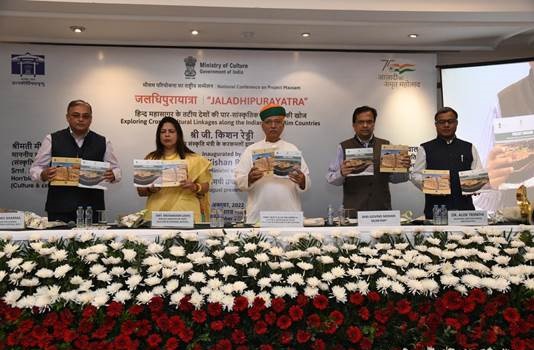
The Archaeological Survey of India (ASI) recently organised a National Workshop on Project Mausam, titled “Islands at the Crossroads of Maritime Networks within the Indian Ocean Region”, highlighting India’s renewed focus on maritime heritage and cultural diplomacy.
Background and Context
For centuries, the Indian Ocean functioned as a vibrant space of exchange—connecting South Asia with Africa, the Middle East, Southeast Asia, and East Asia through trade, religion, ideas, art, and technology. India, with its long coastline and maritime traditions, played a pivotal role in shaping these networks.
Recognising the need to systematically document and project this shared heritage, Project Mausam was launched in 2014 as part of India’s broader effort to:
- Reclaim its maritime civilisational legacy
- Strengthen cultural ties with Indian Ocean Region (IOR) countries
- Use heritage as a tool of soft power diplomacy
What is Project Mausam?
Project Mausam is a government-led cultural and maritime heritage initiative of India, launched in 2014 by the Ministry of Culture.
Key Objectives
- To study and document the Indian Ocean ‘world’—a historical space shaped by monsoon winds (mausam), maritime routes, and cultural exchanges
- To collate archaeological, historical, and literary evidence of commercial, cultural, and religious interactions across the Indian Ocean
- To identify and prepare transnational World Heritage nominations for inscription on UNESCO’s World Heritage List
- To promote the idea of a shared and interconnected heritage among Indian Ocean littoral states
Geographical and Thematic Scope
- Coverage: 39 countries across the Indian Ocean Region
- Focus Areas:
- Ancient and medieval ports
- Coastal settlements and islands
- Maritime trade routes
- Spread of religions (Buddhism, Islam, Hinduism)
- Navigation techniques and shipbuilding traditions
- Nodal Agency: Archaeological Survey of India (ASI)
- Associate Bodies:
- Indira Gandhi National Centre for the Arts (IGNCA)
- National Museum
Two Major Units
- Project Research Unit
- Conducts archaeological, historical, and interdisciplinary research
- Organises international seminars and workshops
- World Heritage Nomination Unit
- Identifies sites and prepares dossiers for UNESCO nominations
- Focuses on transnational nominations, emphasising shared heritage
Significance of Project Mausam
Cultural Diplomacy
- Strengthens India’s engagement with IOR countries through heritage cooperation
- Complements initiatives like SAGAR (Security and Growth for All in the Region)
Academic and Research Value
- Encourages multidisciplinary research involving archaeology, history, oceanography, and anthropology
- Promotes both scholarly publications and public outreach
UNESCO Engagement
- Enhances India’s presence in global heritage governance
- Introduces a non-Eurocentric narrative of maritime history
Project Mausam vs Mission Mausam
It is important not to confuse Project Mausam with Mission Mausam.
Mission Mausam
- Launched: 2024
- Ministry: Ministry of Earth Sciences
- Implementing Agencies: IMD, NCMRWF, IITM
- Focus:
- Advanced weather and climate services
- Improved forecasting for agriculture, disaster management, and rural development
- Cloud physics research
- Key Initiative: Setting up India’s first cloud chamber at IITM, Pune
Project Mausam deals with heritage and diplomacy, while Mission Mausam focuses on meteorology and climate science.
Way Forward
- Greater collaboration with Indian Ocean countries for joint heritage nominations
- Integration of Project Mausam with maritime security and economic initiatives
- Enhanced digital documentation and public engagement
- Leveraging the project for tourism, education, and people-to-people ties
FAQs
Q1. Why is Project Mausam important for India’s foreign policy?
It strengthens India’s soft power by using shared maritime heritage to deepen ties with Indian Ocean Region countries.
Q2. How many countries are covered under Project Mausam?
A total of 39 Indian Ocean countries have been identified.
Q3. Who implements Project Mausam?
The Archaeological Survey of India (ASI) is the nodal agency, supported by IGNCA and the National Museum.
Q4. What is meant by transnational World Heritage nomination?
It refers to heritage sites spread across multiple countries that are jointly nominated to UNESCO, highlighting shared history.
Q5. Is Project Mausam related to weather forecasting?
No. That function is covered under Mission Mausam, a separate initiative by the Ministry of Earth Sciences.
|







 Contact Us
  New Batch : 9555124124/ 7428085757
  Tech Support : 9555124124/ 7428085757