Prelims: (Economy + CA)
Mains: (GS 3 – Monetary Policy, Banking, Macroeconomic Stability) |
Why in News ?
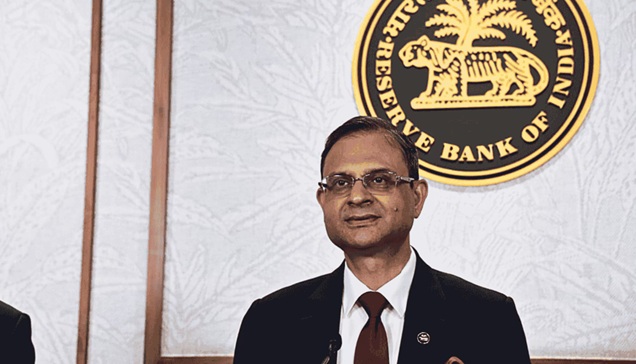
The Reserve Bank of India’s Monetary Policy Committee (MPC) decided to keep the repo rate unchanged at 5.25%, maintaining the status quo on interest rates. Consequently, bank lending and deposit rates — and EMIs on home and personal loans — are expected to remain stable.
The MPC revised India’s GDP growth projection upward to 7.4% for FY 2026 (from 7.3%) and retail inflation to 2.1% (from 2%), reflecting confidence in growth momentum alongside benign price pressures.
The committee also retained a neutral policy stance, signalling flexibility to respond to evolving domestic and global conditions. This decision comes after India’s recent trade agreements with the US and the European Union and follows the Union Budget, which shaped the broader macroeconomic context.
The pause follows a 25 basis point rate cut in December, which brought the repo rate to its current level. With cumulative rate cuts of 125 basis points in 2025, the decision marks a breather after a phase of sustained monetary easing.
Background and Context
- The RBI conducts monetary policy through its Monetary Policy Committee (MPC), which targets price stability while supporting growth.
- India follows a flexible inflation targeting framework, with a medium-term CPI inflation target of 4% ± 2%.
- Over 2025, the RBI implemented cumulative rate cuts of 125 basis points to support growth amid moderating inflation.
- The latest decision comes after:
- A Union Budget focused on fiscal consolidation and growth-supportive measures,
- Multiple trade agreements with major economies,
- A phase of easing inflationary pressures and resilient domestic demand.
- Against this backdrop, the RBI has chosen to pause further easing, preserving policy space while monitoring evolving conditions.
Why the RBI Chose to Hold Interest Rates Steady ?
The decision to pause reflects a combination of benign inflation, strong growth momentum, and external uncertainties.
Domestic Economic Conditions
- India’s economy remains broadly resilient, giving the MPC space to wait and watch rather than act immediately.
- Growth is supported by strong consumption, improving investment sentiment, and fiscal measures announced in the Union Budget.
Budget Measures Supporting Growth
RBI Governor Sanjay Malhotra noted that several FY26 Budget measures are expected to boost economic activity, including:
- Income tax cuts, raising household disposable income
- GST rate rationalisation, easing cost pressures
- Benefits of earlier RBI rate cuts, supporting credit and consumption
Together, these factors have strengthened the near-term growth outlook.
External Sector: Cushion from Trade Agreements
Since the December policy review, India has signed trade agreements with:
- The United States
- The European Union
- Oman
- New Zealand
These agreements are expected to:
- Boost exports and investment flows
- Reduce vulnerability to global uncertainties
- Support medium- to long-term growth
However, the RBI cautioned that geopolitical developments and global financial conditions still warrant close monitoring.
Consumption as the Main Growth Driver
- Economic growth is being underpinned by robust consumption, projected to grow at around 7% in FY26.
- The consumption outlook has been reinforced by:
- Subdued inflation
- Fiscal support measures
- Monetary easing already delivered
Additionally, statistical factors, such as a low GDP deflator due to low inflation, contributed to stronger growth in the first half of the fiscal year.
Inflation Outlook: Benign but Watched Closely
- Headline inflation in November and December remained below the tolerance band.
- CPI inflation projections:
- Q1 FY27: 4.0%
- Q2 FY27: 4.2% (slightly revised upward)
The RBI clarified that the upward revision is mainly due to higher prices of precious metals, contributing 60–70 basis points, while underlying inflation pressures remain subdued.
Impact of RBI’s Rate Pause on Lending and Deposit Rates
Lending Rates: Stability for Borrowers
- With the repo rate unchanged, lending rates linked to external benchmarks, especially the repo rate, are expected to remain stable.
- As a result:
- No immediate change in EMIs for home and personal loans linked to the repo rate
- Borrowers gain certainty over repayment obligations
Possible Movement in MCLR-Linked Loans
- Loans linked to the Marginal Cost of Funds-Based Lending Rate (MCLR) may still see adjustments.
- This is because banks can revise MCLR-based rates based on:
- Changes in funding costs
- Liquidity conditions
- Deposit mobilisation trends
Thus, some borrowers may experience rate changes even without a repo rate move.
Deposit Rates: Broad Stability
- On the deposit side, interest rates are expected to remain broadly steady in the near term.
- Any changes would depend on sustained liquidity pressures or shifts in banks’ funding requirements.
The Road Ahead: RBI’s Cautious Pause Amid Global Uncertainty
The RBI appears comfortable with a cautious, wait-and-watch stance.
- With economic growth holding firm, inflation under control, and fiscal spending providing support, there is no immediate need to alter policy rates.
- The February decision represents a deliberate pause, not a reversal of the easing cycle.
Growth Boost from Trade Agreements
The RBI Governor highlighted that recent and forthcoming trade agreements with the EU and the US are likely to sustain growth momentum over the medium term. He also noted that global growth could be marginally stronger than earlier projections, supported by:
- Rising technology investments
- Accommodative financial conditions
- Large-scale fiscal stimulus across major economies
Persistent External Risks
Despite the positive outlook, risks remain significant:
- Geopolitical tensions and rising trade frictions
- Volatile crude oil prices
- Diverging global monetary policies, as inflation remains above target in many advanced economies and central banks approach the end of easing cycles
Fiscal–Monetary Alignment
- With the government committed to fiscal consolidation, monetary policy is unlikely to face additional pressure.
- The alignment between fiscal prudence and monetary stability strengthens macroeconomic credibility.
Significance of the Decision
- Macroeconomic Stability
- The rate pause reinforces stability in inflation expectations, financial markets, and household borrowing behaviour.
- Support to Growth without Overheating
- By pausing after substantial easing, the RBI balances growth support with vigilance against future inflation risks.
- Predictability for Households and Businesses
- Stable interest rates provide certainty for consumers, investors, and firms planning long-term investments.
- Policy Flexibility
- Retaining a neutral stance preserves RBI’s ability to respond swiftly to domestic or global shocks.
- Alignment with Global Monetary Trends
- The RBI’s cautious approach mirrors the global shift toward policy calibration as major central banks near the end of their easing cycles.
FAQs
1. What is the current repo rate in India ?
The repo rate is 5.25%, unchanged after the latest MPC meeting.
2. Will EMIs on home and personal loans change ?
No immediate change is expected for loans linked to the repo rate. MCLR-linked loans may still see adjustments.
3. Why did the RBI revise GDP growth upward for FY26 ?
Due to strong consumption, supportive fiscal measures, trade agreements, and the impact of earlier rate cuts.
4. What does a “neutral policy stance” mean ?
It means the RBI is open to either raising or cutting rates in the future, depending on economic conditions.
5. What are the main risks to the current outlook ?
Geopolitical tensions, volatile crude oil prices, and diverging global monetary policies remain key risks.
|






 Contact Us
  New Batch : 9555124124/ 7428085757
  Tech Support : 9555124124/ 7428085757