Prelims: (Environment + CA)
Mains: (GS 3 – Environment Conservation, Urbanisation, Wildlife Protection) |
Why in News ?
Recently, the Central Empowered Committee (CEC) recommended that the Ecologically Sensitive Zone (ESZ) around Bannerghatta National Park (BNP) in Bengaluru should be restored to its original 2016 extent, citing concerns over ecological degradation and increasing urban pressure.
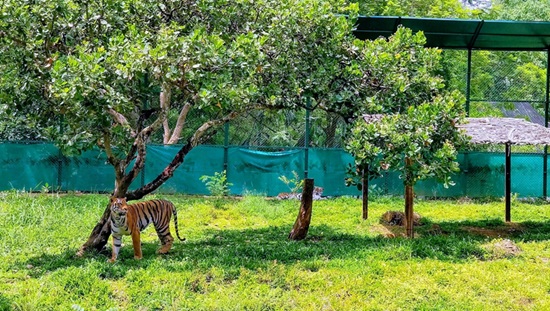
Bannerghatta National Park: Location and Ecological Profile
- Bannerghatta National Park is located in the Anekal range of hills, on the southern fringes of Bengaluru, Karnataka.
- It was declared a National Park in 1974, serving as a critical green lung for the rapidly expanding Bengaluru metropolitan region.
- In 2006, India’s first butterfly enclosure was inaugurated within the park.
- The Suvarnamukhi stream, the main water source for wildlife, flows through the centre of the park.
Biodiversity Significance of Bannerghatta
Vegetation
The park supports diverse forest types, including:
- Dry Deciduous Scrub Forests
- Southern Tropical Dry Deciduous Forests
- Southern Tropical Moist Mixed Forests
Flora
Notable plant species include:
- Narcissus latifolia
- Schleichera oleosa
- Sandalwood
- Neem
- Tamarind
- Bamboo
- Eucalyptus
Fauna
Bannerghatta is a prime habitat for several wildlife species, including:
- Endangered Asian Elephant
- Indian gaur
- Tiger
- Leopard
- Sambar deer and Spotted deer
- Wild dog, Wild pig, Sloth bear
- Pangolin, Slender loris, Common mongoose
- Black-naped hare
Urban Pressure and ESZ Controversy
- The proximity of BNP to Bengaluru has subjected it to intense urbanisation pressures, including real estate development, infrastructure expansion, and tourism.
- Over the years, reductions in the notified ESZ have raised concerns about habitat fragmentation, human–wildlife conflict, and ecological stress.
- The CEC’s recommendation to restore the ESZ to its 2016 boundaries aims to re-establish ecological buffers and limit unregulated development around the park.
What is an Ecologically Sensitive Zone (ESZ) ?
- Eco-Sensitive Zones are areas notified around protected areas to act as “shock absorbers” for fragile ecosystems.
- They regulate human activities to minimise negative environmental impacts.
- ESZs are notified by the Ministry of Environment, Forests and Climate Change (MoEFCC) under the Environment (Protection) Act, 1986.
- Activities within ESZs are categorised as prohibited, regulated, or permissible, depending on ecological sensitivity.
Significance of Restoring the ESZ
- Helps curb unplanned urban expansion around BNP.
- Reduces human–wildlife conflict by maintaining ecological corridors.
- Protects water sources such as the Suvarnamukhi stream.
- Ensures long-term conservation of biodiversity near a major urban centre.
- Aligns with India’s commitments to sustainable urban development and biodiversity protection.
FAQs
1. Where is Bannerghatta National Park located ?
In the Anekal range of hills near Bengaluru, Karnataka.
2. Why is Bannerghatta National Park ecologically important ?
It supports diverse flora and fauna, including endangered species like the Asian elephant, and serves as a crucial green buffer for Bengaluru.
3. What did the Central Empowered Committee recommend recently ?
Restoration of the Ecologically Sensitive Zone around BNP to its original 2016 extent.
4. What is the purpose of an Ecologically Sensitive Zone ?
To act as a buffer around protected areas and reduce ecological damage from human activities.
5. Under which law are ESZs notified ?
The Environment (Protection) Act, 1986.
|






 Contact Us
  New Batch : 9555124124/ 7428085757
  Tech Support : 9555124124/ 7428085757