(Preliminary Examination: Current Events of International Importance, World Geography)
(Mains Examination, General Studies Papers 1 and 2: Events in World History from the 18th Century onwards, Redrawal of National Boundaries, Agreements Affecting India's Interests, Impact of Policies and Politics of Developed and Developing Countries on India's Interests) |
Context
Recently, Israel formally recognized the Republic of Somaliland, which declared itself independent, as an independent and sovereign nation.
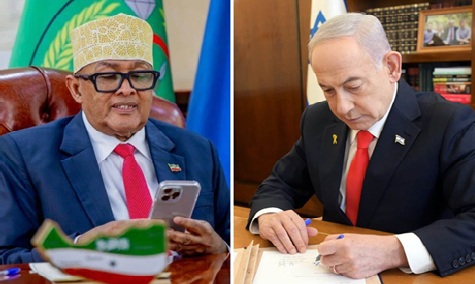
Key Points Related to the Decision
- Israel is the first United Nations (UN) member state to do so. It is known that Somaliland has been governing itself since 1991 after separating from Somalia and has been seeking diplomatic recognition.
- Somaliland has had diplomatic contacts with countries such as Ethiopia, the United States, and the United Arab Emirates (UAE). The UAE also claims to have a military base in Somaliland. DP World, a major UAE port company, also has a port in the Somaliland city of Berbera.
Criticism of the Decision
This decision has now pitted China against Israel, following the Arab League, Gulf Cooperation Council, African Union, and Organization of Islamic Cooperation (OIC) countries.
- Several other countries, including Turkey and Somalia, have strongly criticized this move. For Turkey, Somalia is a strategic pillar of its Africa policy and one of the continent's key partners. Somalia is home to Turkey's largest overseas military base. Somalia has received significant military, economic, and humanitarian assistance from Turkey.
- This decision could pose a strategic and economic challenge for Turkey. Turkey is about to begin drilling for energy in areas along the Somali coast. Turkey has increased its activities there by signing several agreements over the past year.
- Somalia was angered by an agreement reached last year between landlocked Ethiopia and Somaliland that ceded a portion of its coastal territory to Ethiopia for a port and military base.
Introduction to Somaliland
Historical Background
- Somaliland has been a British protectorate since the late nineteenth century. It gained independence as the State of Somaliland on June 26, 1960.
- Subsequently, on July 1, 1960, it merged with Italian Somaliland to form the Republic of Somalia.
- However, under the Somali government, the northern regions faced political neglect, economic inequality, and administrative neglect. Repressive policies intensified during the reign of Siad Barre in the 1970s and 1980s, leading to civil war, violence, and widespread displacement in the north.
- After the collapse of the Somali state in 1991, Somaliland declared itself an independent nation and established its own political and administrative institutions.
Geographical Location
Somaliland is located in the Horn of Africa region. It borders Djibouti, Ethiopia, Somalia, and the Puntland region. It also has a strategic coastline near the Gulf of Aden.
Governance and Administration
- Capital: Hargeisa (Hargeisa)
- Political System: Somaliland functions as a de facto independent state with its own constitution, elected government, independent judiciary, security forces, passports, a separate currency, and national symbols.
- Its governance system integrates modern democratic institutions and traditional tribal systems, contributing to social stability and dispute resolution.
- It has a bicameral legislature, including a House of Elders (Gurti). Its institutional legitimacy is strengthened through regular elections.
Economy
Somaliland's economy is primarily based on animal husbandry, with livestock exports to Gulf countries being a significant source of foreign exchange earnings.
Reasons for Recognizing Somaliland
Strategic Reasons
- Israel needs allies in the Red Sea region for several strategic reasons. One of these reasons includes a potential future campaign against the Houthi rebels. However, this comment was made in reference to Iran-backed rebels in Yemen.
- Somaliland is an ideal country for such cooperation because it could give Israel access to an operational area near the conflict zone.
- Israel's historic recognition of Somaliland as a sovereign nation opens the door to a key strategic region. This would provide direct access to the port of Berbera, improve security in the Red Sea amid the Houthi threat, and counter Iranian influence.
Economic Reasons
- Lack of international recognition has hindered Somaliland's access to foreign loans, aid, and investment, and the region continues to face poverty.
- The Horn of Africa region is considered strategically important due to its proximity to the Red Sea and the Bab al-Mandeb Strait. Approximately 30% of the world's container trade passes through this sea route.






 Contact Us
  New Batch : 9555124124/ 7428085757
  Tech Support : 9555124124/ 7428085757