(Preliminary Examination: Current Affairs)
(Mains Examination, General Studies Paper 3: Conservation, Environmental Pollution and Degradation, Environmental Impact Assessment.) |
Context
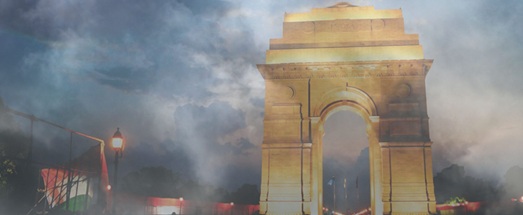
Every winter, Delhi and large parts of North India are shrouded in a thick layer of smog. Governments adopt quick measures such as cloud seeding, smog towers, odd-even rules, or water sprinkling, but air quality improves only temporarily. The real problem lies in India's air governance flaws, fragmented responsibilities, and short-term political incentives.
Why Pollution Management Fails in India
Over-reliance on Quick and Superficial Measures
- Measures such as cloud seeding, smog towers, odd-even rules, anti-smog guns, and festival bans are high-visibility measures.
- They are politically convenient, easily implemented, and fit within the budget.
- But these cannot replace long-term reforms such as clean fuels, waste management, industrial upgrades, or public transport improvements.
Fragmented Administrative Structure
Air quality management is fragmented across multiple institutions:
- Ministry of Environment
- Central Pollution Control Boards (CPCB/SPCBs)
- Commission for Air Quality Management (CAQM)
- Delhi Pollution Control Committee
- MCD, NDMC, NHAI, PWD
- Departments of Agriculture, Transport, Industry, Energy, etc.
Results
- No single institution has full authority or accountability.
- Inconsistencies between states, conflicting orders from courts, central, and local governments.
- Policy enforcement is weak and uneven.
Two Major Traps Affecting Policy
- Intellectual Trap
- Policymaking is often influenced by large research institutions, think tanks, or expert groups.
- These solutions are technically sound, but they ignore the actual capacity, budgets, public behavior, informal economy, and political constraints of Indian municipal bodies.
- As a result, policies stagnate at the pilot stage or fail to be implemented.
- The Western Trap
- Models from developed countries are implemented in India without considering the local context.
- Conditions there differ from India's—strong enforcement, stable finances, and high institutional trust.
- India's dense neighborhoods, informal activities, less reliable transportation, and limited staffing challenge the successful implementation of these models.
Key Policy Concerns
- Uneven municipal capacity
- Economic dependence on agricultural stubble
- Unregulated urban development
- Diesel-based transportation
- Informal labor markets
- Limited resources and high population pressure
- All these factors together prevent policies from being implemented on the ground.
The Way Forward
- A modern and clear clean air law
- Clear definitions of which institution will have leadership, who will be accountable, and how decisions will be made are essential.
- This law should strengthen collaborative institutions rather than creating a powerful regulator.
- Multi-year, stable funding
- Air quality improvement is not a one-year project; it requires sustained investment.
- Stable funding will increase staff, improve monitoring systems, and create long-term programs.
- Making law enforcement transparent and visible
- Publicizing compliance data increases the credibility of regulations.
- Consistency in punitive action is essential.
- A new professional category of “managers”
- Experts who understand science, administration, and politics.
- Their role is to translate scientific knowledge into practical policies.
- This will reduce the “expert-local administration” gap.
- Policy design tailored to Indian conditions
- Solutions should be based on what Indian agencies can actually implement.
- Community acceptance, local budgets, social behavior, and city capacity should be taken into account.
Conclusion
India doesn't lack ideas, technologies, and expertise; what's lacking is alignment between expert recommendations and actual capacity, between global models and Indian soil, between political priorities and long-term commitment. Clean air is not just a weather issue, but a question of public health, productivity, and the basic functionality of cities. High-tech tools can provide temporary relief, but lasting solutions are only possible through governance reforms tailored to Indian conditions.





 Contact Us
  New Batch : 9555124124/ 7428085757
  Tech Support : 9555124124/ 7428085757