Context
India's health policy is witnessing a revolutionary shift. The Union Budget 2026-27 has made it clear that traditional medical systems—Ayurveda, Yoga, Unani, Siddha, and Homeopathy (AYUSH)—are no longer just alternatives but are becoming the cornerstone of mainstream healthcare. With a massive budget allocation of ₹4,408 crore, the government has reiterated its commitment to strengthening AYUSH domestically and establishing it as a 'soft power' on the global stage.
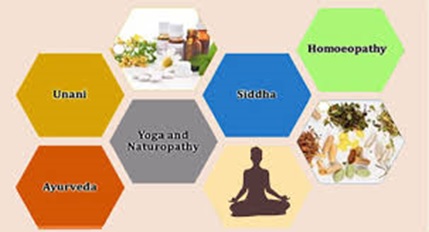
Institutional Strengthening and Infrastructure Expansion
- The sector, governed by the Ministry of AYUSH, has grown into a vast network. Traditional medicine is being taken to primary health centers through the National AYUSH Mission (NAM).
- The biggest achievement of this budget is the announcement of three new All India Institutes of Ayurveda (AIIA). These institutes, modeled after AIIMS, will not only treat patients but also standardize Ayurveda through high-level research and education.
- Additionally, the upgradation of the WHO Global Traditional Medicine Centre in Jamnagar is a major step towards making India a global rule-maker for traditional medicine.
Integrating Technology and Farmers: 'Bharat-Vistaar'
- The backbone of the AYUSH sector is its supply chain and medicinal plants. To this end, the government has launched a revolutionary AI-based digital assistant called 'Bharat-Vistaar'.
- Objective: To provide real-time data to farmers cultivating medicinal plants.
- Benefits: Improved crop quality, information on market prices, and ease of export certification.
Global Markets and the India-EU Agreement
- The Free Trade Agreement (FTA) between India and the European Union (EU) is proving to be a milestone for AYUSH. Following this agreement:
- Indian doctors will be able to provide services in European countries based on their degrees.
- Mutual recognition of safety certificates for the export of Ayurvedic products will reduce trade barriers.
- Global recognition of the Traditional Knowledge Digital Library (TKDL) will curb biopiracy of Indian medicinal sources.
Challenges: Authenticity and the 'Mixopathy' Controversy
- This rapidly growing field faces some serious challenges. Organizations like the Indian Medical Association (IMA) often question the lack of clinical evidence.
- Safety: The presence of heavy metals (such as lead and mercury) in medicines remains a matter of international concern.
- Regulatory Clarity: The decision to allow AYUSH doctors to perform certain surgeries and prescribe allopathic medicines has given rise to the 'Mixopathy' controversy. Experts believe that scientific rigor and strict regulatory oversight are essential to maintain the credibility of AYUSH.
Conclusion
Budget 2026-27 has provided a new direction and substantial energy to the AYUSH sector. If India succeeds in integrating its ancient medical practices with modern scientific evidence, AYUSH will not only achieve self-reliance in the health sector but will also lead the global wellness economy.






 Contact Us
  New Batch : 9555124124/ 7428085757
  Tech Support : 9555124124/ 7428085757