The Indian Prime Minister recently laid a wreath at the Adwa Victory Monument in Addis Ababa, the capital of Ethiopia, to honor Ethiopia's historic victory in the 1896 Battle of Adwa. This battle is considered a symbol of independence and self-respect in Africa's colonial history.
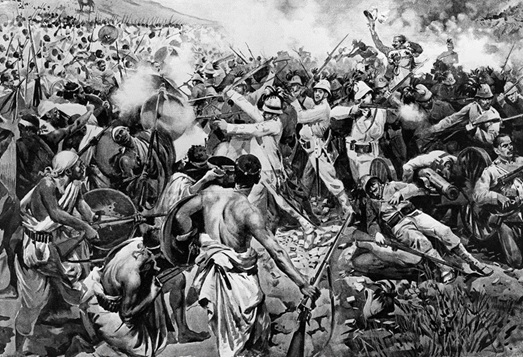
The Battle of Adwa: A Historic Turning Point in Colonial History
- This decisive battle was fought on March 1, 1896, near the Adwa region of Ethiopia, between the Ethiopian Empire (then known as Abyssinia) and Italy.
- This conflict was the final and most important battle of the First Italo-Ethiopian War (1895–1896). The roots of this war lay in Italy's ambition to establish its own empire in Africa.
- This endeavor was part of the ongoing "Race for Africa" among European powers, in which several countries competed to establish colonies on the continent.
- The victory at Adwa holds special significance because it was the first major and decisive victory by an African army over a European power during the colonial period. It inspired people throughout Africa struggling against colonialism.
Subsequent events and the second conflict
- Despite the victory at Adwa, Italy did not abandon its ambition to establish control over Ethiopia. In 1935, Italian dictator Benito Mussolini once again invaded Ethiopia, beginning the Second Italo-Ethiopian War.
- In the initial stages of this second conflict, Ethiopia faced Italian forces almost alone. However, it received limited support from anti-fascist volunteers from the United States and other countries.
Liberation of Ethiopia
In 1940, Italy declared war on Great Britain. British forces subsequently supported Ethiopian forces, and in 1941, Italian forces were expelled from Ethiopia, restoring the country's independence.







 Contact Us
  New Batch : 9555124124/ 7428085757
  Tech Support : 9555124124/ 7428085757